





 English
  Francês
  Alemão
  Italiano
  Japonês
  Norueguês
  Portuguese
  Spanish
 3 min of reading


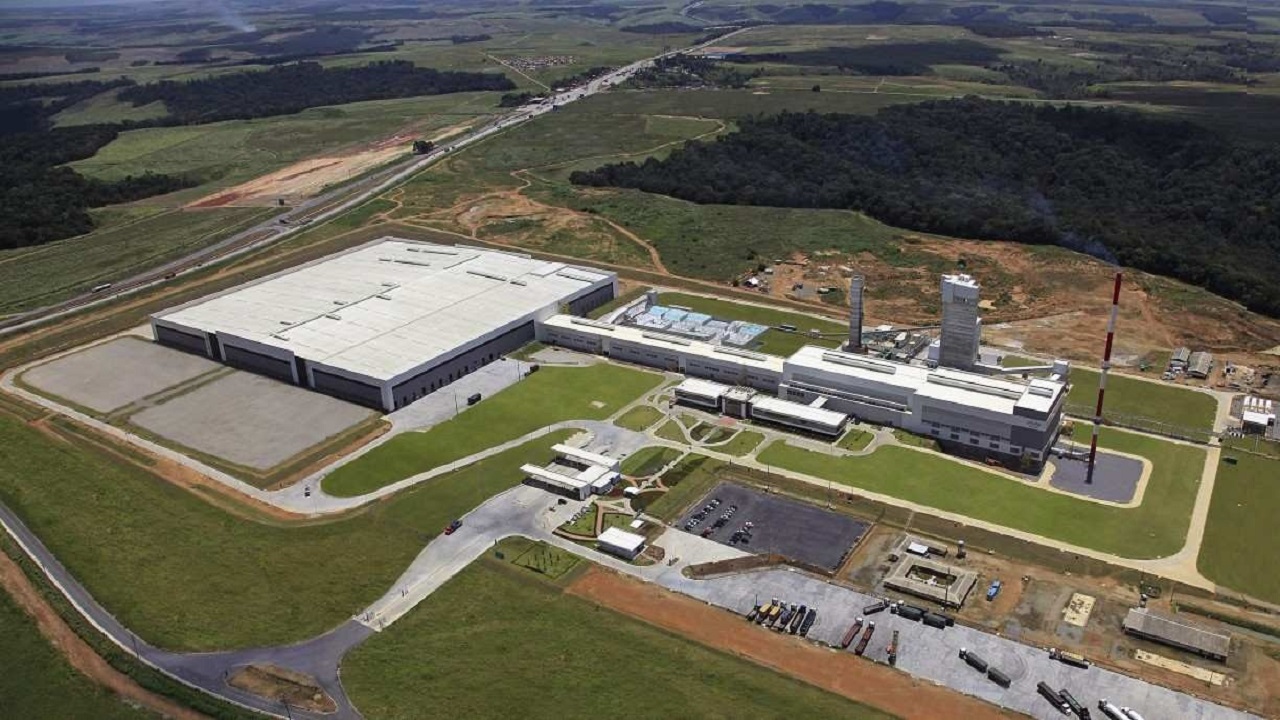
The Pernambuco-based Company Vivix, Owner of 13% of Flat Glass Sales in Brazil, Will Double Its Production Capacity and Awaits Revenue of R$ 900 Million in 2022
Founded in 2011, Vivix is part of the economic group surrounding the Brennand family, one of the most diversified in the Northeast Region. The Pernambuco-based Vivix Flat Glass (or simply Vivix), one of the main flat glass manufacturers with 100% of its capital being national, announced on Monday (27) an investment of R$ 1.3 billion to expand its glass-based solar panel factory in Goiânia, near Recife, expecting to generate more than 4,000 jobs.
Flat Glass Sales in Brazil
Vivix holds 13% of flat glass sales in Brazil, a market with strong presence from foreign competitors — Japan’s AGC, America’s Guardian, and France’s Saint-Gobain.
“Vivix’s expansion has always been part of our strategic planning. At that time, we conducted research that revealed strong existing potential in the country, particularly in the northeast region, for flat glass consumption. Flat glass is a trending material, more widely used in developed countries than in Brazil,” says Lisboa, who has been leading Vivix since the inauguration of the first factory in 2011. Previously, he spent ten years in sales and marketing at GCB, after working in the commercial and operational areas of Bunge, PepsiCo, and ExxonMobil.
-
‘Interlocking brick’ made of earth arrives in the construction industry with cost reductions of up to 40% on the project.
-
Espírito Santo will receive the largest engineering project in its history with the duplication of BR 262, which will have 50 viaducts, 28 bridges, and 2-kilometer tunnels cutting through the most challenging mountainous region of the entire state.

-
A project of nearly 9 million reais already has the first kilometer paved in Santa Catarina and promises to completely transform the access between Jaraguá do Sul and Rio dos Cedros in an area where tourism is growing at a rapid pace.

-
With 160,000 m² of collectors, an area larger than 20 football fields, Silkeborg, in Denmark, hosts a solar thermal plant that heats 19,500 homes and could become the largest solar heating plant in the world.


Post-Expansion Plans
“Here in the country, we see the presence of glass growing, but with low per capita consumption compared to some European countries and the United States, which represents the immense potential that exists. We believe that the market is gradually changing each year.”
The products manufactured in the two factories will be sold to all regions of Brazil, and part of it will be exported. Like the first one, the new factory will also utilize the “Mine to Line,” which consists of controlling the production of flat glass from the extraction of raw materials in its own mines. For this, Vivix has a processing plant located in the municipality of Pedras de Fogo, in the neighboring state of Paraíba.
The industry produces flat glass for use in civil construction and decoration, with modern technology and quality standards. The company’s portfolio includes clear colored flat glass, laminated glass, mirrors, painted glass, and solar protection. Currently, the two main activities of GCB are Vivix and Atiaia Energy.
Vivix’s Dimension in the Brazilian Market
The expansion of Vivix’s factory is expected to generate 4,000 jobs and be completed in 2025. Built next to the current factory, the unit is expected to directly employ 600 people and reach 2,400 indirect jobs.
The new plant will have a furnace with a capacity of 1,000 tons per day — the largest in the country and one of the largest in the world, according to the company itself.
“This investment should more than double Vivix’s current production capacity of flat glass, from 900 to 1,900 per day,” said Henrique Lisboa, president of Vivix. In 2022, Vivix expects revenue of approximately R$ 900 million, a 12% increase compared to last year’s results.
About the Company
Founded in 2011, Vivix is part of the business group of the renowned Brennand family, one of the most diverse in the Northeast Region. With over 100 years, the Cornélio Brennand group started its activities in the ceramics sector, with ceramic workshops spread throughout Pernambuco.
Throughout its history, it diversified its activities, venturing into the production of porcelain tiles and maintaining its operation in the sugar-alcohol chain (agro-industrial sector).










Seja o primeiro a reagir!