





 English
  Francês
  Alemão
  Italiano
  Japonês
  Norueguês
  Portuguese
  Spanish
 3 min of reading


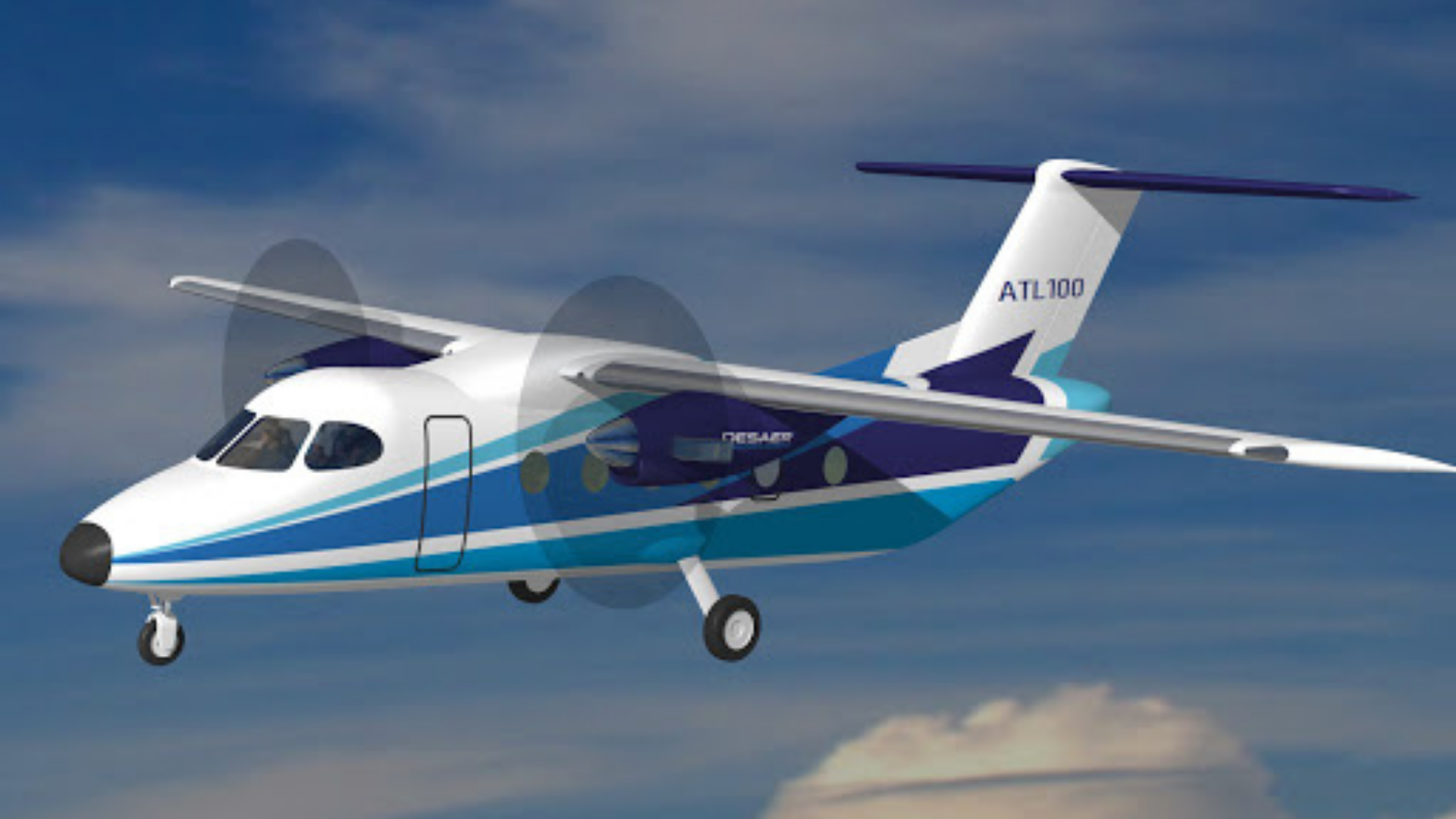
The New Airplane Factory of Desaer Will Be Built in Araxá, Minas Gerais, for the Manufacture of the Twin-Engine ATL-100 Aircraft
Desaer – Aeronautical Development – plans to build its airplane factory in the city of Araxá, in the state of Minas Gerais, with the aim of producing the twin-engine ATL-100 (light transport aircraft). Construction of the airplane factory is expected to start in the second half of this year. The company was founded by engineer Evandro Fernandes Fileno, who left Embraer in 2016 to create the ATL-100 and then founded Desaer. See also: Portuguese Company CEiiA, in Partnership with Brazilian Desaer, Plans Airplane Factory and Generation of 1,200 Jobs
- Decommissioning Works of Old Petrobras Oil Platforms Are in Full Swing at the Cação Field
- Construction Company Opens Many Job Vacancies for Site Manager, Warehouse Clerk, Safety Technician and More
- Fuel Distributor Opens Job and Internship Vacancies to Operate in the State of Bahia on This 31st
- 135 Free Online Courses Are Being Offered by the Ministry of Education (MEC) on This 31st
- Multinational Steel Company Announces Investments of 1.6 Billion Reais and Creation of 750 Jobs in the State of São Paulo
New Airplane Factory in the State of Minas Gerais
Despite the plans to build the new airplane factory in the state of Minas Gerais, Desaer will maintain its office at Incubaero, a business and project incubator created by the Casimiro Montenegro Filho Foundation, located in São José dos Campos, in the state of São Paulo. The move to Minas Gerais came after discussions with several states, including Espírito Santo, Goiás, and São Paulo.
Desaer currently has seven partners and 40 employees. According to the founder of Desaer, Brazil currently has more than a thousand certified aerodromes, but only about 65 are used frequently, and he states that many cities have runways to accommodate airplanes but do not have flights.
-
Chinese giant worth nearly R$ 4 billion that manufactures cables for electric cars, solar energy, and robotics wants to open a factory in SC.

-
Many employers do not know, but the law guarantees domestic workers a 25% increase in salary during trips, 50% for overtime, 20% for night shifts, and 17 additional benefits that can lead to labor lawsuits if not paid.

-
Gasoline prices soar and the question arises: is ethanol more advantageous? The 70% rule reveals the limit with gasoline.

-
The government has made a decision and is starting a test with more ethanol in gasoline, anticipating a mixture of up to 35%, diesel with 25% biodiesel, and a study to assess the impacts on engines.


The ATL-100 Aircraft from Brazilian Desaer
The ATL-100 aircraft aims to meet market demand for short-distance flights. Its maximum speed is approximately 380 km/h, with a range of up to 1,600 km and the ability to carry around 2.5 tons. Being able to fly at low altitudes, the aircraft does not need to be pressurized or have a rounded profile.
The airplane models are designed to transport up to 19 passengers, 12 parachutists, or up to three LD3 containers (the same ones used in large cargo aircraft). Thus, it would not be necessary to unload products from a larger airplane’s container to be placed on the ATL-100, saving time and reducing costs.
The Airplane Factory in Portugal
Together with the construction of the airplane factory in Araxá, in the state of Minas Gerais, Desaer maintains a joint venture with the Portuguese company Ceiia (Center for Engineering and Product Development), specialized in aerospace engineering and innovation. This company was responsible for developing parts of the military aircraft C-390 Millennium (also known as KC-390, from Embraer).
In Portugal, known as Desaer Portugal, the office will be in Évora and the factory in Ponte de Sor. The partnership has 70% national participation and 30% Portuguese. According to the founder of the aircraft company, the idea is to manufacture and fly in Portugal first, as there is financial incentive from the Portuguese government.
Another reason for the ATL-100 to be built in Europe is the aircraft’s range. Since the model was not developed for long distances, it would not be capable of crossing the ocean. The Brazilian aircraft manufacturer would supply the markets of the Americas, while the Portuguese one would cater to the international market. Once operational, the expectation is that each factory will deliver four planes per month.









Seja o primeiro a reagir!