





 Portuguese
  English
  Spanish
  4 min of reading
  3 comments


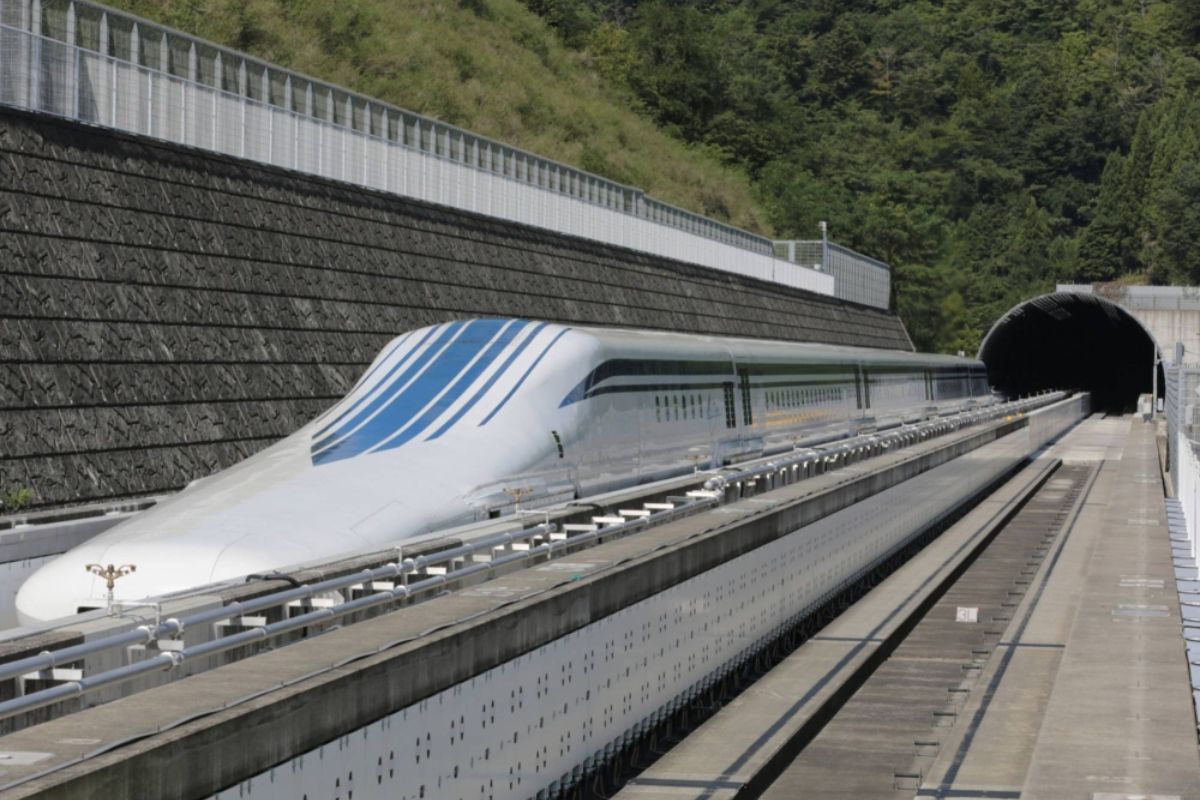


Japan Is Heavily Investing in the Chuo Shinkansen, a New Magnetic Levitation Train Line (Maglev) That Promises to Revolutionize Travel at Speeds of 500 Km/h. Learn About the Ambitious Project, Its SCMAGLEV Technology, Current Delays, and the Complex Debates Involved.
Japan is constructing the Chuo Shinkansen, a new high-speed magnetic levitation train line designed to be the fastest in the world. The project, led by Central Japan Railway Company (JR Central), promises to connect Tokyo to Nagoya in under 40 minutes, and eventually to Osaka.
Using advanced Superconducting Maglev (SCMAGLEV) technology to achieve operational speeds of 500 km/h, this train represents a monumental technological leap. However, the Chuo Shinkansen faces significant challenges, from environmental opposition and engineering complexities to high costs and schedule delays.
Chuo Shinkansen: The Strategic Vision for the Next Generation of High Speed in Japan
The Chuo Shinkansen project is a national strategic investment for Japan. Its goals go beyond a simple upgrade in transportation. One of the main objectives is to create a “triple redundancy” for the country’s vital economic artery (Tokyo-Nagoya-Osaka), currently dependent on the Tokaido Shinkansen, which is vulnerable to earthquakes. The Chuo Shinkansen aims to ensure connectivity and economic continuity during disasters. Another goal is to form a “Super Mega Region”, integrating the three largest metropolitan areas in Japan to stimulate economic growth. Moreover, Japan aims to export its SCMAGLEV technology, showcasing its engineering capabilities.
-
A megaproject worth R$ 89 billion is advancing in Iraq and promises to change the game in global trade by creating a new corridor between Asia and Europe, reducing traditional routes and repositioning the country as a logistics powerhouse.
-
Goodbye bedside table: floating shelves become a trend in 2026 by freeing up space in the bedroom, improving circulation, bringing visual lightness, and integrating technology without taking up floor space.

-
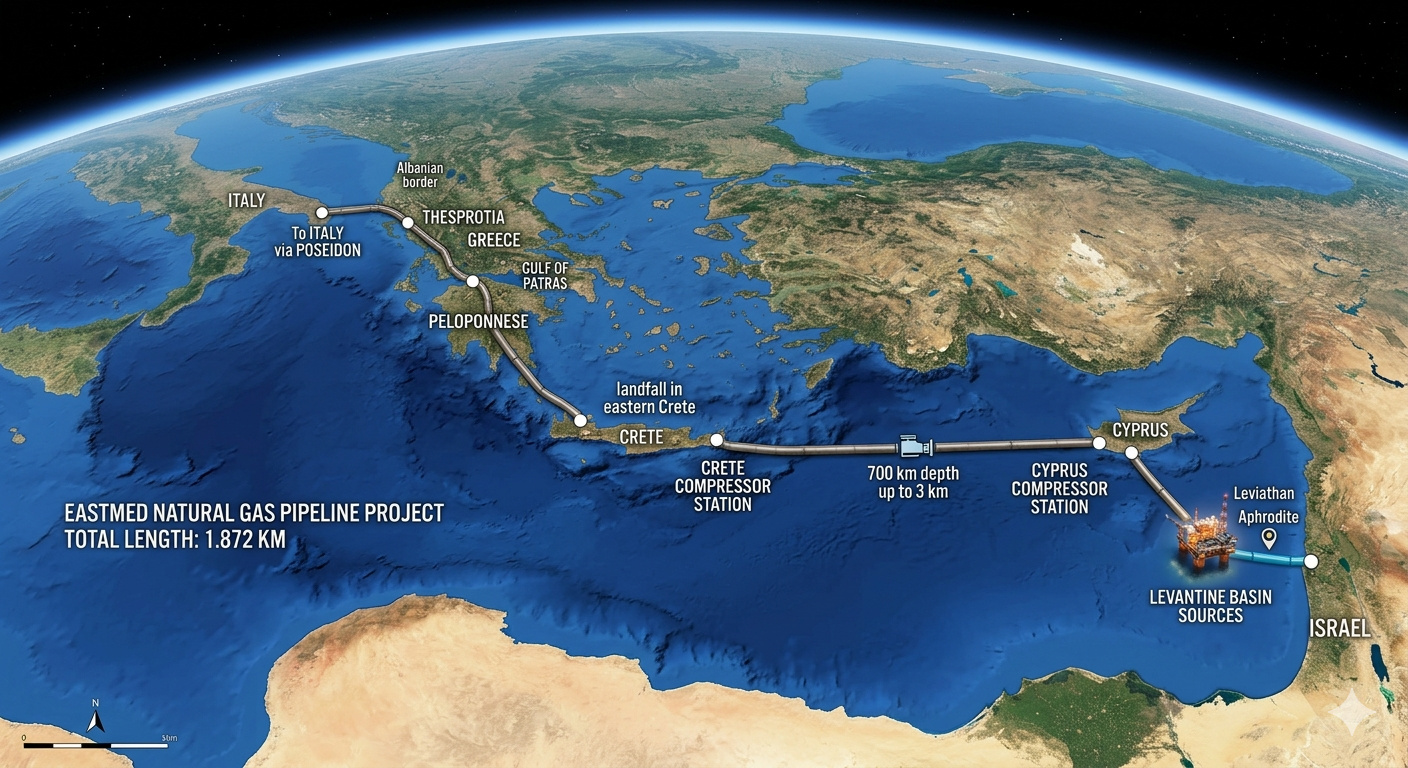
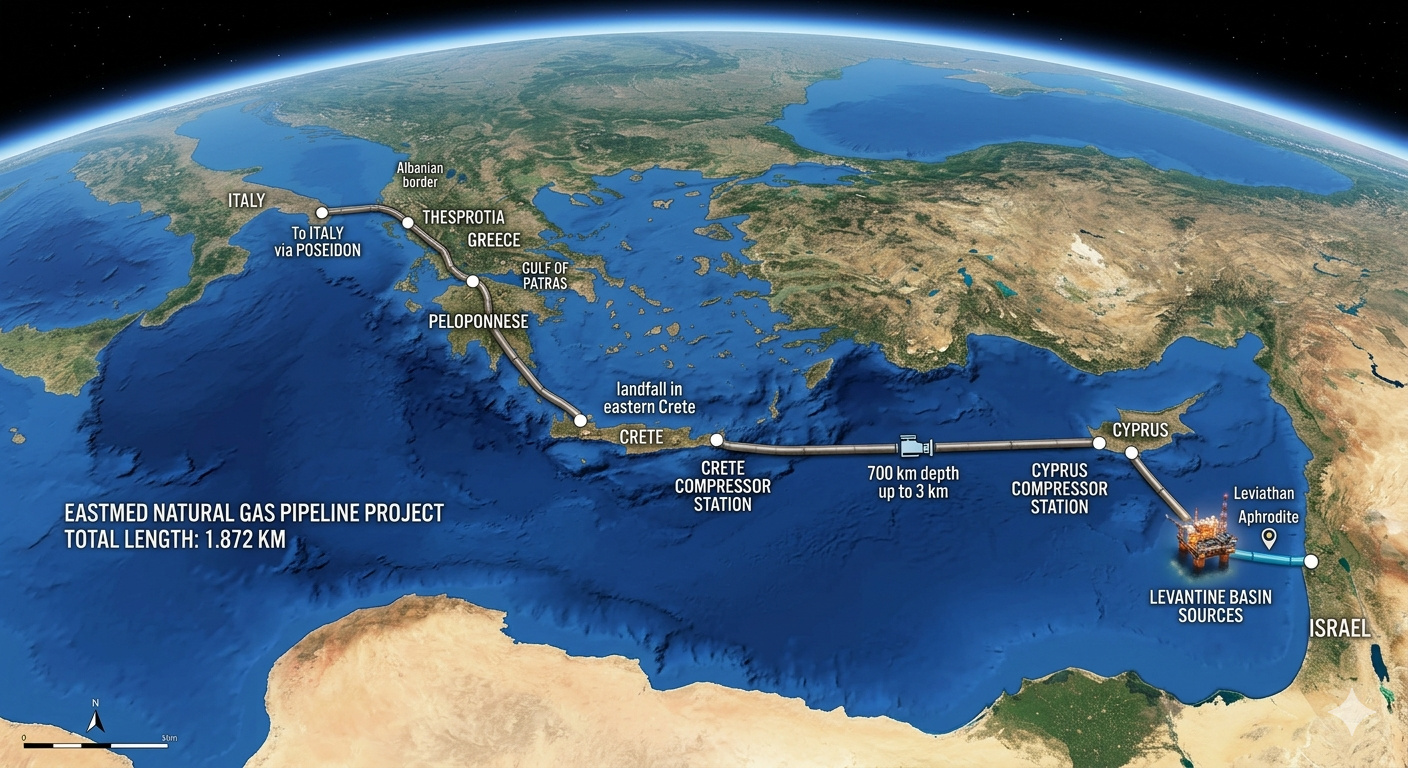
Israel, Greece, and Cyprus signed an agreement in 2020 to transport gas from the Mediterranean to Europe via a 1,872 km pipeline, but Turkey claimed sovereignty over part of the maritime route, and the project never materialized.
-
Israel, Greece, and Cyprus signed an agreement in 2020 to transport gas from the Mediterranean to Europe via a 1,872 km pipeline, but Turkey claimed sovereignty over part of the maritime route, and the project never materialized.

SCMAGLEV technology is the heart of the project. It uses superconducting magnets cooled to -269°C, allowing for electromagnetic levitation (EDS) to lift the train about 10 cm above the track and propulsion through a linear synchronous motor (LSM) at operational speeds of 500 km/h.
The Route and Phases: From Tokyo to Osaka in the Blink of an Eye?
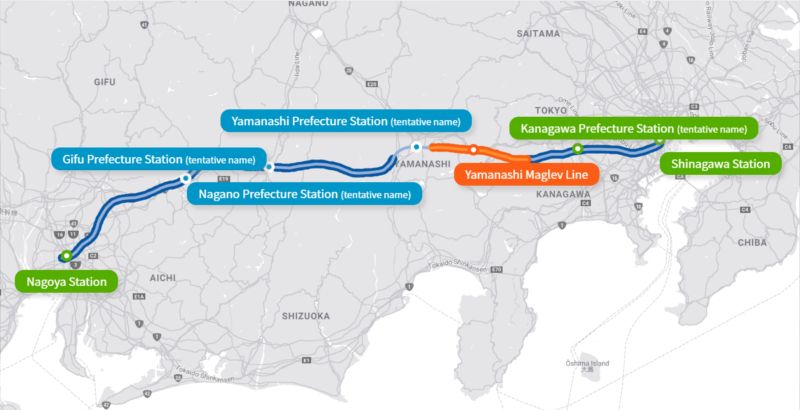
The new magnetic levitation train line will connect Tokyo (Shinagawa Station) to Nagoya in Phase 1, a stretch of approximately 285.6 km. Subsequently, in Phase 2, the line will be extended to Shin-Osaka, totaling about 438 km. The promise is to reduce travel time between Tokyo and Nagoya to just 40 minutes and between Tokyo and Osaka to about 67 minutes.
However, the original timelines have been impacted. The opening of Phase 1, initially scheduled for 2027, has been officially postponed by JR Central to 2034 or later. Consequently, the completion of Phase 2 to Osaka is also delayed beyond 2037. A striking feature of the project is that approximately 86% to 90% of the Tokyo-Nagoya stretch will be underground or in tunnels, including the complex crossing of the Southern Japanese Alps.
The Obstacles That Hinder the New Magnetic Levitation Train Line
The construction of the Chuo Shinkansen faces significant obstacles. The main public impasse is the opposition from Shizuoka Prefecture, which fears the impact of tunnel construction on the water resources of the Oi River, a vital source for the region that will not have a Chuo Shinkansen station and thus sees few direct benefits.
Beyond the Shizuoka issue, analyses indicate systemic delays in several other uncontested sections. These problems include difficulties in land acquisition, unforeseen geological complexities, and logistical challenges in construction. Additional environmental issues have arisen in Gifu Prefecture, such as concerns over the deposition of potentially contaminated excess soil and the recent drop in groundwater levels in Mizunami city, attributed to tunnel work, which led to a temporary suspension of construction in the area.
The Financial Engineering Behind the Maglev Train
The estimated cost for the complete Chuo Shinkansen line (Tokyo-Osaka) exceeds ¥9 trillion (approximately US$ 80 billion, at the time of the base report). The Tokyo-Nagoya section alone has an estimated cost by JR Central of around ¥7.04 trillion. Factors such as the challenging tunnel excavation and long stretches of deep underground sections contribute to these high figures.
Project financing is primarily supported by JR Central, which is a private company. However, to accelerate the construction of the extension between Nagoya and Osaka, JR Central obtained a government loan of ¥3 trillion from Japan’s Fiscal Investment and Loan Program (FILP). Additionally, the prefectural and municipal governments along the route also incur significant costs for building the new stations.
SCMAGLEV: Global Comparison and the Future of High Speed
The SCMAGLEV technology of the new magnetic levitation train line allows for a planned operational speed of 500 km/h, significantly higher than conventional high-speed rail (HSR) systems like the Tokaido Shinkansen (285-300 km/h), the French TGV, or the German ICE. However, the cost of construction per kilometer of the Chuo Shinkansen appears to be substantially higher than those systems and also than other Maglev systems, such as the Shanghai Transrapid (which operates at 431 km/h on a short route).
The debate over the actual passenger capacity of the SCMAGLEV line and its energy consumption (which some critical sources estimate to be 3 to 4 times higher than that of the current Shinkansen) directly impacts its economic viability and its environmental credentials. Japan has ambitions to export SCMAGLEV technology, primarily focusing on the United States (a project for the Northeast Corridor between Washington D.C. and Baltimore is currently paused) and a previous attempt in Australia (the CLARA project, which seems stalled).









Fantástico!!! Mesmo tempo que demoro 90 minutos para andar 20km em SP!!!
Sugestão:
Chamem o pessoal da nossa recém criada TAV-Brasil! Eles prometem construir um trem-bala de SP ao RJ em apenas três anos (do zero ao plenamente operacional), e sem um único centavo de dinheiro público.
Sendo tão porretas assim, certamente o Maglev do Japão será moleza pra eles…
A bala já temos de sobra: bala perdida… agora trem bala mesmo só em filme de ficção científica…