





 Portuguese
  English
  Spanish
  4 min of reading
  4 comments


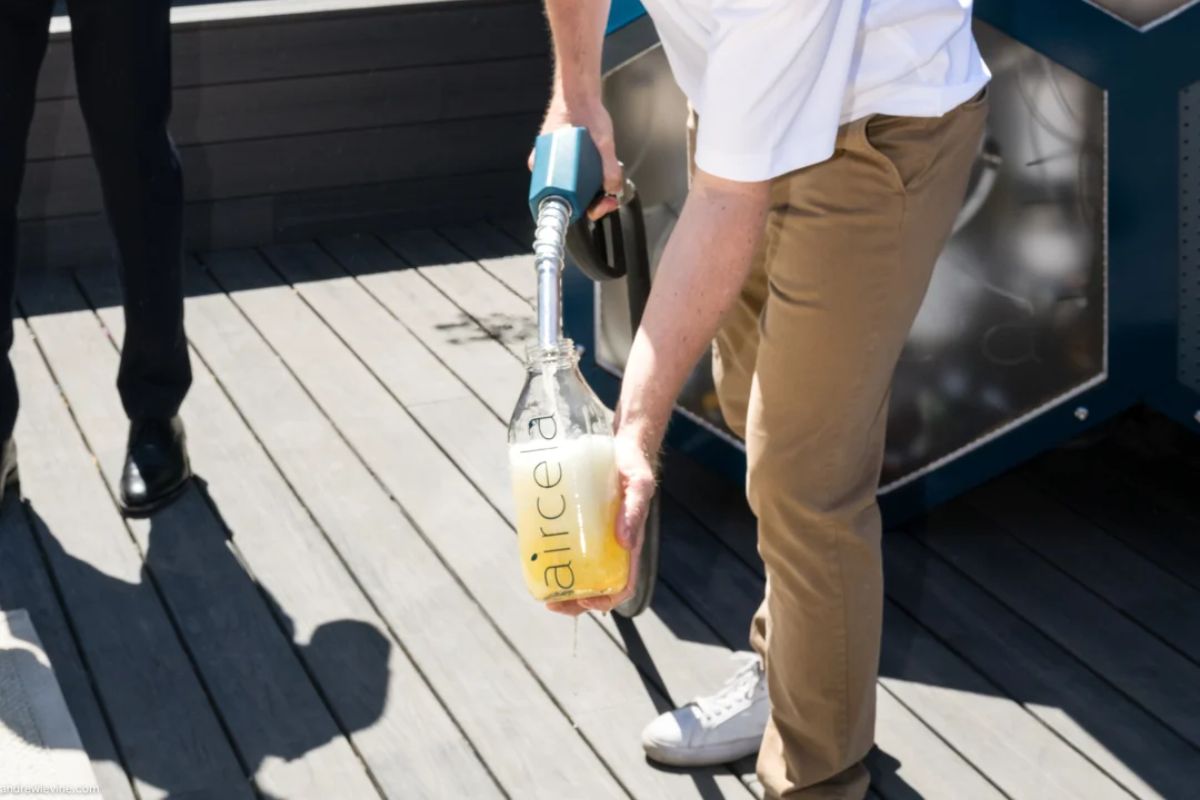


A New York Startup Created a Machine the Size of a Refrigerator That Promises to Revolutionize Energy, but Its High Cost and Low Efficiency Make Its Use in Cars Unviable for Now, the Promise? Gasoline Without Oil.
Imagine a machine that you can have at home that produces gasoline using just three ingredients: air, water, and electricity from renewable sources, such as solar. This is the promise of Aircela, a technology startup that has developed a device capable of creating gasoline without oil.
The technology is real and scientifically proven, but the idea of substituting the gas station is still distant. Analyzing its operation and costs reveals that, although it is an engineering achievement, the true future of this innovation may not lie in cars, but rather in the oceans.
The Technology Behind Gasoline Without Oil: How Does Aircela Work?
Aircela, founded in 2019, developed its technology with the help of one of the world’s leading experts on the subject, Dr. Klaus Lackner. In a public demonstration in New York on May 20, 2025, the company showcased its machine in full operation. The process of gasoline without oil occurs in three main stages:
-
A couple buys an old chalet, breaks the kitchen floor for renovation, and finds over a thousand coins of gold and silver hidden since the English Civil War over 4 centuries ago.
-
Rigid bags with their days numbered: new trend prioritizes comfort in 2026.

-
YouTuber creates an excavator equipped with a giant 4.5-meter sword to challenge his brother to a rematch, and the invention quickly goes viral on social media.
-
The U.S. Army surprises the world by presenting the UH-60MX Black Hawk helicopter capable of flying without pilots, controlled by a tablet, featuring the MATRIX system, smart sensors, and full autonomy in real combat and rescue missions.


CO2 Capture from Air: The machine sucks air from the environment and, using a chemical solution, captures carbon dioxide (CO2).
Hydrogen Production: At the same time, an electrolytic process powered by renewable energy breaks down water molecules (H2O), separating hydrogen.
Gasoline Synthesis: The captured CO2 is combined with hydrogen in a reactor. This first creates methanol, which is then converted into liquid gasoline through a process called Methanol-to-Gasoline (MTG).
The Final Product: A High-Octane Gasoline Free of Impurities
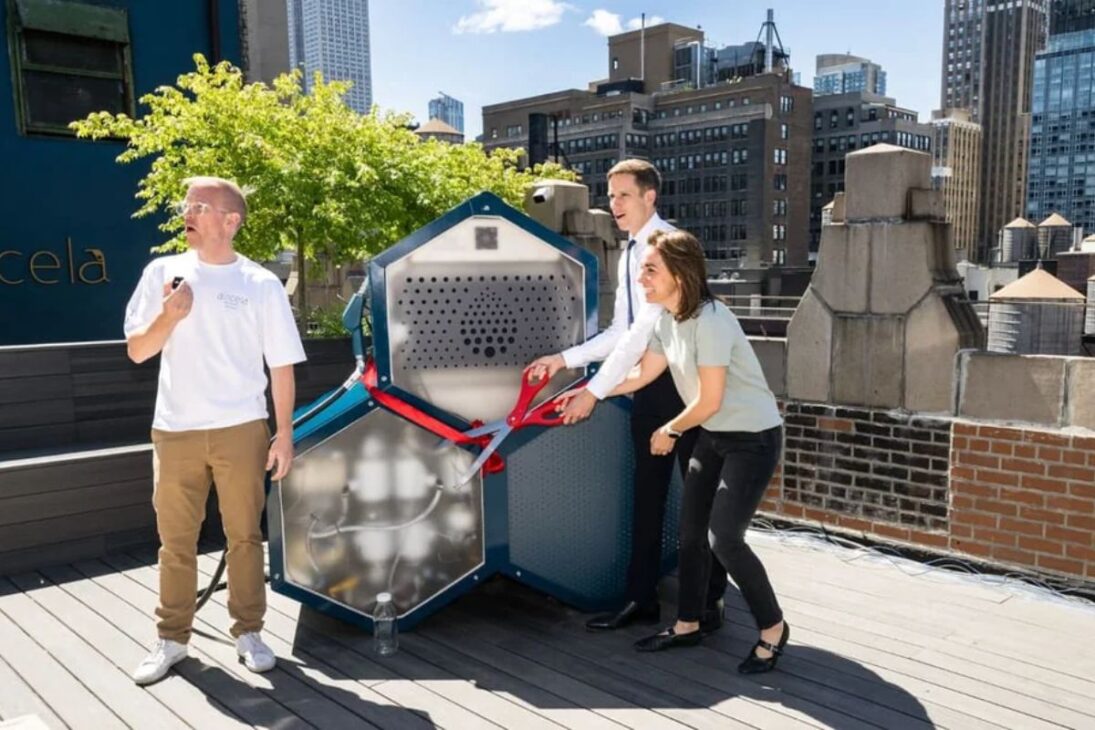
The gasoline without oil produced by Aircela has impressive characteristics. The final fuel has an octane rating between 90 and 95, which is equivalent to the premium gasoline sold at gas stations.
Because it is produced from pure raw materials (air and water), it is free from contaminants like sulfur and heavy metals. Furthermore, it is completely compatible with any standard combustion engine, allowing it to be used without the need for any adaptations to the vehicle.
The Numbers Don’t Add Up for the Consumer: The High Cost of Gasoline Without Oil
Despite the innovation of gasoline without oil, the economic viability for the average consumer is the biggest obstacle. The price of a single Aircela machine is estimated to be between US$ 15,000 and US$ 25,000. Spreading this cost over 10 years yields a fuel cost of over US$ 5 per gallon (about 3.7 liters) just for the equipment.
Adding in the high consumption of electricity, the final price of the fuel can exceed US$ 13 per gallon. Additionally, the process is much less efficient than that of an electric vehicle. While a battery electric vehicle (BEV) utilizes over 75% of the energy drawn from the outlet, Aircela’s system, considering the combustion in the engine, has an efficiency of only 12.5%.
Why Did a Shipping Giant Invest in Aircela?
If it’s not viable for cars, why has Aircela attracted so much investment? The answer lies in one of its main investors: Maersk, one of the largest shipping companies in the world. Maersk is in the process of decarbonizing its fleet, and its main bet is on the use of green methanol.
The Aircela process, as we’ve seen, produces methanol as an intermediate step before converting it into gasoline. For Maersk, the interest is not in gasoline, but in the ability to produce e-methanol in a decentralized way at ports around the world. The same applies to other sectors that are difficult to electrify, such as aviation.
A Promising Niche but with a Regulatory Hurdle

Aircela’s path seems focused on high-value niches, such as maritime transport, aviation, or remote locations like military bases and mining sites, where the cost of traditional fuel is already very high. The company plans to start its first field tests in fall 2025.
However, before considering the consumer market, the company faces a significant regulatory hurdle. To be sold as “gasoline”, the fuel needs to obtain ASTM D4814 certification, a costly and complex process that ensures the quality and safety of the product. Without this certification, using the fuel in a standard car could void the engine warranty, a risk that most consumers are not willing to take.





Nossa, impressionante, como não pensaram nisso antes?
https://en.m.wikipedia.org/wiki/Bergius_process
Com tanta terra no Brasil para plantar cana e produzir etanol a baixo custo, usar qualquer outro combustível é desrespeitar a natureza. O carro elétrico ainda vai levar tempo por falta de infraestrutura de recarga, que depois das baterias de estado sólido e dos motores radiais vai passar a ser o principal obstáculo para a disseminação dessa tecnologia. Em alguns estados o preço do etanol não compensa e isso realmente deixa muito a desejar, pois o etanol tem infraestrutura já consolidada e os carros flex estão em toda parte. Falta inteligência na diminuição do preço do etanol para tornar as cidades mais respiráveis…
Produzir só o hidrogenio para um carro movido a hidrogenio já fica mais caro que a gasolina.
Ainda o carro híbrido é a melhor solução, porém a mais cara.