





 Portuguese
  English
  Spanish
  4 min of reading
  0 comments


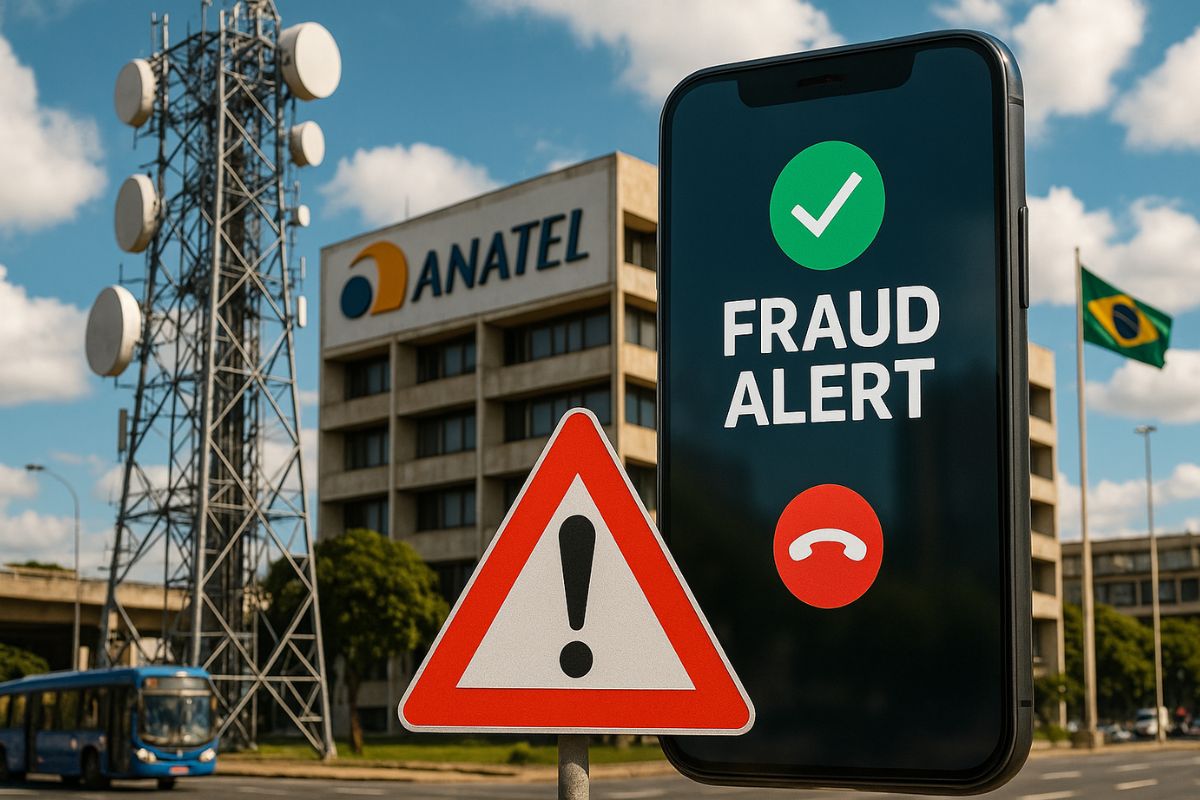
The New Anatel Rule Requires Companies with High Call Volumes to Authenticate the Origin of the Number Displayed to the User, Replacing the Old Model Based Solely on Identification and Strengthening the Fight Against Phone Fraud
The New Anatel Rule comes into effect on November 15, 2025, and directly targets companies that originate more than 500,000 calls per month in the country. The objective is simple yet technical. The agency wants to prevent scammers from using fake or cloned numbers to impersonate banks, telecoms, call centers, or collection services. To that end, the origin of the call must be validated before reaching the consumer.
This obligation was maintained even after requests for postponement and flexibility made by sector entities. The agency understood that the authentication technology is already available, that the universe of affected companies is relatively small, and that spoofing has become a relevant gateway for phone scams. With the New Anatel Rule, the logic shifts to trust through authentication rather than just identification.
What the New Anatel Rule Determines
The decision confirms Resolution No. 201/2025 and makes call authentication mandatory for around 350 major callers, mainly telemarketing, collection centers, and mass services. These companies must use the service called Verified Origin each time they make calls to users.
-
Larger than entire cities in Brazil: BYD is building a 4.6 km² complex in Bahia with a capacity for 600,000 vehicles per year, but the discovery of 163 workers in conditions analogous to slavery has shaken the entire project.

-
With an investment of R$ 612 million, a capacity to process 1.2 million liters of milk per day, Piracanjuba inaugurates a mega cheese factory that increases national production, reduces dependence on imports, and repositions Brazil on the global dairy map.

-
Brazilian city gains industrial hub for 85 companies that is equivalent to 55 football fields.

-
Peugeot and Citroën factory in Argentina cuts production by half and opens a layoff program for more than 2,000 employees after Brazil drastically reduced purchases of Argentine vehicles.


The New Anatel Rule also establishes a time frame. The start date has been preserved as November 15, 2025, and the adaptation period of 90 days was deemed sufficient by the rapporteur. The agency emphasized that the problem is known, the solutions are standardized, and delays would compromise the effectiveness of combating spoofing.
Who Will Be Required to Validate the Calls
The main focus is on companies that make large-scale calls, above 500,000 monthly calls. This threshold was adopted because this group contains the highest volumes of consumer contacts, and the use of unauthenticated numbers causes the most noise.
The New Anatel Rule made it clear that Mobile Personal Service operators are also still within the obligation. The proposal to exclude them was rejected because number alteration fraud is common in mobile networks. If one part of the chain does not authenticate, the entire protection system loses strength.
Why the 0303 Code Will Not Return
One of the requests from the entities was to reinstate the 0303 code as a way to signal to users that it was a telemarketing call. Anatel did not accept this. The technical understanding was that an unauthenticated code does not guarantee that the call is from who claims to be calling. In other words, 0303 identifies, but does not validate.
The New Anatel Rule adopted the view that merely showing a prefix does not resolve the issue of number spoofing. Any model that allows masking the origin without authentication could be exploited by those practicing spoofing. For this reason, the agency preferred authentication with international standards over a simple code in front of the number.
How Verified Origin Works
The Verified Origin service has two complementary stages. The first is authentication. In this phase, the system confirms whether the number displayed on the consumer’s screen actually belongs to the company that is calling. This point is the core of the New Anatel Rule because it blocks the use of cloned numbers.
The second stage is identification. Once the origin is authenticated, the call can display the company’s name, logo, and even the reason for the contact on the user’s phone screen. This layer of transparency is important for the user to decide whether to answer and to reduce the rejection rate of calls that are legitimate but currently arrive without context.
Technological Standard and Combating Fraud
The New Anatel Rule follows the same path already taken in other countries by defining the use of protocols such as STIR, SHAKEN, and RCD.
These standards create a type of trusted signature of the call, allowing the network to verify where it originated and whether there was any malicious alteration along the way.
With this, the agency hopes to reduce phone scams, restore user trust in calls that are genuinely from banks, companies, and service providers, and empower consumers. When the call arrives authenticated and identified, the user knows who is speaking and why.
Why Anatel Did Not Postpone the Deadline
Telecommunications companies argued that more time would be necessary to adapt systems and integrate Verified Origin into their internal processes. The rapporteur maintained the 90-day deadline because the number of affected companies is relatively small, the technical solution is already available, and the social impact of spoofing has become evident in recent years.
The New Anatel Rule was designed precisely not to affect the entire caller base, but only the large issuers, who also have the most technical and financial capacity to implement authentication.
Postponing, in this context, would mean keeping consumers exposed to spoofed calls for longer.
The implementation of the New Anatel Rule marks a shift in phase in combating spoofing in the country. Instead of merely labeling calls, the agency is requiring large companies to prove they are who they say they are before speaking with the user.
This reduces the space for fraud, improves the experience of the consumer , and creates a clearer accountability trail.
In your view, will the New Anatel Rule really reduce false calls or will companies still need more measures to protect consumers? Let us know in the comments.









-

Uma pessoa reagiu a isso.