





 Portuguese
  English
  Spanish
  4 min of reading
  26 comments


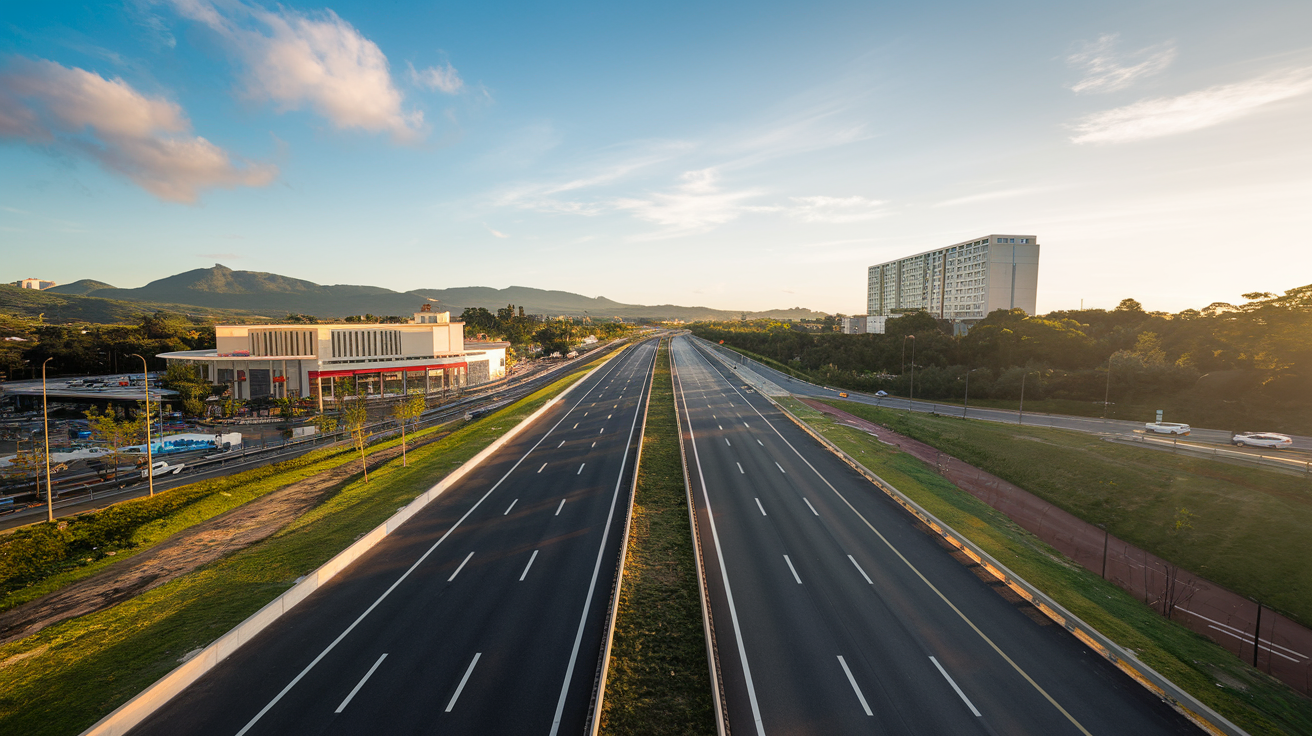

A New Highway With Six Lanes, Parallel to BR-101, Promises to End Congestion Between Curitiba and the Coast of Santa Catarina. The Via Mar Project is the Bet to Revolutionize Logistics and Bring Economic Benefits. But Will It Get Off the Ground?
Imagine facing hours of traffic congestion on a highway that seems endless, especially on holidays and during the summer season.
This is the reality faced by those who venture on the BR-101 between Curitiba and the coast of Santa Catarina.
But an innovative project could transform this exhausting experience, bringing relief not only to drivers but also to the productive sector.
-
The government requests the Federal Revenue Service for a new system to automate the income tax declaration, reducing errors, time, and bureaucracy for millions of Brazilians.

-
Pix in installments, international Pix, and contactless payment without internet: the Central Bank revealed the new features coming to the tool that is already used by almost every adult in Brazil.
-
Mercado Livre has just started selling medications with delivery in up to three hours to your door, and this move could completely change the way Brazilians buy medicines on a daily basis.

-
In Dubai, rising tensions from the war in the Middle East are causing super-rich individuals to leave the Gulf and direct their fortunes to a new financial refuge in Asia.

What is being planned promises to forever change logistics and mobility in the region.
The Via Mar Project: An Alternative to BR-101
Named Via Mar or Northern Coast Corridor, the project from the government of Santa Catarina envisions a new highway parallel to BR-101.
Spanning 145 kilometers, the road will connect Joinville to the Greater Florianópolis region.
Unlike the current highway, Via Mar will feature six lanes, with three on each side, to provide smoother traffic flow and meet the growing demand for vehicles and cargo transport in the region.
According to the state government, the highway is being planned with the goal of dividing the traffic, which today is massively concentrated on BR-101.
Studies indicate that areas such as Itajaí, Balneário Camboriú, and Itapema, where vehicle flow is intense, will directly benefit from reduced congestion.
Governor Jorginho Mello (PL) emphasized that the project will be a logistical landmark for Santa Catarina.
“It is the first step toward realizing projects that will boost logistics and benefit cargo transport,” he stated during the signing of the authorization for technical studies.
Highway Will Be Divided into Lots and Robust Investment
Via Mar will be executed in five lots, each with specific characteristics and infrastructure works, such as bridges and overpasses.
In total, the initial cost of technical studies and environmental licenses exceeds R$ 13 million, while the most expensive lot, the fifth, has an estimated budget of R$ 26.8 million.
The planned sections are:
Lot 1: 26.85 km between Joinville and Guaramirim, including four bridges and two overpasses.
Lot 2: 21.09 km between Guaramirim and Massaranduba, with two bridges and one overpass.
Lot 3: 16.77 km between Massaranduba and Navegantes, with two bridges and eight retainers.
Lot 4: 25.78 km between Navegantes and Itajaí, with four overpasses, two bridges, and three retainers.
Lot 5: 54.72 km linking Itajaí to the Contorno Viário da Grande Florianópolis, with four overpasses, four bridges, and three retainers.
Even though the construction has no set start date, the government is betting on public-private partnership (PPP) to make the project viable as soon as the studies are completed.
This stage is expected to take about two years and will also involve expropriation processes.
Economic Impacts: From Paraná to Mercosur
The economic impact of Via Mar will be felt far beyond the borders of Santa Catarina.
According to the State Planning Department, the region where the highway will be built concentrates 60% of the state’s population and a large part of its industrial, agricultural, and fishing activities.
The superintendent of the Federation of Industries of Paraná (Fiep), João Arthur Mohr, believes that the new logistics corridor will also benefit Paraná and other states in the South.
He points out that the road could expedite cargo transport to the ports of Santa Catarina, in addition to facilitating the flow of goods to Rio Grande do Sul, Uruguay, and Argentina.
According to Mohr, a new highway is essential to ease traffic on BR-101, which does not have expansion works planned in the contract with the current concessionaire, Arteris Litoral Sul, valid until 2033.
“Via Mar is a viable alternative to improve flow, but we still need solutions for the stretch between Curitiba and Joinville, especially on BR-376,” he warned.
Improvement in Logistics and Quality of Life
Besides alleviating the hassles faced by drivers, Via Mar promises to transform cargo transport in Southern Brazil.
Strategic ports, such as those of Itajaí and São Francisco do Sul, should be directly benefited, which will reduce costs and timelines for industries.
The expectation is that the new corridor will also improve the quality of life for residents of the cities along BR-101.
With less congestion and a parallel highway, traffic within urban centers will be reduced, providing more safety and less pollution.
So, What Does the Future Hold?
Despite the promises, the project still depends on a series of approvals and studies.
Via Mar could be a game changer in logistics and transport in Southern Brazil, but it also raises challenges, such as high costs and environmental issues.
And you, do you believe that Via Mar will be the definitive solution to the traffic and logistics problems in the Southern region? Leave your opinion in the comments!








Não duplica nem a 280 que tá pedindo socorro,vai inventar de fazer uma rodovia nova ,o governador tem que pensar nas cidades portuárias como São Francisco do Sul e não em turista .
Balela!! Paliativo! O Brasil precisa ACORDAR, transporte de cargas em longas distâncias só FERROVIAS resolve. Mais barato, sem acidentes, sem perdas de vidas, ecologicamente correto!! Aqui estamos na contra mão do mundo!!!! Rodovias deveriam ser pra transporte de cargas complementar e para onibus e automóveis , o povo poder viajar com mais segurança e fazer turismo pelo país!!!
Com certeza vai melhorar muito, mas isso a médio e longo prazo. No curto prazo deveria se exigir da concessionária (governos do PR, SC e Federal) a urgente transformação dos acostamentos em terceira faixa, com as obras necessárias e posterior construção de novos acostamentos, mesmo que para isso se faça necessária a repactuação da concessão. O que não da mais é levar seis, oito horas de Curitiba à Itapema, p. Ex. A BR 101 se transformou numa avenida que vive congestionada.