





 Português
  Inglês
  Espanhol
  2 min de leitura
  0 comentários



Only 5 People in the World Have Seen the Color “olo”, Created with a Laser That Tricks the Retina
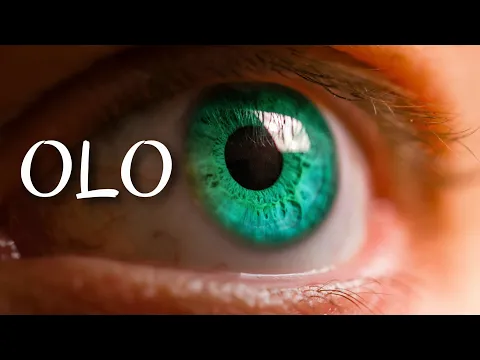
Have you ever imagined seeing a color that no one else in the world can see? Scientists at the University of California, Berkeley achieved the impossible: creating a new color for the human eye. The experiment, conducted using precision lasers and advanced eye tracking, allowed five volunteers to see a shade that simply does not exist in nature or on screens, according to the MSN website.
How Is It Possible to See a New Color?
Through the Oz Vision platform, researchers used microdoses of laser to activate only the M cones in the retina (sensitive to green light), without interfering with the L (red) or S (blue) cones. This selective activation tricked the brain, creating a new visual perception: a color dubbed “olo”, an ultra-saturated blend of green and blue — impossible to describe or represent.
“It’s a sensation of seeing something completely outside of what we know as visual reality,” reported one of the volunteers.
ARTIGO CONTINUA ABAIXOVeja também
A bright yellow mushroom imported from Asia escaped from a cultivation farm in the United States in 2010 and is now aggressively spreading across 25 states, destroying entire communities of native fungi in American forests.

Buried under China, a colossal machine weighing 20,000 tons began operating as the largest neutrino detector on the planet and, in just 59 days, surpassed results that science took half a century to achieve.

Iran enters the center of a climate alert after the war emitted 5.6 million tons of CO2 in two weeks, surpassing the annual pollution of entire countries.

Lunar exploration may change after a Chinese probe finds a “cavity” of radiation that reduces the impact on astronauts by up to 20% at certain times on the Moon.


What Is the Oz Vision System?
The revolutionary technology combines:

Ultra-thin lasers
High-precision moving mirrors
Real-time optical sensors
Eye tracking software (nicknamed Wizard)
With it, each cone of the retina can be individually stimulated, even with the eye in constant motion.
Why Is the Discovery So Important?
The color “olo” cannot be printed, displayed on screens, or described with words
It is visible only with direct stimulation of the retina
It could represent a new sensory dimension for humans
In tests, participants were exposed to all colors of the visible spectrum and could not compare “olo” to any of them.
Future: Colors for the Colorblind and Beyond
The technique also has the potential to create “virtual cones”, which could allow colorblind individuals to see a wider range of colors. In tests with primates, scientists have already succeeded in expanding color perception — and hope for similar results in humans.






Seja o primeiro a reagir!