





 English
  Francês
  Alemão
  Italiano
  Japonês
  Norueguês
  Portuguese
  Spanish
  3 min of reading


Chinese Scientists Developed Data Transmission Technology Model That Works With Underwater Solar Cells
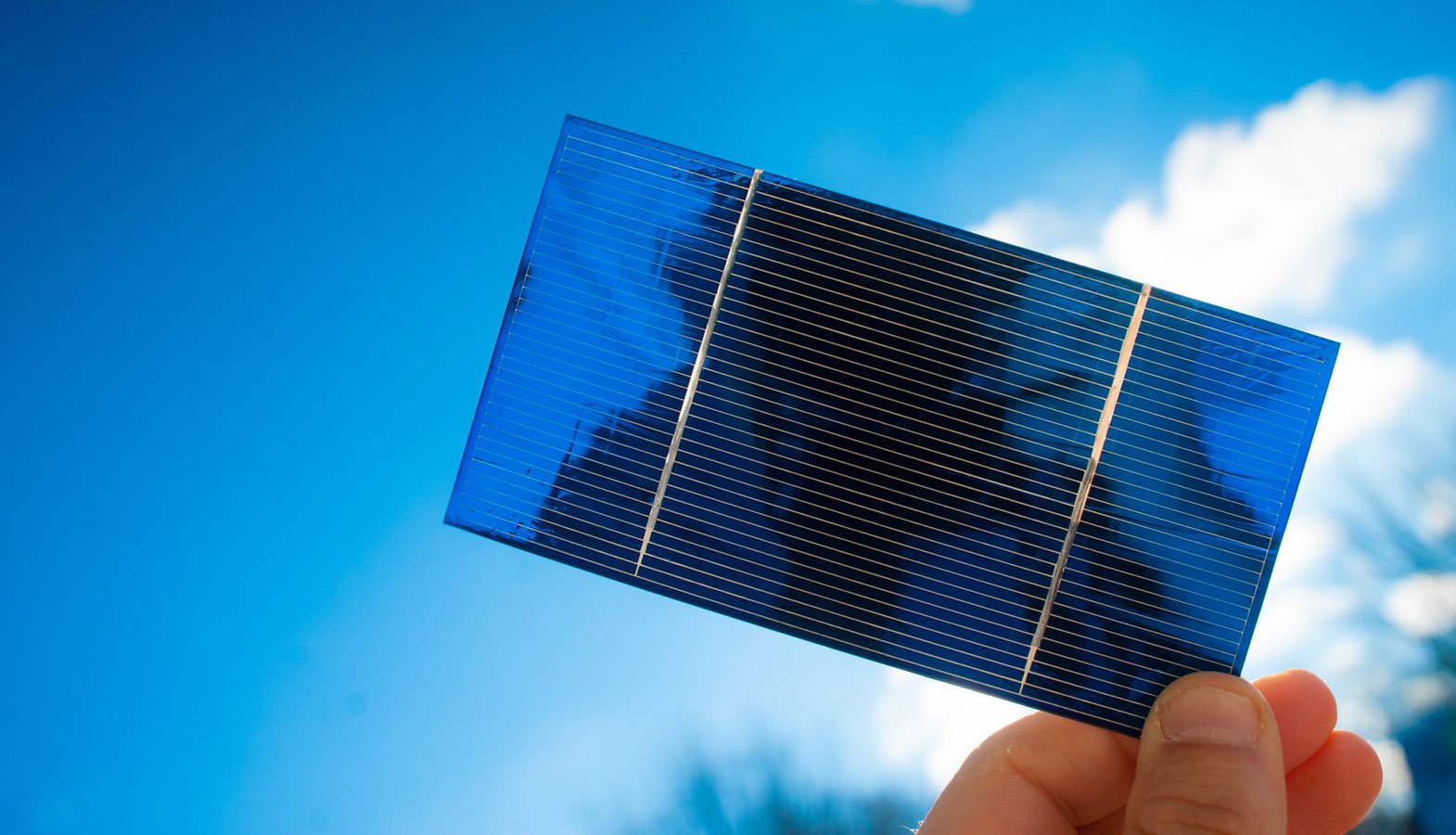
A wireless underwater communication system of excellent quality has been developed. The innovation was created by scientists from Zhejiang University, China, using series-connected solar cells that act as detectors for underwater data transmission.
Also Read:
- Solar Energy Financing: High Demand for Financing the Installation of Solar Panels is Gaining New Lines of Credit;
- New Renewable Energy Technologies Feature a 23-Meter Generator That Produces Wind Energy for 24 Hours;
- Construction of a Solar Power Plant by CelgPAR in the State of Goiás Will Feature 15,300 Solar Modules.
According to the original text by Gustavo Minari for Canaltech, these series-connected solar cells can identify and absorb light beams quickly and efficiently, as they have a significantly larger surface area than conventional photodiodes. This allows them to become a more effective receiving matrix, eliminating alignment issues that typically hinder data and information transmission.
Jing Xu, a professor at the University and the lead author of the research on this technology, explains: “There is a critical need for more efficient underwater communication to meet the increasing data exchange demands in ocean protection activities worldwide. Moreover, this kind of system also enables information transmission and energy generation in a single device.”
-
Chinese giant worth nearly R$ 4 billion that manufactures cables for electric cars, solar energy, and robotics wants to open a factory in SC.
-
Many employers do not know, but the law guarantees domestic workers a 25% increase in salary during trips, 50% for overtime, 20% for night shifts, and 17 additional benefits that can lead to labor lawsuits if not paid.

-
Gasoline prices soar and the question arises: is ethanol more advantageous? The 70% rule reveals the limit with gasoline.

-
The government has made a decision and is starting a test with more ethanol in gasoline, anticipating a mixture of up to 35%, diesel with 25% biodiesel, and a study to assess the impacts on engines.


More Transmission in Less Time With the New Technology
Comparing the Chinese technology to the use of radio or acoustic waves for information transmission, the wireless underwater system with solar cells boasts higher speed, lower latency, and does not require as much energy. However, the optical devices in question require precise alignment between the transmitter and receiver of solar light beams, which makes installation in large-distance complexes unfeasible.
To address this issue, the Chinese scientists opted for computer modeling and simulations of solar cells connected to enhance the peripheral circuit of the advanced technology model, increasing bandwidth and improving performance for transmitting large volumes of data.
“So far, achieving high-speed links using conventional silicon solar cells required very complex modulation schemes and algorithms, which need intensive computational resources, consume extra energy, and create high processing latency,” adds scientist Xu.
Submerged Data
The scientists at the Chinese University tested the new technology using a 3×3 centimeter solar cell panel in a tank measuring 7 meters to replicate conditions found at the bottom of the water. By using mirrors to create a 35-meter pathway for the photovoltaic signal, they were able to transmit wireless information at a speed of 150 Mbps.
To further develop this solar cell technology, the scientists plan to enhance the system and make it capable of functioning over long distances from the laboratories. The goal is to expand the range and performance of the model with softer signals, so it can be applied in murky water or in areas with more significant movement.
In conclusion, professor and scientist Jing Xu adds: “As solar cells are mass-produced, the proposed scheme is quite economical. Besides the underwater world, this type of detector can also be used in visible light transmissions, a type of wireless communication that uses LEDs and other light sources to carry data over distances.”








Seja o primeiro a reagir!