





 Português
  Inglês
  Espanhol
  3 min de leitura
  0 comentários


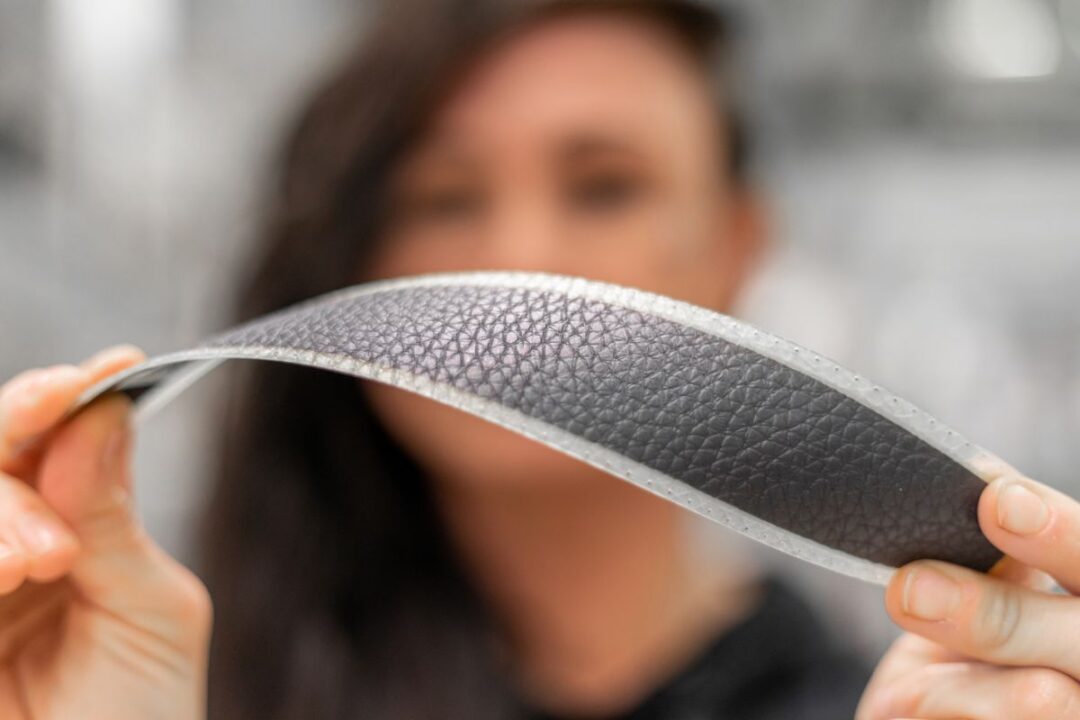
Discover How Flexible And Durable Solar Cells Harvest Energy From Any Light, Even From A Candle, Ending The Need For Batteries And Cables In Devices
Every year, 3.1 billion batteries are disposed of… just from TV remote controls. Getting our devices to charge themselves (whether with sunlight, artificial light, or even candlelight) would free us from the need to plug them in or change their batteries, making them much more sustainable and energy-efficient.
The Promise Of Exeger’s Powerfoyle
The Swedish company Exeger has developed flexible photovoltaic cells that promise to change our relationship with electronics: they are specialized in converting light from virtually all internal sources into electricity. Their creators compare the technology, capable of harnessing candlelight, to algae at the bottom of the ocean, where darkness is nearly total: “we can efficiently use just a few photons.”
“The Biggest Advance Since 1988”
Although photovoltaic cells have been in devices like calculators for over 50 years, this is “the biggest advance since 1988,” says Giovanni Fili, co-founder of Exeger.
-
Renewable energy advances over protected areas in Brazil, and a survey by the Energy Transition Observatory reveals silent impacts that challenge environmental conservation and pressure sensitive traditional territories.

-
Rio Grande do Sul accelerates energy transition: State invests in renewable technologies and consolidates decarbonization strategies and pathways to attract billions in new industrial investments.

-
With 160,000 m² of collectors, an area larger than 20 football fields, Silkeborg, in Denmark, hosts a solar thermal plant that heats 19,500 homes and could become the largest solar heating plant in the world.

-
A study reveals the expansion of renewable energy procurement in Brazil and shows how companies are taking advantage of opportunities to reduce expenses, ensure energy efficiency, and strengthen strategic environmental commitments.


He refers to the year when researchers at the University of California discovered how to produce low-cost flexible cells. However, they were too fragile and inefficient to be integrated into complex electronic devices like Bluetooth headphones.
A New Type Of Electrode For Energy Harvesting
Fili and his partner, Henrik Lindström, patented a new material with a conductivity one thousand times greater than standard electrodes (the component that allows for the collection and transport of electrical current in the photovoltaic cell).
In addition to being flexible, this skin-like material is resistant to water, dust, and impacts, making it suitable for modern electronic devices, ensuring efficiency and durability in energy harvesting.
A Long Way To Go
A technical document lowers expectations. For now, Powerfoyle cells deliver a voltage between 0.57 and 0.6 volts when exposed to light from 100 to 1000 lux (an LED with a color temperature of 5000K). The output power varies between 6 and 54 microwatts per square centimeter. Part of the problem is that the material produces a considerable shadow that reduces its efficiency. Powerfoyle is still not enough to recharge a smartphone completely, Exeger admits, but it can increase its battery life by 50%.
They Are Already Being Mass Produced
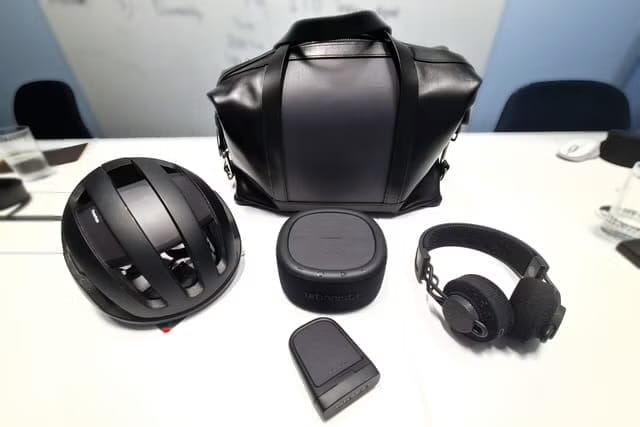
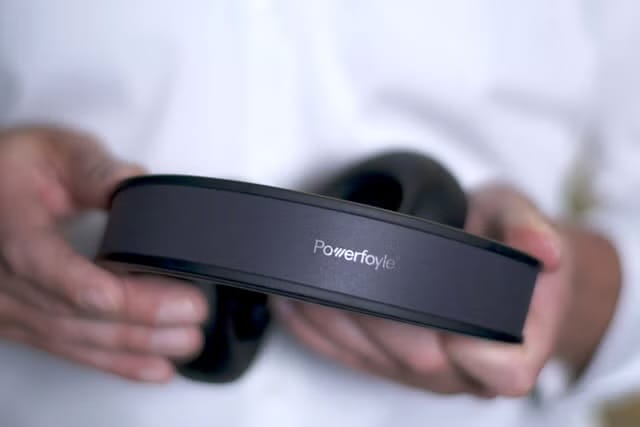
Exeger has been working on this invention for years and already has the capacity to produce 2.5 million square meters of Powerfoyle film per year, which is printed with a “ultra-secret” machine. The first generation is already ready to hit the market in products like headphones, wireless speakers, and a bicycle helmet. Among its clients are Philips, Marshall, Kapsch, and Adidas. The company hopes to reach one billion people by 2030 one way or another.
More Information | Exeger










Seja o primeiro a reagir!