





 Portuguese
  English
  Spanish
  3 min of reading
  0 comments


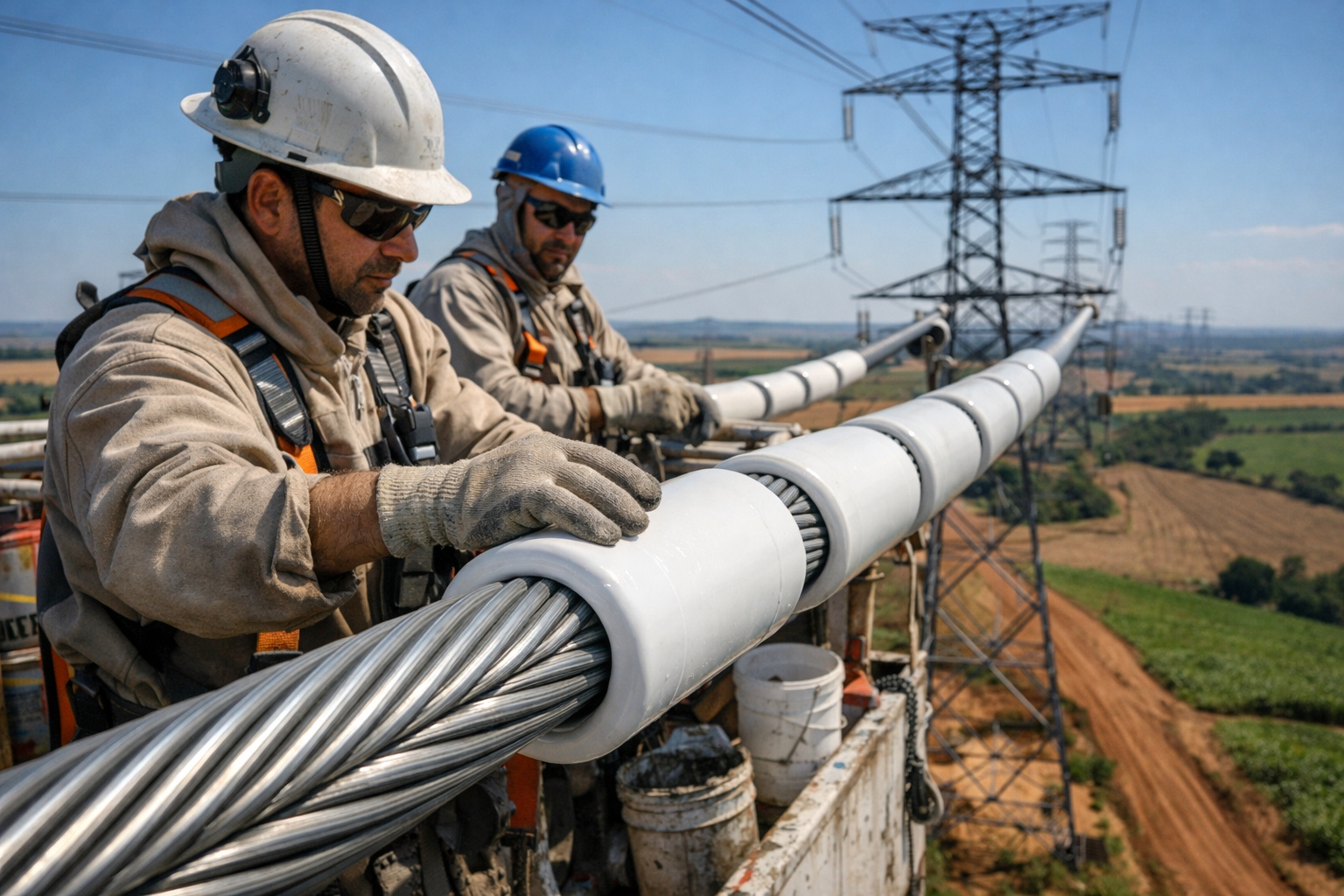
Innovative Ceramic Coating Increases Cable Capacity, Reduces Heating, and Strengthens National Electric Infrastructure
The electric power sector in Brazil may undergo a new technological transformation. The so-called E3X Technology has entered the testing phase in the interior of São Paulo and promises to increase transmission capacity without requiring new towers or conductor replacements.
Specialized portals in the energy sector have announced the news based on technical information provided by the companies involved in the project, such as Prysmian Brazil and ISA Energy Brazil.
Currently, the national electric system faces growing demand, expansion of renewable sources, and structural limitations. However, physically expanding the network requires high investment, complex environmental licensing, and lengthy timelines. Therefore, solutions that enhance the efficiency of the existing structure gain strategic relevance.
-
Renewable energy advances over protected areas in Brazil, and a survey by the Energy Transition Observatory reveals silent impacts that challenge environmental conservation and pressure sensitive traditional territories.

-
Rio Grande do Sul accelerates energy transition: State invests in renewable technologies and consolidates decarbonization strategies and pathways to attract billions in new industrial investments.

-
With 160,000 m² of collectors, an area larger than 20 football fields, Silkeborg, in Denmark, hosts a solar thermal plant that heats 19,500 homes and could become the largest solar heating plant in the world.

-
A study reveals the expansion of renewable energy procurement in Brazil and shows how companies are taking advantage of opportunities to reduce expenses, ensure energy efficiency, and strengthen strategic environmental commitments.


How E3X Technology Works in Practice
E3X Technology applies a thin ceramic coating directly to the surface of transmission cables. This material improves thermal dissipation and allows the conductor to operate with greater stability.
Firstly, the coating increases the thermal emissivity of the cable. In other words, the conductor releases heat more efficiently into the environment. As a consequence, it operates at more balanced temperatures, even under high electrical load.
Furthermore, the technology reduces the impacts of the Joule effect, a phenomenon that occurs when electrical current encounters resistance in the cable and generates heating. This overheating compromises energy efficiency and can accelerate the wear and tear of the structure.
With better thermal control, the cable transports more energy without exceeding operational limits. Thus, companies can expand transmission without building new towers and without replacing conductors.
Tests on 138 kV Line Between Porto Primavera and Rosana

The technical teams are conducting tests between the municipalities of Porto Primavera, where the Porto Primavera Hydroelectric Plant operates, and Rosana, located 366 kilometers from the state capital.
The analyzed section consists of 350 meters of cables and operates at 138 kV, a level considered high electrical load. This condition allows for the assessment of the technology’s performance in a real thermal stress scenario.
Prysmian Brazil leads the project in partnership with ISA Energy Brazil. The companies aim to prove, in practice, that the ceramic coating improves performance without altering the physical structure of the line.
Should the results confirm the efficiency gains, the companies will submit the proposal for analysis by the National Electric Energy Agency (ANEEL). The agency will assess the regulatory feasibility before authorizing any application on a commercial scale.
Strategic Impact on the Brazilian Electric System
If ANEEL approves the technology, the sector could increase capacity without investing in new physical structures. This reduces costs, accelerates projects, and minimizes environmental impacts.
Additionally, Brazil is experiencing strong expansion of solar and wind sources. These plants require greater energy flow capacity. Therefore, solutions that enhance the efficiency of the existing network help integrate new sources into the National Interconnected System.
On the other hand, the technology still needs to demonstrate consistent technical performance. Only after regulatory validation will the market be able to adopt the system on a large scale.
Nonetheless, E3X Technology already represents an important step in modernizing the electric infrastructure. By combining materials engineering, thermal efficiency, and operational optimization, it paves the way for a smarter model of electric energy transmission in Brazil.
Do you believe that technologies like E3X can reduce costs and prevent the construction of new towers in Brazil?










-

-

-

-

8 pessoas reagiram a isso.