





 Portuguese
  English
  Spanish
  4 min of reading
  0 comments



Scientists Create Ultra-Thin Coating That Turns Any Surface Into Solar Energy Generator
Imagine if the roof of your car, the cover of your phone, or even the facade of your house could generate solar energy without the need for traditional solar panels. This is exactly what a group of researchers from the University of Oxford is making possible. With an ultra-thin and flexible coating, applied like paint, they have opened a new path in energy innovation. And this technology could change everything we know about harnessing the sun.
A New Way To Generate Solar Energy, Without Taking Up Large Areas Of Land
The world is racing against time to reduce carbon emissions and avoid the worst of climate change. But one of the barriers to solar energy has always been space: giant solar farms occupy valuable areas, often generating conflict with agricultural activities.
Now, with this new technology based on ultra-thin coating, this could change. The material developed in Oxford is less than one micron thick, meaning it is 150 times thinner than a conventional silicon wafer used in solar panels. And the best part: it is so versatile that it can be applied through inkjet printing on almost any surface.
-
Millions of people have been eating yam for centuries without knowing that this humble tuber contains a compound called diosgenin, which scientists have now discovered can improve memory and help control blood sugar levels.

-
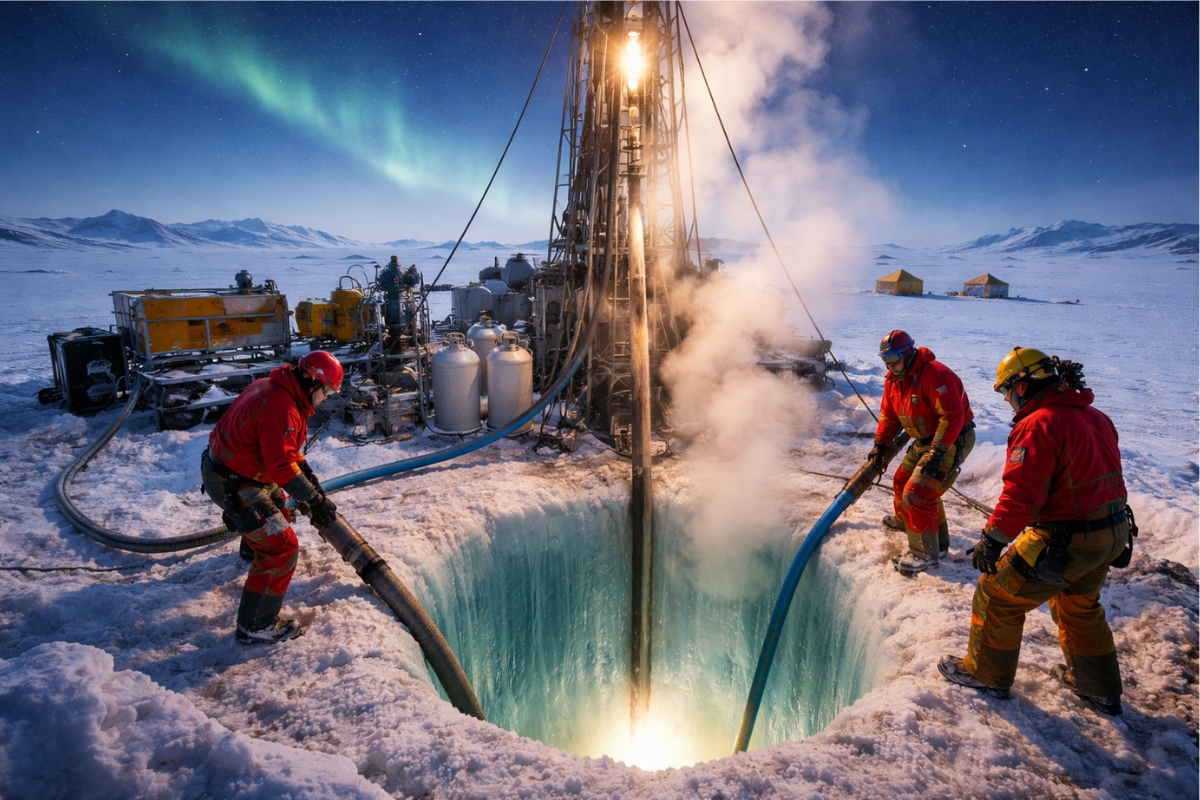
Scientists from an international project drill 1,800 meters of ice in Antarctica using hot water and discover details about one of the most intriguing places on planet Earth.
-
Seen from space, a colossal volcano nearly 5,000 meters high in Russia has released 1,600 km of smoke over the Pacific, forming “devil’s horns” of lava and revealing the brutal force of the Ring of Fire.

-
Expedition 501: Scientists drill into the ocean floor and discover a giant reserve of fresh water hidden beneath the sea, extracting nearly 50,000 liters and revealing an invisible system that could reshape the map of water scarcity.


Instead of needing hectares of land to install panels, it would be possible to generate energy directly in everyday objects. Isn’t that a revolution?
Inside The Technology: The Power Of Perovskites
The secret to this innovation lies in the so-called perovskites, materials that are already considered the next big bet in solar energy. They can capture a much broader range of light than silicon, making them incredibly efficient.
Today, the Oxford coating already achieves an efficiency of 27% — surpassing the about 22% achieved by the best silicon solar panels. And scientists believe that, with further advances, this efficiency could surpass 45% in the future.
This evolution is impressive: just five years ago, perovskite coatings had an efficiency of only 6%. “We can envision perovskite coatings being applied to a broader range of surfaces to generate cheap solar energy, like car roofs and buildings, and even the backs of phones,” explained Junke Wang, one of the scientists in the research, in an interview with CNN.
The Solar Energy Boom Drives New Solutions
According to data from Wood Mackenzie, solar energy installations grew 80% in 2023 compared to the previous year. It was the 19th consecutive year in which solar energy led the growth of global electricity generation, according to Ember’s Global Electricity Review 2024.
One of the main drivers of this growth is the decrease in technology costs: generating solar energy is now cheaper than any other type of energy, including fossil fuels.
But the challenge of land usage still exists. Solar parks need a lot of space, which creates disputes with the agricultural sector. The Oxford team believes that their ultra-thin coating could help reduce this need.
“We do not want to eliminate solar parks, as we need many surfaces to generate a sufficient amount of solar energy,” Wang emphasizes. But applying the coating to objects and buildings could complement these large power plants.
A Challenge Ahead: Increasing Durability
Although promising, the technology still faces a significant obstacle: stability. Some perovskite formulations tested in the lab degrade quickly, hindering mass commercialization.
That’s why scientists are focused on improving the durability of the material. “The latest innovations in materials and solar techniques demonstrated in our labs could become a platform for a new industry, manufacturing materials to generate solar energy more sustainably and cheaply, using existing buildings, vehicles, and objects,” said Henry Snaith, the chief researcher of the Oxford team and founder of Oxford PV, which has already started manufacturing perovskite panels at scale in Germany.
What Can We Expect Going Forward?
If durability issues are overcome, we could be facing a new era of solar energy. The use of ultra-thin coatings that can be applied through inkjet printing opens up a range of possibilities for integrating solar technology into our daily lives in an invisible and efficient manner.
Building facades, car roofs, phones, and even packaging could soon generate energy. This could radically transform the way we think about energy generation and consumption.
Meanwhile, the solar energy market continues to expand. And every innovation like this brings the world closer to the goal of a cleaner and more sustainable future.
Now we want to hear your opinion! Do you believe that this energy innovation will really transform the solar market? Leave your comment below or share this article with your friends!









Seja o primeiro a reagir!