





 Portuguese
  English
  Spanish
  4 min of reading
  0 comments


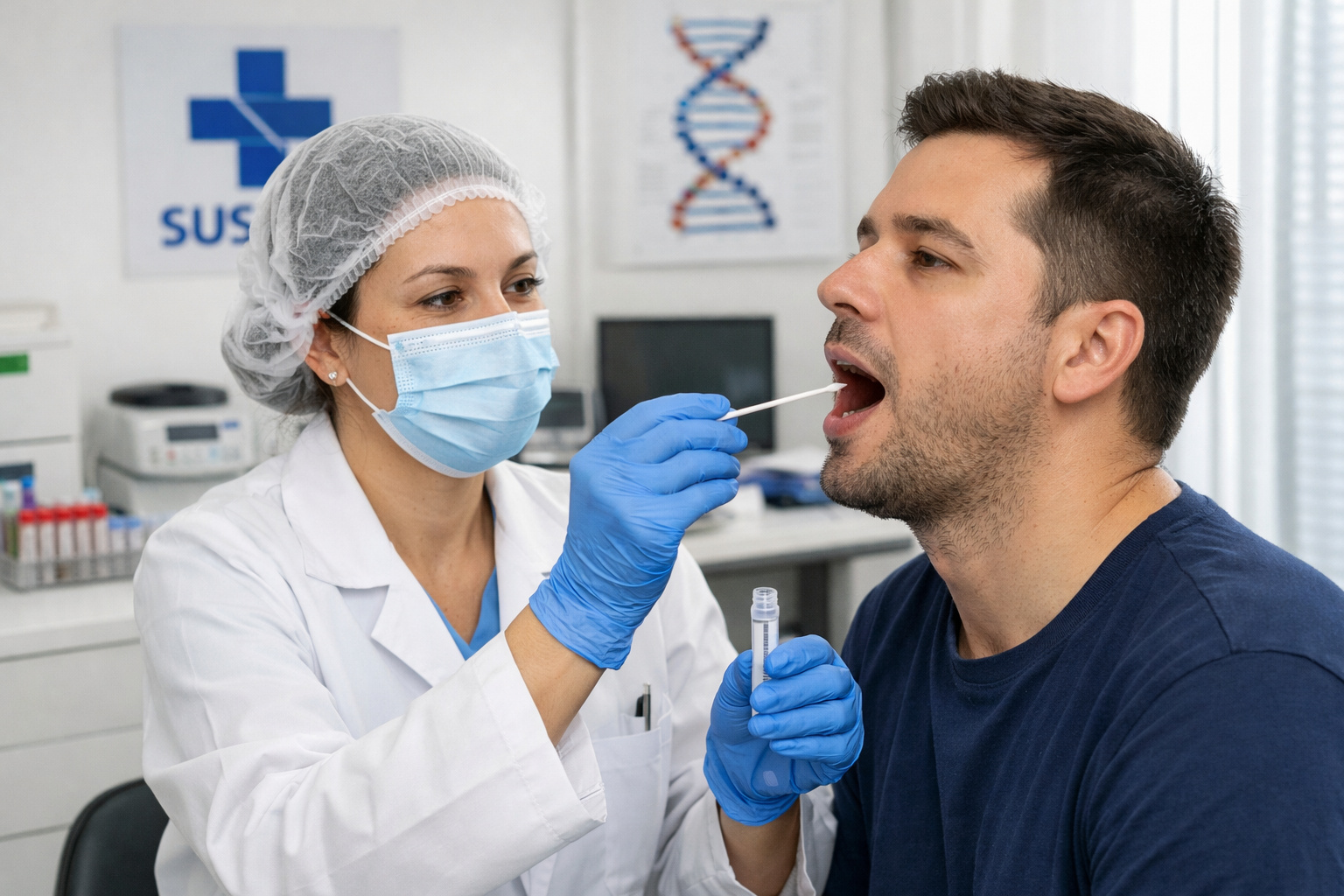
Complete DNA Sequencing Enters The Public Network And Can Benefit Up To 20 Thousand Brazilians Per Year
The Unified Health System (SUS) begins a new phase in addressing rare diseases in Brazil. From now on, the public network offers complete DNA sequencing, a technology that promises to reduce the average diagnostic time from seven years to just six months. Furthermore, the Ministry of Health estimates that the platform could handle up to 20 thousand requests per year nationwide.
Currently, at least 13 million Brazilians live with rare diseases. Therefore, speeding up the diagnosis means not only anticipating treatment, but also improving the quality of life for millions of families. In this context, the announcement made this Thursday (26), in Brasília, represents a structural advance for public health.
The information was disclosed by “Agência Brasil,” which detailed the investments and goals of the new complete exome sequencing platform in SUS.
-
Motorola launched the Signature with a gold seal from DxOMark, tying with the iPhone 17 Pro in camera performance, Snapdragon 8 Gen 5 that surpassed 3 million in benchmarks, and a zoom that impresses even at night.

-
Satellites reveal beneath the Sahara a giant river buried for thousands of kilometers: study shows that the largest hot desert on the planet was once traversed by a river system comparable to the largest on Earth.

-
Scientists have captured something never seen in space: newly born stars are creating gigantic rings of light a thousand times larger than the distance between the Earth and the Sun, and this changes everything we knew about stellar birth.

-
Geologists find traces of a continent that disappeared 155 million years ago after separating from Australia and reveal that it did not sink, but broke into fragments scattered across Southeast Asia.

Examination That Costs Up To R$ 5 Thousand Now Offered For R$ 1.2 Thousand
During the event, Health Minister Alexandre Padilha confirmed that SUS will now offer complete exome sequencing, an examination that can cost up to R$ 5 thousand in the private network. However, with public investment, the system will provide the exam for approximately R$ 1.2 thousand.
According to the coordinator of rare diseases at the ministry, Natan Monsores, the government invested R$ 26 million in this first year to enable the technology. Thus, SUS expands access to a high-complexity examination at a significantly lower cost.
In addition to the cost reduction, the tool increases diagnostic accuracy. Consequently, geneticists, neurology, and pediatrics teams will have a more efficient instrument for finalizing complex diagnoses.
The material collection occurs simply. Firstly, the professional uses a swab on the inside of the cheek to collect cells. Alternatively, the exam can also be performed using a blood sample. Then, the laboratories conduct the complete sequencing.
According to the ministry, any patient being treated at a reference service or identified in neonatal screening can be referred to the sequencing hubs. Thus, the system broadens the reach of the technology.
Network Already Operates In 11 States And Should Reach The Entire Country By April 2026


Currently, 11 states have already activated the services. Additionally, just 90 days after the initial implementation, teams conducted 412 tests and completed the sequencing of 175 reports.
The Ministry of Health intends to expand the network to all states by April 2026. Thus, the strategy aims to decentralize access and reduce regional inequalities.
Simultaneously, Padilha signed the authorization for new services focused on treating rare diseases. Furthermore, the minister highlighted that next Saturday marks World Rare Disease Day, emphasizing the importance of the measure.
Another relevant announcement involves gene therapy for children with spinal muscular atrophy (SMA). This is a condition that can be lethal if not treated in a timely manner. According to the minister, all children who received the therapy halted the progression of the disease.
Organizations Celebrate Advances But Demand Promotion And Strengthening
During the event, Maria Cecília Oliveira, president of the Association of Families, Friends and People with Severe, Rare Diseases, and Disabilities, celebrated the advances in public policies. However, she also emphasized the need to ensure real impact for patients.
In turn, Lauda Santos, president of Amaviraras and co-founder and vice-president of Febrararas, highlighted that the government needs to increase the promotion of the new technology. According to her, many patients are still unaware of the available services.
Moreover, Lauda stressed that strengthening representative entities remains essential. She also lamented the high tax burden on medications, which continues to hinder access to treatment.
Given this scenario, the investment of R$ 26 million, the capacity to serve up to 20 thousand people per year, and the goal of expansion by April 2026 indicate a structural change in the diagnostic policy for rare diseases in SUS.
Therefore, if the execution occurs as planned, Brazil could shorten a wait that previously lasted seven years to just six months — a breakthrough that could redefine the future of public health for millions of Brazilians.
Do you believe that this new SUS technology can change the lives of millions of Brazilians waiting for a diagnosis for years?








-

-

2 pessoas reagiram a isso.