





 Portuguese
  English
  Spanish
  3 min of reading
  1 comment


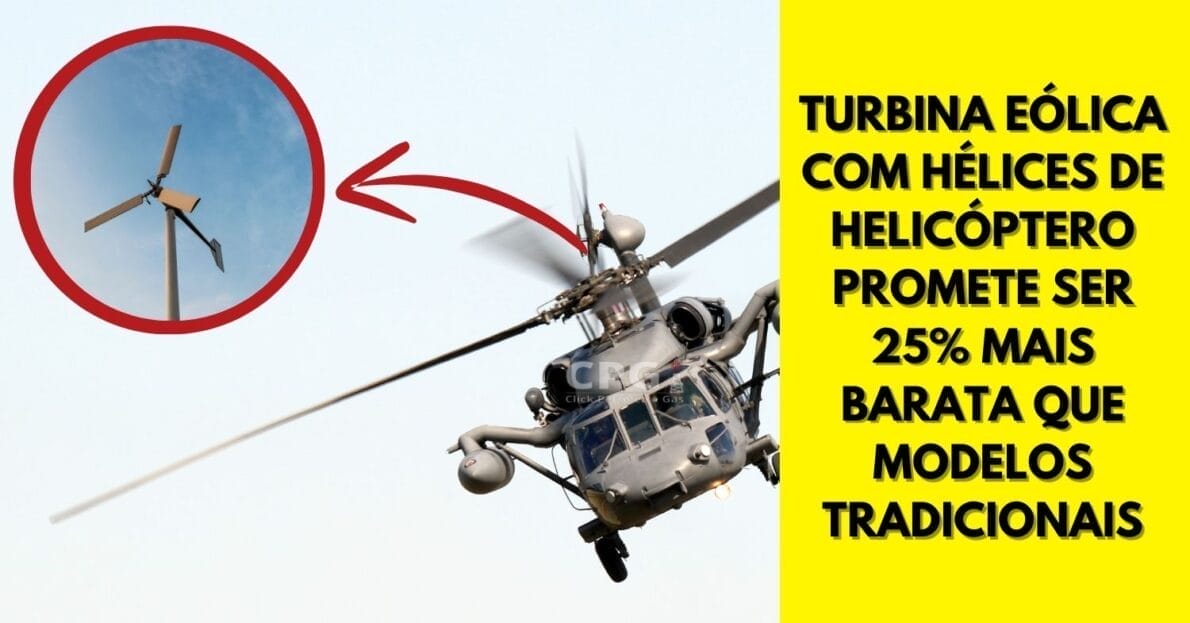

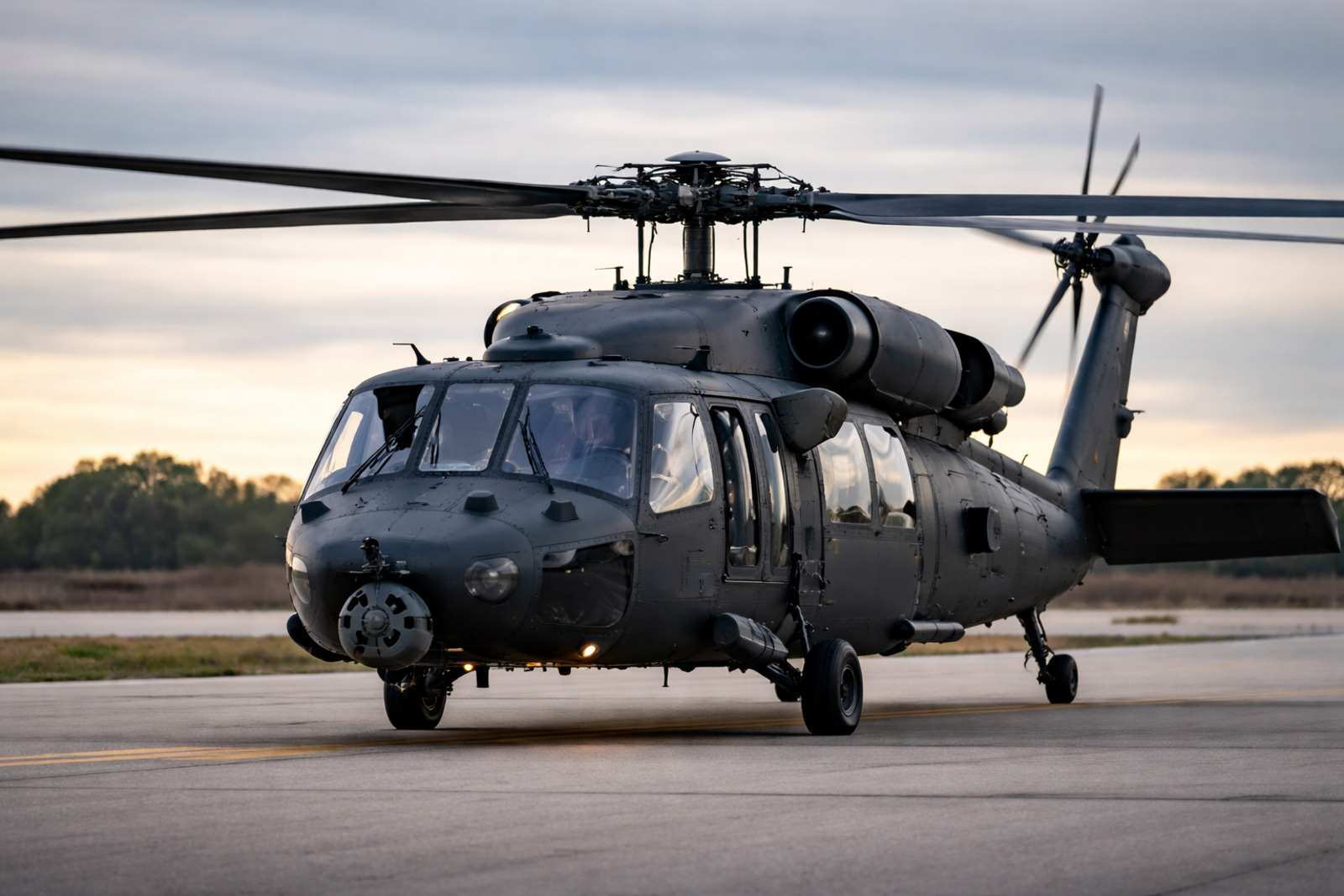
New Wind Turbine Technology With Helicopter Blades Revolutionizes The Sector. Understand The Benefits And Differentials This Model Brings To The Renewable Energy Market.
Wind turbines are undergoing a revolutionary transformation. A Swedish company is innovating with a floating system made up of 126 small turbines. At the same time, a Dutch company is exploring helicopter blade technology to reinvent the design of wind generators. These innovations promise to elevate the efficiency of renewable energy to a new level.
New Technology Developed For The Wind Energy Market Has Been In Development For Almost Half A Century
The manufacturer Seawind Ocean Technologies has developed a new two-blade wind turbine that is 25% cheaper to install and operate than the conventional three-blade model, but that essentially produces the same amount of energy.
Designed to be installed offshore, where the wind tends to be stronger and more consistent, the first turbine with helicopter blades is scheduled for 2024, bringing to light a technology developed nearly 50 years ago.
-
Renewable energy advances over protected areas in Brazil, and a survey by the Energy Transition Observatory reveals silent impacts that challenge environmental conservation and pressure sensitive traditional territories.

-
Rio Grande do Sul accelerates energy transition: State invests in renewable technologies and consolidates decarbonization strategies and pathways to attract billions in new industrial investments.

-
With 160,000 m² of collectors, an area larger than 20 football fields, Silkeborg, in Denmark, hosts a solar thermal plant that heats 19,500 homes and could become the largest solar heating plant in the world.

-
A study reveals the expansion of renewable energy procurement in Brazil and shows how companies are taking advantage of opportunities to reduce expenses, ensure energy efficiency, and strengthen strategic environmental commitments.


In 1873, when the world was experiencing an oil crisis, the NASA commissioned helicopter pioneer Glidden Doman to develop a system that could be replicated at scale. Doman, who later became a co-founder of Seawind, presented a unique idea: to take advantage of the rotation system used in helicopters to introduce a new two-blade wind turbine technology and an intelligent mechanism called “oscillating hinge.”
Three wind energy turbines like this were produced, and one was installed on the Mediterranean island of Sardinia, but five years later, the program was canceled due to a lack of funding and urgency, as oil prices returned to normal levels in the 1990s. Other large dual-blade turbines were also installed, but all failed due to oscillation problems.
Understand The Functioning Process Of The Wind Turbine 25% More Accessible Than Traditional Models
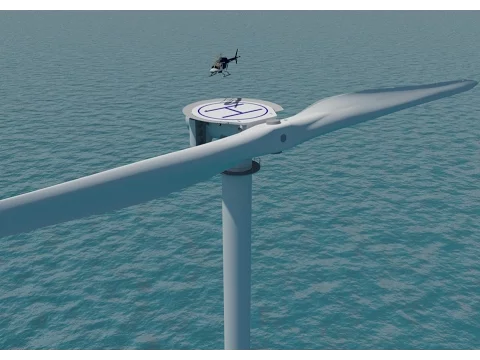

The goal of a wind energy turbine is very simple; it harnesses the wind to generate as much electrical energy as possible. For this, turbines must follow its direction and adjust their exposure depending on the speed. When the wind is very strong, as happens offshore, the blades of a conventional turbine tend to spin around their own axis to reduce the impact of the wind.
The helicopter blade wind turbine system developed by Seawind, rotates the “head” of the turbine in the same way a sunflower does. A coupled hinge system helps the rotor inside the head to oscillate or tilt a few degrees.
According to Vincent Dewulf, CEO of Seawind, the rotor is like a sailboat sail that you need to adjust as the wind changes. A radar on top measures wind speed and directs the rotation accordingly.
All of this helps reduce the need for the pitch mechanism, which is complex, expensive, and one of the main causes of failures in traditional wind energy turbines. That’s why, according to the executive, the company can generate power at a 25% lower cost than other turbines while producing the same amount as a three-blade turbine with a similar diameter.
Dewulf Explains The Reason For The 5 Meter Lengthening Of Turbines
To compensate for the fewer number of blades, Dewulf explains that they increased their length by 5 meters. The helicopter blade wind turbine system developed by the company brings several advantages. They can rotate faster as there is less air resistance.
With one less blade, installation becomes cheaper and easier, and due to having fewer moving parts and simpler mechanisms, its maintenance is also reduced. According to the executive, when operating offshore, having to perform frequent maintenance is a problem.
So far, Seawind has raised 2.8 million euros to develop the first turbine, although Dewulf says the company is on its way to raising another 55 million euros to fund certifications, simulations, and the construction of the turbine itself.






Helicópteros não têm hélices; possuem asas rotativas. Foi um grande erro no título e no corpo da matéria.
Mas a ideia parece boa.