





 Portuguese
  English
  Spanish
  3 min of reading


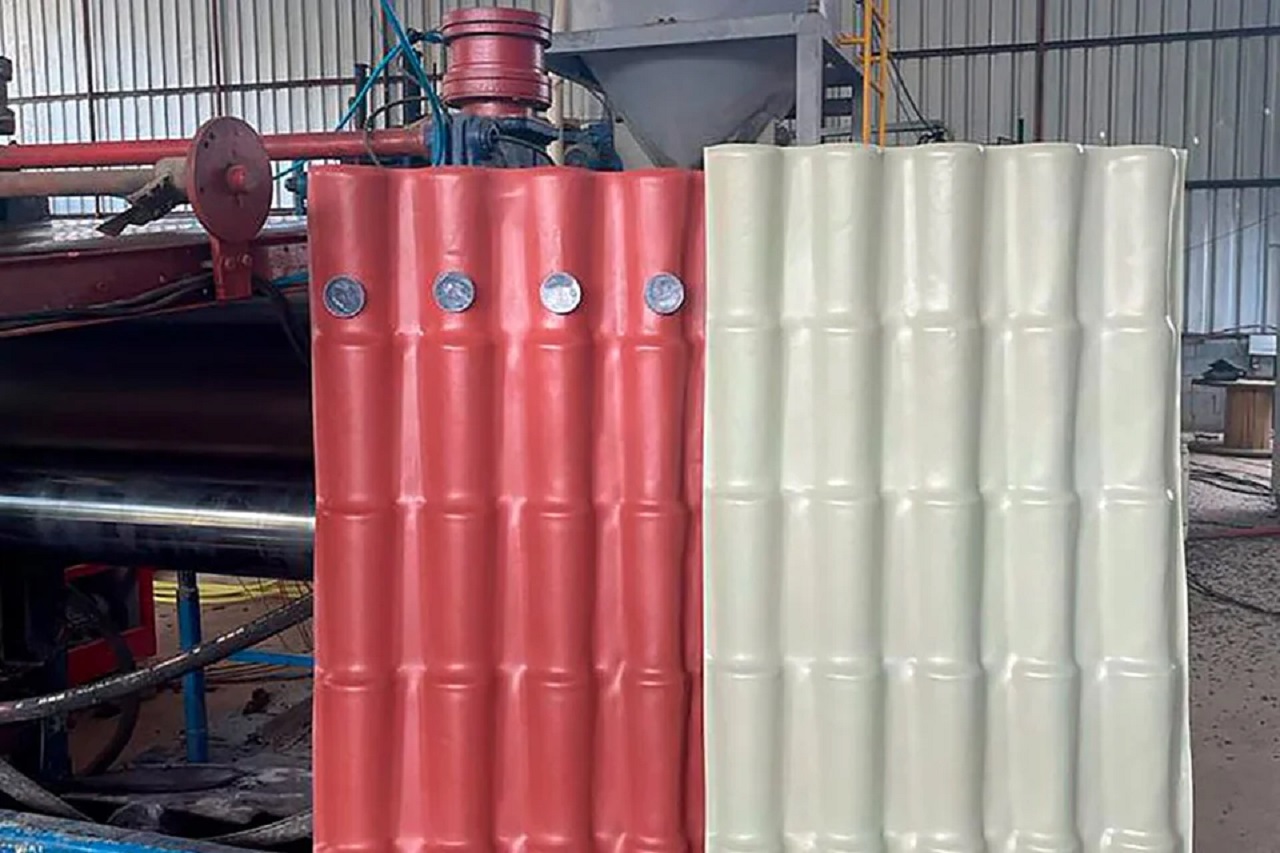
The Carioca Company Telite Developed New Solar Roof Tiles Using Graphene. The Graphene Roof Tiles Are Capable of Generating Significant Savings on Electricity Bills, and Just Four Units Can Supply Half of the Consumption of a Brazilian Household
Telite, a company operating in the interior of Rio de Janeiro, is proposing the recycling of plastic for the production of solar roof tiles. The company currently sells around 25,000 tiles per month and has recently launched a new product on the market: graphene roof tiles that can generate solar energy. This roof tile can convert sunlight into electrical energy. Thus, its construction becomes self-sufficient, providing significant savings on electricity bills.
With Just Four Graphene Roof Tiles, a Household Can Generate 30 kW
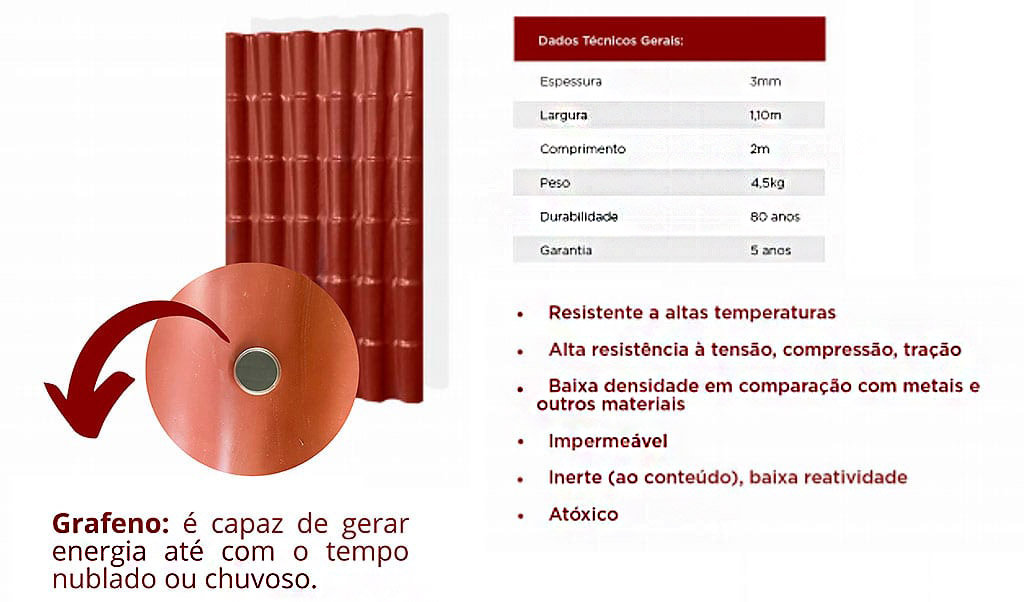
The solar tile is made from high-density polyethylene and is composed of graphene. It was through this material that the company managed to ensure that four tiles could generate 30 kW per month in a medium-sized house.
-
Renewable energy advances over protected areas in Brazil, and a survey by the Energy Transition Observatory reveals silent impacts that challenge environmental conservation and pressure sensitive traditional territories.

-
Rio Grande do Sul accelerates energy transition: State invests in renewable technologies and consolidates decarbonization strategies and pathways to attract billions in new industrial investments.

-
With 160,000 m² of collectors, an area larger than 20 football fields, Silkeborg, in Denmark, hosts a solar thermal plant that heats 19,500 homes and could become the largest solar heating plant in the world.

-
A study reveals the expansion of renewable energy procurement in Brazil and shows how companies are taking advantage of opportunities to reduce expenses, ensure energy efficiency, and strengthen strategic environmental commitments.

According to the company, if the household uses these four solar roof tiles, it could become self-sufficient in electricity generation, providing a significant savings on electricity bills. However, if the number of graphene roof tiles in the house exceeds the consumption and there is surplus electricity, it can be sold to the local utility. The advantages are numerous, and the company also guarantees that its solar tiles can last over 70 years.

According to the manufacturer, in addition to savings on electricity bills, the graphene roof tiles can last up to 80 years and are produced to serve a diverse audience. According to the CEO of the company, Leonardo Retto, the goal of the company was to create a technology capable of reaching all social classes, ensuring the possibility of providing renewable and sustainable energy to places that are still lacking electricity in Brazil.
How Are Graphene Solar Roof Tiles Produced?


According to Telite, its graphene roof tiles are produced with HDPE, that is, a category of high-density polyethylene. HDPE is a polymer from the polyolefin family.
The thermal and mechanical structure of these tiles makes them more durable than regular ones. It is worth noting that the tiles are much easier to install.
It is important to highlight that graphene seems to be one of the most promising materials for creating new technologies across a wide range of industries. Invented in 2004, the material earned Konstantin Novoselov and Andre Geim the Nobel Prize in Physics. Its main characteristics are its lightness, stiffness, good electrical conductivity, and impermeability.
Benefits of Using Solar Roof Tiles
The graphene roof tile, in addition to savings on electricity bills, generates various benefits such as the production of clean and sustainable energy, the ability to generate energy self-sufficiency, durability, easy installation, and maintenance, as well as being an eco-friendly and accessible roof tile for everyone.
In order for the project to become viable, Telite faced several obstacles. One of them was finding a supplier for the graphene used in the composition of the new technology.
After finding a partner, the company raised around R$ 9 million for the tiles to be produced on a large scale. According to the company executive, Telite’s concern at this moment is to ensure that a large production reaches the market. Until last year, the company was in talks with graphene producers and, until then, there was no place capable of supplying the material on a large scale, given that the extraction of this material still has a high cost in the country.









Seja o primeiro a reagir!