





 Português
  Inglês
  Espanhol
  3 min de leitura
  1 comentário


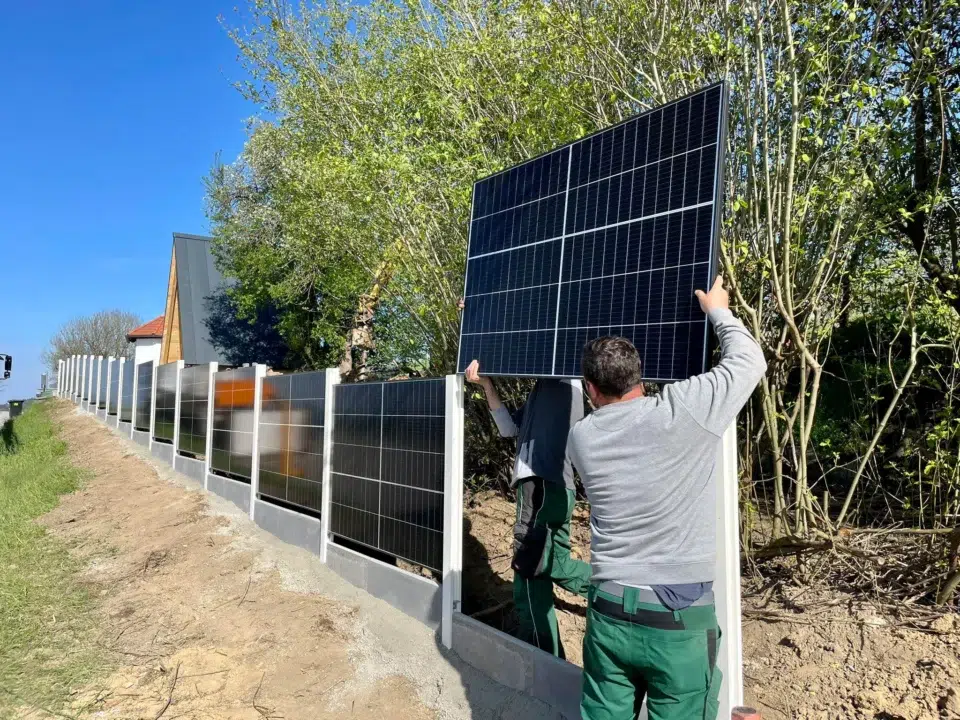

Although Using Solar Panels as Walls May Capture Less Light Than When Installed on the Roof, the Significantly Lower Installation Cost Has Made This Option Attractive to Many
In recent years, we have witnessed a true turnaround in the solar energy market. What was once seen as an extremely expensive alternative energy option has now become affordable enough for solar panels to be used not only on rooftops but also as true walls in homes across Europe.
This phenomenon is particularly notable in countries like the Netherlands and Germany, where the drastic drop in prices has completely transformed the urban and rural landscape.
Price Reduction of Solar Panels in Brazil
In recent years, Brazil has witnessed a significant drop in solar panel prices, making this renewable energy source increasingly accessible and attractive to consumers. This price reduction is mainly attributed to the increase in production capacity, especially in China, which dominates about 90% of the global solar panel market.
-
Renewable energy advances over protected areas in Brazil, and a survey by the Energy Transition Observatory reveals silent impacts that challenge environmental conservation and pressure sensitive traditional territories.

-
Rio Grande do Sul accelerates energy transition: State invests in renewable technologies and consolidates decarbonization strategies and pathways to attract billions in new industrial investments.

-
With 160,000 m² of collectors, an area larger than 20 football fields, Silkeborg, in Denmark, hosts a solar thermal plant that heats 19,500 homes and could become the largest solar heating plant in the world.

-
A study reveals the expansion of renewable energy procurement in Brazil and shows how companies are taking advantage of opportunities to reduce expenses, ensure energy efficiency, and strengthen strategic environmental commitments.


In 2023, the average price of solar panels dropped by around 40%, making solar energy an economically viable option for both homes and businesses. For example, the price of a 3kW solar kit, which cost R$ 23.4 thousand in 2017, fell to approximately R$ 13 thousand in 2024. This decrease in initial installation costs significantly reduces the payback period, estimated at about 40 months for a household with an average consumption of R$ 500 monthly.
The adoption of photovoltaic systems is rapidly growing in Brazil, driven by both economic benefits and the desire for greater comfort and energy independence. Installing solar panels allows consumers to generate their own electricity, reducing reliance on traditional sources and stabilizing energy costs in the long run.
Moreover, solar energy has significantly contributed to the Brazilian energy matrix. In 2023, the country added 7.4 GW of installed solar power, accounting for 16.3% of the electric matrix. This growth is supported by favorable policies and ongoing investments in photovoltaic infrastructure, which totaled over R$ 36 billion in 2023. Terra Brasil Notícias.
Solar Panels as Walls: A Creative Solution for Energy Generation
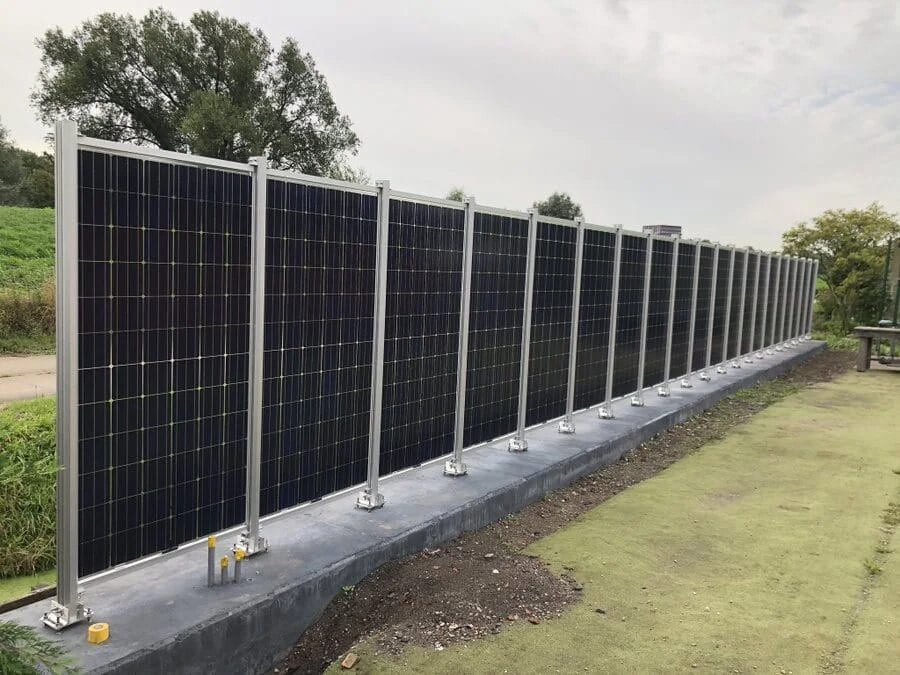
Although using solar panels as walls may capture less light than when installed on the roof, the significantly lower installation cost has made this option attractive to many. This innovative format not only serves as a physical barrier but also as a sustainable energy source, marking the beginning of a new era in solar energy utilization.
Despite the progress, the installation of solar panels still faces challenges, such as rising labor costs and delays in grid connections, testing the patience of homeowners and suppliers. Additionally, the limited capacity of the grid in some areas emerges as a problem that requires innovative and agile solutions.
The Bright Future of Solar Energy
With the International Energy Agency predicting that solar power supply will reach 1,100 gigawatts globally by the end of 2024, the future looks promising. This exponential growth reflects not only technological advancement but also a shift in global perception regarding the importance of renewable energy.
In Europe, where the imbalance between supply and demand has created economic problems for the sector, the European Commission has promised to assess unfair practices and improve manufacturers’ access to European Union funds. This demonstrates a commitment to adjusting and optimizing the solar energy market, ensuring that it continues to thrive.
An Era of Accessibility and Sustainability
The dramatic drop in solar panel prices and their adoption in creative forms such as walls demonstrate the flexibility and potential of solar energy. As we overcome technical and economic challenges, we move towards a future where clean and sustainable energy is not only a possibility but an accessible reality for all. Solar energy, now cheaper and more versatile than ever, is ready to play a central role in the global energy transition, proving that the sun is truly for everyone.










Os paineis utilizados em cercas sao fabricados exclusivamente para cercas e nao que estejam utilizando paineis de telhados para fazer isso, sou pioneiro no ramo como importador e distribuidor visitando fabricantes da China.