





 Portuguese
  English
  Spanish
  3 min of reading
  0 comments


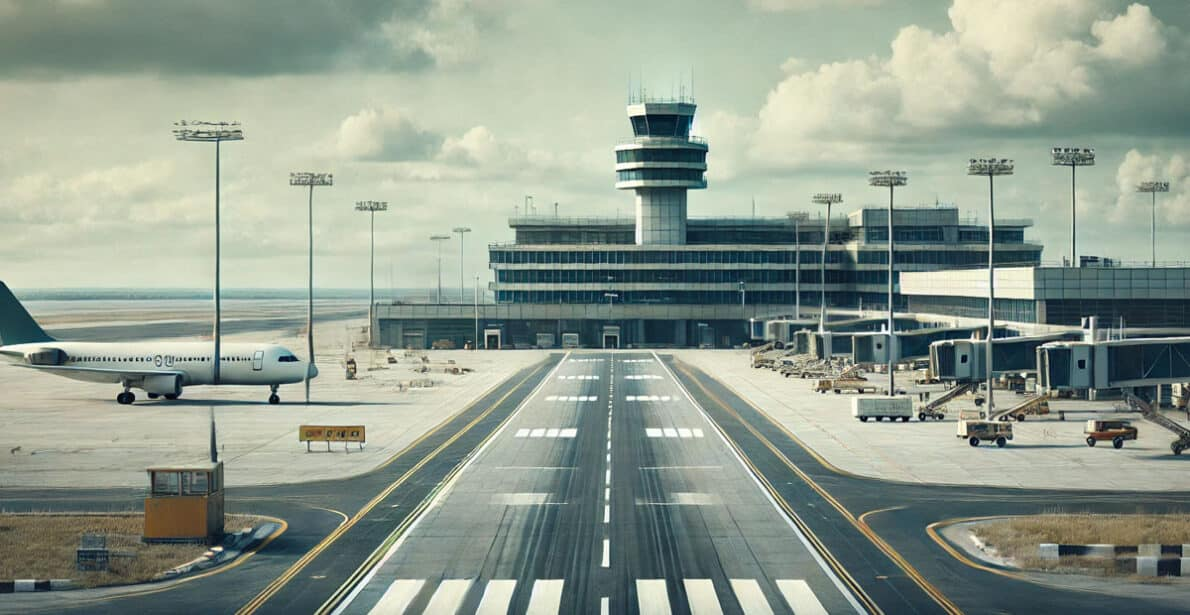
Colossal International Airport Will Not Only Receive 185 Million Passengers, But Will Also Create Thousands of Jobs and Boost the Local Economy.
An audacious step toward the future of aviation has been taken with a grand-scale project that promises to transform global air transport.
Planned to open its doors in 2030, the airport stands out as an innovative “aerotropolis,” designed to go beyond a conventional airport and redefine the passenger experience. But what makes this project so special?
According to reports, the new airport will be one of the largest logistics hubs in the world, prepared to accommodate up to 180 million passengers in the coming years and encourage international trade and tourism.
-
A new Brazilian shopping center worth R$ 400 million will be built in an area equivalent to more than 4 football fields, featuring 90 stores, 5 cinemas, a supermarket, a college, and parking for 1,700 cars, potentially generating 3,000 jobs.

-
Larger than entire cities in Brazil: BYD is building a 4.6 km² complex in Bahia with a capacity for 600,000 vehicles per year, but the discovery of 163 workers in conditions analogous to slavery has shaken the entire project.

-
With an investment of R$ 612 million, a capacity to process 1.2 million liters of milk per day, Piracanjuba inaugurates a mega cheese factory that increases national production, reduces dependence on imports, and repositions Brazil on the global dairy map.

-
Brazilian city gains industrial hub for 85 companies that is equivalent to 55 football fields.

It is estimated that the airport will generate around 15,000 jobs, bringing economic development and opportunities for Saudis and reinforcing the strategy to make Riyadh, in Saudi Arabia, a city of global influence.
With 57 square kilometers of area, the project goes beyond runways: it includes residential zones, leisure areas, and an integrated experience designed to transform the relationship between passengers and the airport space.
This colossal construction, designed by Foster + Partners, is expected to become a reference in the field, with infrastructure designed to facilitate quick connections and a design that resonates with the rich Saudi culture.
Cultural Design and Innovation in Every Detail
The King Salman Airport project is not just functional; it seeks to immerse visitors in an experience that blends modernity and Saudi tradition.
Inspired by developments such as Mukaab, Epicon, Jeddah, and The Line, the airport has been conceived to highlight the cultural identity of the country, with spaces and designs that evoke Saudi history, while utilizing cutting-edge technology to provide fast and comfortable navigation.
The idea is for the airport to be more than just a point of arrival or departure: it should serve as a meeting point between cultures, enhancing Saudi Arabia’s position in the global aviation market.
The proposal is for the King Salman International Airport to eventually serve 185 million travelers by 2050, solidifying Riyadh as one of the main cities connected to the world.
Economic and Social Impact of the Airport
The construction of the airport is part of a strategy aimed at transforming Riyadh into one of the ten most influential economic centers globally.
According to the Saudi Press Agency, the initiative aligns with the planned population growth for the city, which is expected to reach between 15 to 20 million inhabitants by 2030.
This ambitious project reinforces Saudi Arabia’s commitment to modernization, encouraging foreign investment and expanding the country’s transportation infrastructure.
In the long term, it is expected that Riyadh’s aerotropolis will also be a driver for other industries, attracting companies and investors and establishing Riyadh as an economic hub.
Moreover, the airport is expected to be a starting point for the expansion of sectors such as tourism, commerce, and technology, transforming the city into a strategic point for the movement of people and goods internationally.
Other Inspiring Initiatives Around the World
Saudi Arabia’s vision is not isolated; it reflects a growing trend of airports playing economic, cultural, and technological roles beyond their basic functions.
The Foster + Partners office, responsible for the Riyadh project, also designs other grand works, such as the Red Sea International Airport in Saudi Arabia and the new CPK airport in Poland.
These initiatives exemplify a trend in airport design that prioritizes sustainability and passenger experience, considering both efficiency and comfort.
These ventures demonstrate that the airports of the future are not merely places for boarding and disembarking, but also cultural and economic connection hubs between different regions of the planet.
Together, these innovative projects represent a new era for air transport and highlight the growing importance of airports in the development of major cities.









Seja o primeiro a reagir!