





 Portuguese
  English
  Spanish
  5 min of reading
  0 comments


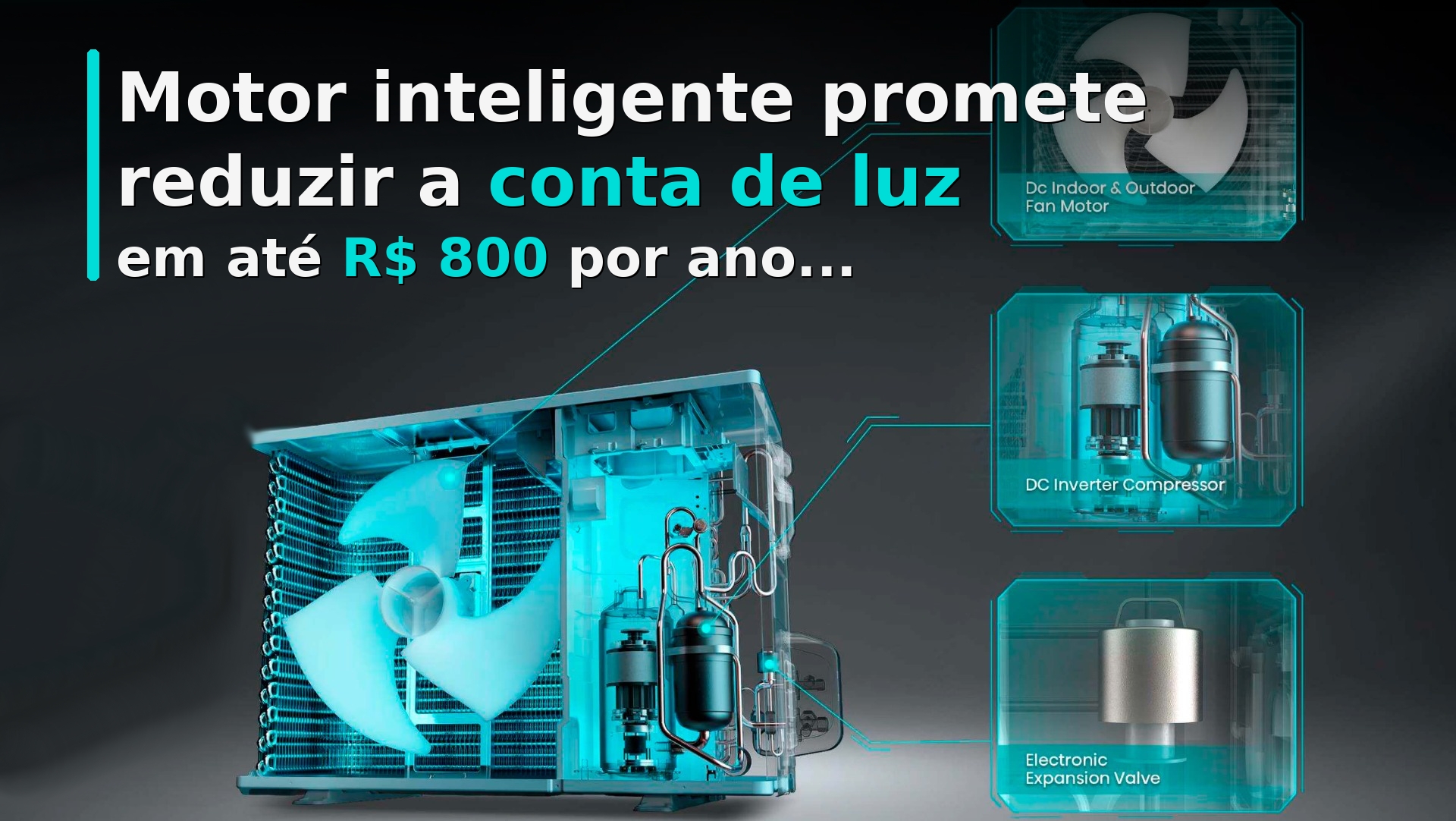
Understand How the New Smart Air Conditioner Motor Works, Why It Consumes Less Energy, and in Which Situations the Savings on the Electricity Bill Can Reach R$ 800 Per Year.
The air conditioner that promises to ease the electricity bill. Opening the energy bill and being shocked has become routine for many people, especially during periods of intense heat. With higher rates and frequently activated tariff flags, any solution that helps save money catches attention. It is in this scenario that the inverter air conditioner has gained traction and is seen not only as a comfort but also as a strategy to reduce expenses.
The promise of up to 40% less consumption and a savings on the electricity bill that can reach nearly R$ 800 a year did not come about by chance and has a real technical basis.
Why the Inverter Air Conditioner Consumes Less Energy
The main difference between inverter and traditional models lies in the heart of the equipment: the compressor.
-
Motorola launched the Signature with a gold seal from DxOMark, tying with the iPhone 17 Pro in camera performance, Snapdragon 8 Gen 5 that surpassed 3 million in benchmarks, and a zoom that impresses even at night.

-
Satellites reveal beneath the Sahara a giant river buried for thousands of kilometers: study shows that the largest hot desert on the planet was once traversed by a river system comparable to the largest on Earth.

-
Scientists have captured something never seen in space: newly born stars are creating gigantic rings of light a thousand times larger than the distance between the Earth and the Sun, and this changes everything we knew about stellar birth.

-
Geologists find traces of a continent that disappeared 155 million years ago after separating from Australia and reveal that it did not sink, but broke into fragments scattered across Southeast Asia.

In conventional appliances, the compressor turns on at maximum, turns off completely, and repeats this cycle several times throughout the day.
This constant “on and off” generates energy spikes, which are precisely the moments of highest consumption.
In the inverter air conditioner, the operation is different. The compressor has variable speed and adjusts its rotation according to the temperature set on the remote control and the conditions of the environment.
When the location reaches the desired comfort level, the appliance does not turn off. It only reduces its power and continues to operate at a lower pace, maintaining a stable temperature.
According to Inmetro, responsible for the Brazilian Labeling Program, this type of continuous operation is one of the factors that explains the higher energy efficiency of inverter models, especially when compared to appliances of the same capacity in BTUs.
Real Savings Happen with Extended Use
In practice, the biggest advantage of the inverter air conditioner appears when the equipment is on for several consecutive hours. After the initial effort to cool the environment, consumption drops and remains lower for long periods.
Climate control specialists assert that it is at this point that the technology shows its full potential. Environments such as bedrooms used every night, offices, commercial spaces, and home offices are classic examples. In very sporadic uses, such as turning on the appliance for a few minutes, the difference compared to the conventional model tends to be smaller.
The National Electric Energy Agency emphasizes that continuous and efficient usage habits have a direct impact on savings on the electricity bill, especially during periods of red flags, when the kWh becomes more expensive.
Does the Inverter Really Save Up to 40%?
The estimate of up to 40% less consumption is considered realistic in scenarios of intense use. To illustrate, just observe a common example: an air conditioner of 12,000 BTUs running about 8 hours a day, for 30 days a month, with an average rate of R$ 1.00 per kWh.
In this scenario, the annual difference between an inverter model and a conventional one can reach approximately R$ 780, a figure very close to the referenced R$ 800 disclosed by manufacturers and industry experts. Depending on the price of energy in the region and daily usage time, this savings can be even greater or slightly lower, but the potential remains clear.
International organizations such as ENERGY STAR, a global reference in energy efficiency, also point out that appliances with inverter technology show superior performance in consumption when used continuously.
What Influences the Savings on the Electricity Bill Throughout the Year
Although inverter technology is decisive, it does not act alone. The annual savings, whether close to or not to R$ 800, depends on a combination of factors that make a significant difference in final consumption.
The first point is the correct sizing in BTUs. An underpowered appliance always works at its limit and consumes more energy. On the other hand, a very powerful model increases the purchase cost and may lead to waste. Balance is essential.
Another important factor is the thermal insulation of the environment. Poorly sealed windows, walls that receive direct sunlight, and roofs without insulation require the air conditioner to work longer and at higher power. Addressing these details helps reduce the effort of the equipment.
The chosen temperature also plays a significant role. Each degree lower on the remote control increases consumption. Experts recommend keeping the unit between 23 °C and 24 °C, a range that balances thermal comfort and savings.
Maintenance cannot be overlooked. Dirty filters hinder airflow, make the system “work harder,” and raise electric consumption. Periodic cleaning helps maintain the original efficiency of the appliance.
Finally, the local energy rate directly influences the financial result. In regions where the kWh is more expensive, the same reduction in kWh generates even greater savings in reais, reinforcing the positive impact of the inverter air conditioner on the electricity bill.
Is It Worth Investing in an Inverter Air Conditioner?
Although the initial price is higher than that of a conventional model, the inverter air conditioner tends to pay off over time for those who use the appliance frequently. In addition to the decrease in consumption, it tends to be quieter and maintain a more stable temperature, which enhances daily comfort.
As summarized by Inmetro in educational materials, energy efficiency has ceased to be just an environmental issue and has also become a financially smart decision for residential and commercial consumers.
Inverter Air Conditioner or Conventional? Which Is Better?
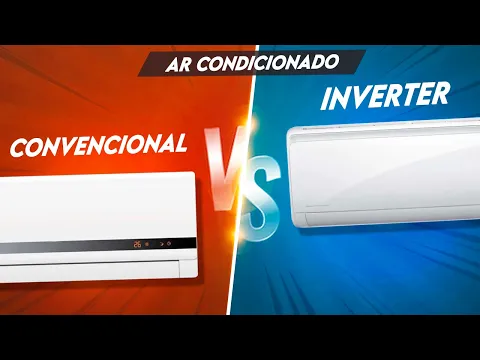

And you, do you already use an inverter air conditioner or are you thinking about switching yours? Leave a comment sharing your experience or share this content with someone who wants to reduce their electricity bill without sacrificing comfort.








Seja o primeiro a reagir!