





 Português
  Inglês
  Espanhol
  6 min de leitura
  0 comentários


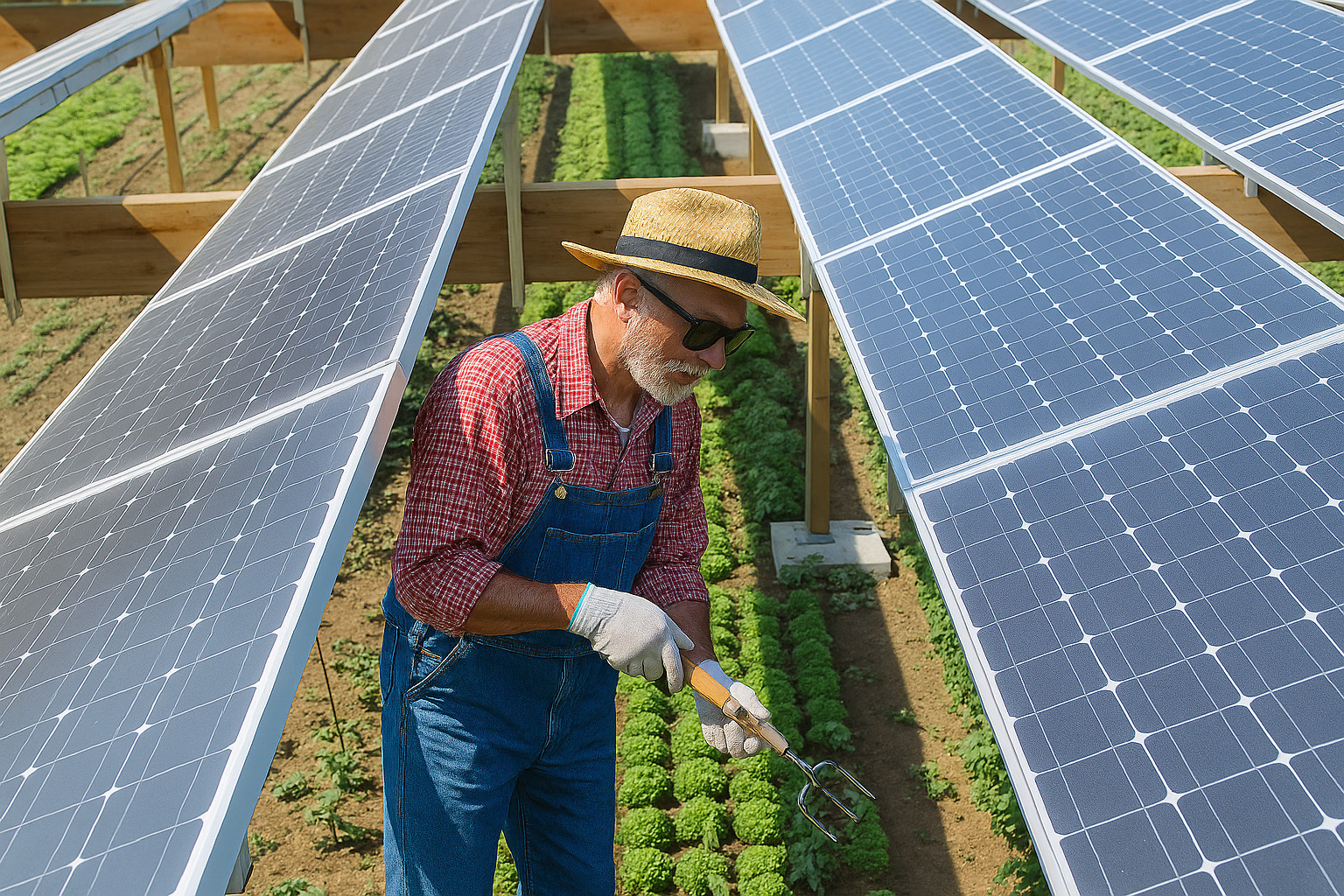
Learn About the Fund That Helps Small Farmers Invest in Renewable Energy With Accessible Conditions and Transforms the Future of Family Farming in Brazil.
In recent years, the search for renewable energy sources has gained momentum in Brazil and around the world. Additionally, the growing concern about climate change, sustainability, and economic development has led governments, companies, and civil society to invest in clean and renewable alternatives, such as solar and wind energy.
However, despite technological advances and the reduction of costs for these systems, many small farmers still face difficulties accessing these energy sources.
Historically, family farming has always played a fundamental role in Brazil. In fact, small farmers produce a significant portion of the food that supplies the domestic market and also contribute to the local and regional economy.
-
Renewable energy advances over protected areas in Brazil, and a survey by the Energy Transition Observatory reveals silent impacts that challenge environmental conservation and pressure sensitive traditional territories.

-
Rio Grande do Sul accelerates energy transition: State invests in renewable technologies and consolidates decarbonization strategies and pathways to attract billions in new industrial investments.

-
With 160,000 m² of collectors, an area larger than 20 football fields, Silkeborg, in Denmark, hosts a solar thermal plant that heats 19,500 homes and could become the largest solar heating plant in the world.

-
A study reveals the expansion of renewable energy procurement in Brazil and shows how companies are taking advantage of opportunities to reduce expenses, ensure energy efficiency, and strengthen strategic environmental commitments.


However, these producers often live in areas remote from urban infrastructure, with limited access to basic services, including reliable and affordable electricity.
Therefore, access to energy is an essential factor for modernizing agriculture and increasing productivity. With electricity, farmers can use equipment for irrigation, product storage, refrigeration, and improve living conditions on their properties.
Nevertheless, in many rural areas, the energy provided by utilities can be expensive or even nonexistent.
Moreover, the lack of adequate infrastructure in rural areas makes the installation of conventional energy networks difficult. For this reason, local energy generation emerges as an even more necessary and efficient solution to overcome the limitations of the traditional system.
Thus, renewable energy appears as a viable and sustainable alternative to bring electricity to these producers.
The National Fund for Renewable Energies in Small Rural Properties
Considering these challenges, the idea of creating a special fund to facilitate small farmers’ access to renewable energy systems was born. Bill 221/25 proposes the creation of the National Fund for Renewable Energies in Small Rural Properties (FNERP).
Thus, the main objective of this fund is to help family farmers invest in solar and wind energy by offering more accessible financial conditions tailored to rural realities.
The fund assists small farmers through financing with reduced interest rates, grace periods for starting payments, and long terms to repay loans. Additionally, the government provides partial subsidies for low-income family farmers, making investment in renewable energy more viable and less burdensome.
Therefore, this represents a significant advancement, as small producers typically do not have easy access to credit for such investments.
It is also important to highlight that the fund encourages the formalization of small producers, as to receive financing, the farmer must be registered in the Rural Environmental Registry (CAR) and comply with environmental regulations.
This measure helps to organize the sector and protect natural resources, bringing benefits to society as a whole.
Throughout Brazil’s history, public policies aimed at family farming have been fundamental in reducing rural poverty and strengthening the agricultural sector. For example, programs like PRONAF (National Program for Strengthening Family Farming), created in the 1990s, provided support to small producers with access to credit, technical assistance, and training.
Thus, the new fund follows this line of support, focusing specifically on renewable energy, a growing sector fundamental to sustainable development.
Economic and Environmental Benefits of Renewable Energy for Small Farmers
The adoption of solar and wind energy systems in small rural properties brings various benefits, both economic and environmental. From an economic standpoint, the reduction in the electricity bill occurs immediately, as the farmer starts producing their own energy, reducing dependence on utilities.
This important savings can be redirected to other needs, such as purchasing inputs, improving production, or education.
Moreover, the use of renewable energy can make small farmers more competitive, as the reduction in operational costs allows for increased production and entry into new markets.
This is especially important in a scenario where the cost of conventional electricity tends to rise, putting pressure on the final prices of agricultural products.
Environmentally, using clean energy helps to decrease the emission of pollutants, such as carbon dioxide, which causes the greenhouse effect and climate change.
Thus, small properties that adopt these technologies contribute to preserving the environment and maintaining the ecological balance of the regions where they are located. Additionally, promoting renewable energy can generate local jobs and income, fostering sustainable development in rural communities.
Another positive aspect is the reduction of reliance on fossil fuels, such as diesel and gasoline, used in generators in some rural areas. This brings direct benefits to the health of families and the environment, as well as lowering costs associated with purchasing these fuels.
Requirements and Resources to Access the Fund
To access the fund’s resources, farmers must meet some requirements, such as being registered in the Rural Environmental Registry (CAR) and being compliant with current environmental regulations.
This requirement reinforces the importance of environmental sustainability, demonstrating that financial support depends on good practices that respect the environment. Additionally, it is necessary to present a technical project for the installation of the system, ensuring that the investment will be efficient and appropriate for the property’s reality.
Financing from the fund comes from various sources, including the National Fund on Climate Change and the Union’s Budget, which allocates annual funds for the program.
This diversity of resources demonstrates the government’s commitment to renewable energy and to strengthening family farming.
Efficient management of the fund will be essential to ensure that the resources benefit those who truly need them. For this, transparency in processes and technical monitoring of installations is expected, ensuring the success of funded projects.
The Context of Energy Transition and Rural Electrification in Brazil
The implementation of this fund not only facilitates small farmers’ access to renewable energy, but also integrates a broader movement in Brazil for energy transition.
The country has the potential to grow even further in the use of clean sources, and including small rural properties in this process is essential for ensuring social justice and sustainability.
The challenge of rural electrification in Brazil began to be addressed in the 1960s, with programs that brought electricity to isolated regions.
Still, the quality and cost of electricity in rural areas often represent obstacles to local development.
With advances in renewable technologies, this reality may change, as distributed generation allows producers to generate their energy on-site, without relying on the conventional electrical grid.
Additionally, adopting these technologies strengthens the resilience of rural communities against electrical grid issues, such as outages and power cuts.
This is especially relevant for agricultural activities that depend on constant energy, such as irrigation systems.
The Future of the Fund and Its Impact on Small Farmers
The bill that creates the National Fund for Renewable Energies in Small Rural Properties is now under analysis in several committees of the Chamber of Deputies, including Environment, Mines and Energy, Agriculture, and Finance.
After approval in the Chamber, the text will proceed to the Senate for the final vote. If approved, it could transform the reality of thousands of family farmers across the country.
Thus, the creation of this fund helps small farmers take an important step towards energy autonomy and sustainability.
The possibility of investing in solar and wind energy with easier financial conditions represents a chance for growth in the field, generating positive impacts on the economy, the environment, and the quality of life of families.
Finally, it’s essential to remember that renewable energy is one of the keys to the future of the planet.
Initiatives that promote its use in traditional sectors, such as family farming, are essential for building a fairer, more sustainable, and innovative Brazil.
In this way, the National Fund for Renewable Energies in Small Rural Properties emerges as a strategic tool to support this transformation, helping small farmers access a vital resource for sustainable rural development.









Seja o primeiro a reagir!