





 Portuguese
  English
  Spanish
  3 min of reading
  0 comments


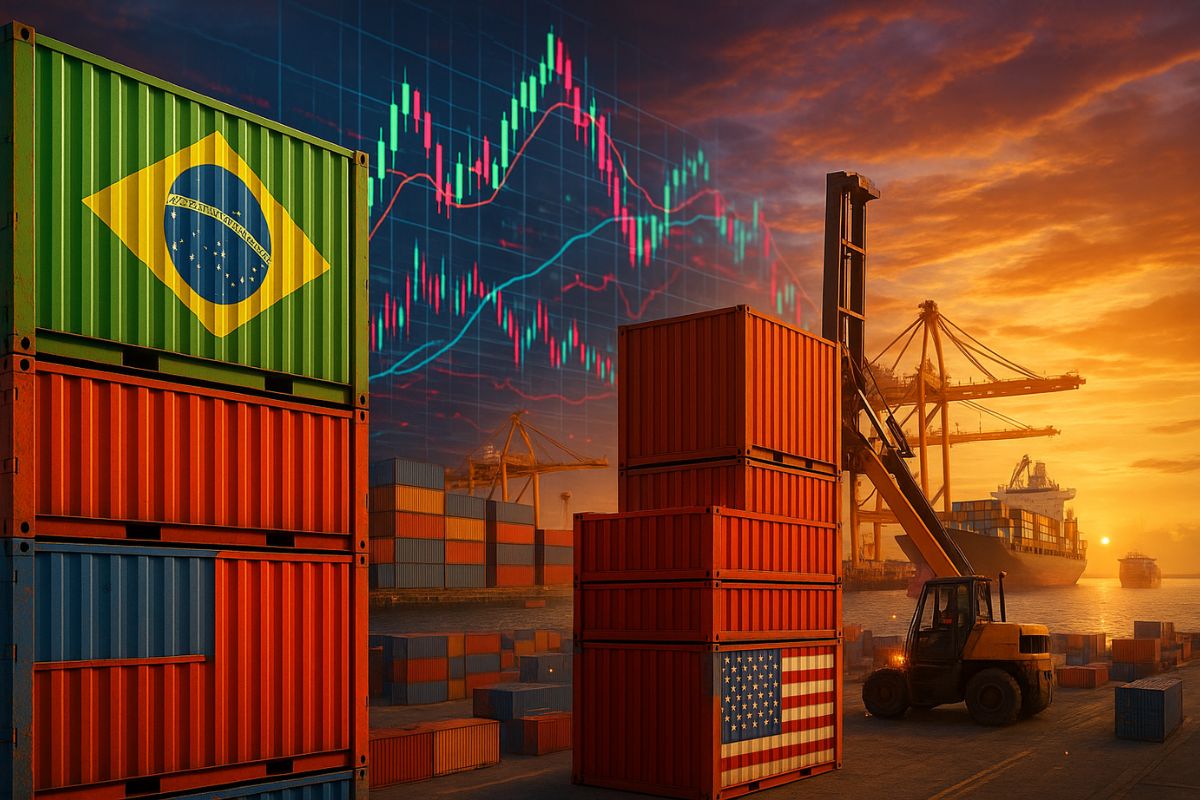
New Billion-Dollar Government Plan Aims to Mitigate Impact of Trump’s Tariffs. Measure Should Inject R$ 30 Billion in Credit for Exporting Companies, Prioritize National Content, and Include Government Purchases
The federal government will announce this Wednesday the new billion-dollar government plan to reduce the losses caused by the 50% tariff imposed by the United States. The strategy, as anticipated by Finance Minister Fernando Haddad, will be presented at a ceremony at the Palácio do Planalto, with the presence of President Luiz Inácio Lula da Silva and a press conference for technical details.
According to Lula, the package provides for R$ 30 billion in credit lines for affected companies, in addition to government purchases and priority for national content. The Palácio do Planalto claims that the plan was designed to meet the demands of the productive sector without compromising the fiscal target, which this year is a zero deficit, with a tolerance margin of 0.25% of GDP.
Emergency Credit for Exporters
The new billion-dollar government plan includes a robust credit line specifically aimed at companies harmed by Donald Trump’s so-called “tariff.” Although the criteria for rates, terms, and guarantees have not yet been disclosed, the promise is of a financial volume capable of alleviating part of the pressure on strategic sectors of the economy. Despite accounting for less than 10% of the monthly credit granted in the country, the amount is considered significant to preserve jobs and international contracts.
-
50 viaducts, 4 tunnels, 28 bridges, and 40 kilometers of bike paths: BR-262 in Espírito Santo will receive 8.6 billion reais for the largest engineering project in the state’s history, inspired by the Immigrant Highway in São Paulo.

-
Brazil produces too much clean energy and doesn’t know what to do with it: over 20% of solar and wind capacity was wasted in 2025 while investors flee and 509 renewable generation projects were abandoned in the last year.

-
Piauí will produce a new fuel that replaces diesel without needing to change anything in the truck’s engine and reduces pollutant gas emissions by half: truck drivers from all over the Northeast are already celebrating the news that will arrive later this decade.

-
A new Brazilian shopping center worth R$ 400 million will be built in an area equivalent to more than 4 football fields, featuring 90 stores, 5 cinemas, a supermarket, a college, and parking for 1,700 cars, potentially generating 3,000 jobs.

Experts consulted by CNBC emphasize that the allocation of resources will be done company by company, according to the situation of each one. This approach may ensure greater efficiency but also imposes management and oversight challenges, as application at such a detailed level requires careful analysis.
Government Purchases and Incentive for National Content
Another front of the new billion-dollar government plan is increasing public purchases of products manufactured in Brazil. However, the measure has limitations: the Executive cannot acquire and stock certain items, such as machinery, industrial equipment, and long-lasting inputs. The greatest impact is expected to occur in sectors dealing with perishable goods and food, where direct purchases can prevent losses and sustain production.
The plan also reinforces the priority for national content in acquisitions and contracts, a measure that, according to the government, will help strengthen local production chains and reduce dependence on imported inputs, especially in times of commercial instability.
Fiscal Target Preserved
Minister Fernando Haddad assured that the package will not imply changes to the fiscal target. As the lines of credit are accounted for as financial expenses and not as primary expenses, there is no direct impact on the primary result. In the case of government purchases, the government will use extraordinary credits that do not affect the spending cap but still need to comply with the rules of the fiscal framework.
The preservation of the target is seen as a positive sign by the market, which feared a loosening to accommodate the costs of the program. With the current strategy, the government seeks to show that it is possible to combine economic stimulus and fiscal responsibility.
Points Still Undefined
Some details of the new billion-dollar government plan remain confidential. It is unclear whether there will be tax deferrals for exporters or whether the reimbursement of accumulated tax credits throughout the production chain will be allowed. The inclusion of employment protection mechanisms, mentioned in preliminary meetings, has also not been confirmed, though it would have a direct impact on public accounts.
These definitions will be presented after the official ceremony, when technicians from the Finance and Development ministries will explain the execution mechanisms, timelines, and eligibility criteria.
Do you believe that the plan will actually compensate for the losses caused by Trump’s tariffs? Or should the government seek additional solutions to protect Brazilian exports? Leave your opinion in the comments.










-

Uma pessoa reagiu a isso.