





 Português
  Inglês
  Espanhol
  3 min de leitura
  0 comentários


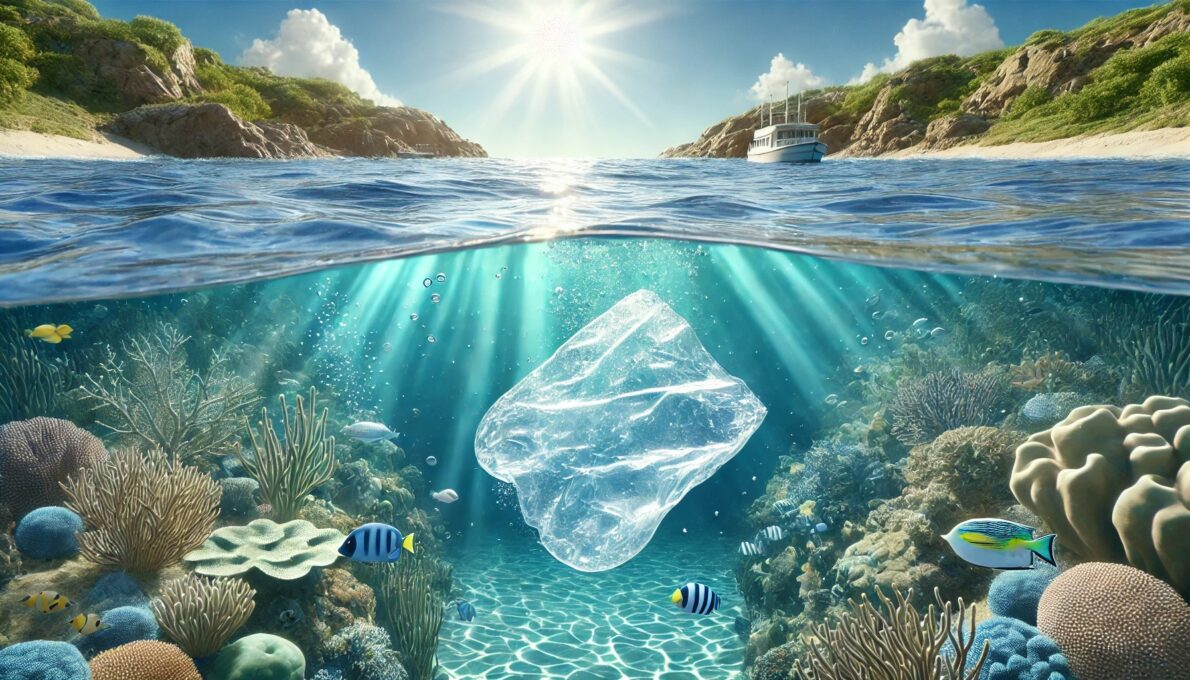
Researchers Reveal New Innovative Plastic That Biodegrades Up To 15 Times Faster Than Paper In The Oceans, Promising To Revolutionize The Fight Against Marine Pollution And Drastically Reduce Environmental Impact.
In recent years, scientists have been intensely focused on discovering which types of plastics can biodegrade more quickly in the marine environment, as millions of tons of plastic pollute the oceans annually. Surprisingly, a bioplastic used for over a century has proven to be highly efficient in this process. Now, researchers have gone further and developed a new type of plastic capable of biodegrading even faster than paper, providing a promising solution to one of today’s greatest environmental challenges.
New Biodegradable Plastic Is 15 Times Faster
The diacetate of cellulose (CDA) is composed of cellulose, a natural polymer found in plant cell walls, particularly in cotton or plant walls, and in wood pulp. It has been known since the late 1800s and is used in everything from sunglasses frames to cigarette filters (its most common use), to photographic films and a million other things in our daily lives.
Researchers from the Woods Hole Oceanographic Institution (WHOI) have discovered that CDA is a new plastic that biodegrades faster than paper in seawater, technically classified as a bioplastic. With a simple modification called “foam,” it can become porous, making it a new type of biodegradable plastic that degrades 15 times faster than solid CDA.
-
Found in one of the most radioactive places on Earth, this Chernobyl fungus may be doing something with radiation that no one has been able to explain to this day.

-
A bright yellow mushroom imported from Asia escaped from a cultivation farm in the United States in 2010 and is now aggressively spreading across 25 states, destroying entire communities of native fungi in American forests.

-
Buried under China, a colossal machine weighing 20,000 tons began operating as the largest neutrino detector on the planet and, in just 59 days, surpassed results that science took half a century to achieve.

-
Iran enters the center of a climate alert after the war emitted 5.6 million tons of CO2 in two weeks, surpassing the annual pollution of entire countries.


According to Collin Ward, a senior author of the study, the researchers have translated fundamental knowledge into the design of a new material that simultaneously meets consumer demands and is a new plastic that biodegrades faster than paper or any other known plastic material.
How Did The New Type Of Biodegradable Plastic Perform In Tests?
According to Collin, it is a great success story in a field that often focuses on the negative aspects of plastic pollution rather than working towards solutions to the problem. In a 36-week test, the new plastic that biodegrades faster than paper was placed in continuously flowing seawater tanks and lost 65-70% of its original mass.
Compared to another common plastic found in oceans worldwide, polystyrene, it showed zero degradation in the same period.
Collin and other researchers at the institution partnered with Eastman, a bioplastic manufacturing company, which contributed to this and other previous studies by providing materials, funding, and serving as co-authors.
The study was conducted in a controlled laboratory environment using continuously flowing seawater from Martha’s Vineyard Sound near Cape Cod, Massachusetts. For the tests of the new type of biodegradable plastic, researchers were able to control light, temperature, and other variables to replicate the dynamic conditions of the ocean.
Researchers Create Straw With Plastic That Biodegrades Faster Than Paper
In January of this year, findings from a previous 16-week study by WHOI were released. This study used the same seawater tank and compared eight different straws made from CDA, polyhydroxyalkanoates (PHA), polylactic acid (PLA), polypropylene (PP), and paper.
The PLA and PP straws showed no measurable signs of degradation, while the others degraded up to 50%.
When comparing the then-prototype CDA foam straw with the solid CDA straw, researchers found that the CDA foam straw was degrading 190% faster than the solid CDA straw, leading to the recent study focused on WHOI regarding the new plastic that biodegrades faster than paper.







Seja o primeiro a reagir!