





 Portuguese
  English
  Spanish
 6 min of reading
  0 comments


Exploration of the Equatorial Margin Sparks Expectations for Billion-Dollar Reserves, but Depends on Environmental Licensing Under Review by Ibama. Petrobras Completed Emergency Simulation in Amapá and Awaits Decision to Proceed with Drilling.
The president of Petrobras, Magda Chambriard, stated on Friday (05) that there has been no progress in the environmental licensing for drilling in the Amazon River Mouth Basin.
“Everything is still the same”, said the executive, commenting on the progress of the process which depends on an opinion from Ibama.
In the previous week, the state-owned company completed an emergency exercise in deep waters of Amapá, an expected step in the requirements for environmental analysis.
-
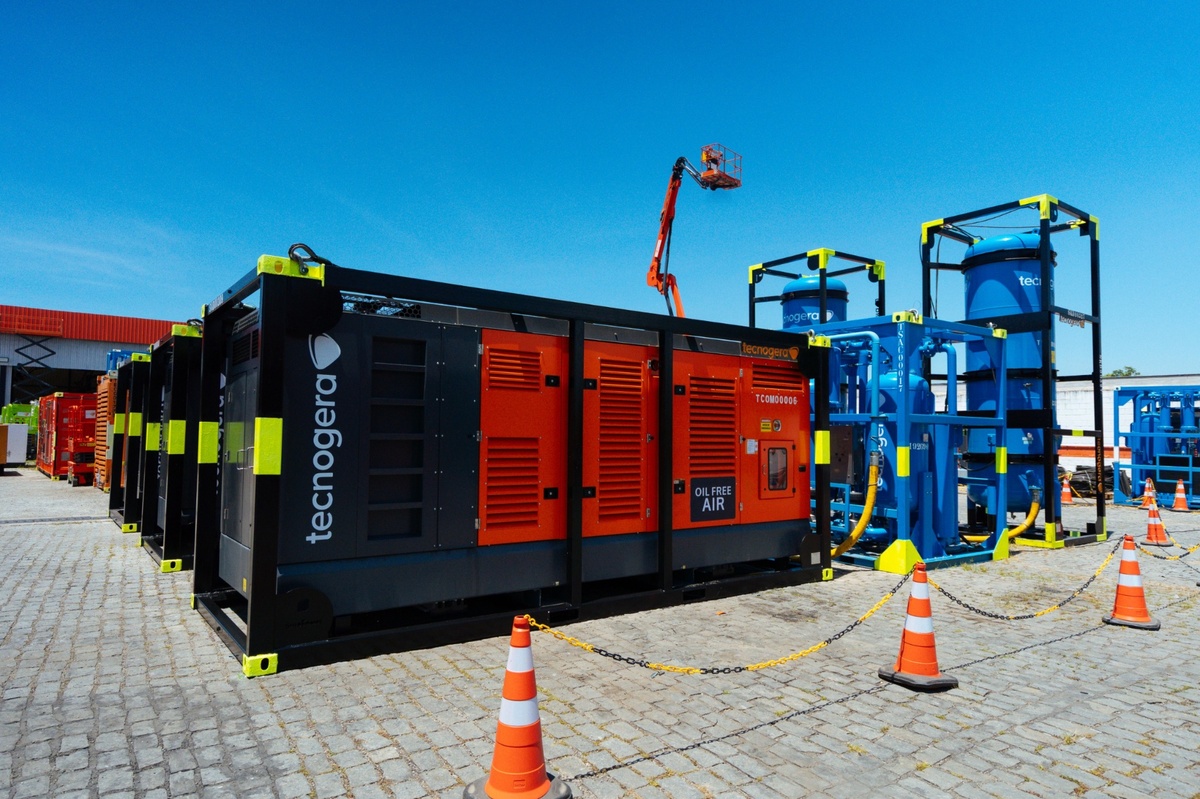
Offshore industrial demand in Macaé surges with the recovery of oil and gas and could grow by up to 396% by 2026 in the Campos Basin.
-
Brazilian giant expands borders in the Southeast: Petrobras confirms new oil discovery in ultra-deep waters in the pre-salt of the Campos Basin.

-
Alert in the global energy market: Severe tropical cyclone hits the coast and disrupts gas production at major plants in Australia, threatening global supply.

-
Petrobras finds high-quality oil in the pre-salt at 113 km from RJ and reignites expectations about strategic reserves in the Campos Basin.


Licensing for the Amazon River Mouth Remains Undecided
Chambriard made the statement after attending the swearing-in of directors of the National Agency for Petroleum, Natural Gas and Biofuels (ANP).
According to her, the company has completed the technical measures that were under its responsibility and is now awaiting a response from the federal environmental agency.
The executive did not indicate a timeline for the decision and emphasized that the company will continue to respond to any additional requests for information.
The licensing includes a exploratory well in an offshore area of the Equatorial Margin, a geological belt that stretches from Amapá to Rio Grande do Norte.
The Amazon River Mouth attracts part of the oil company’s interest due to presenting similarities with oil provinces in neighboring countries.
Nevertheless, the formal authorization to drill remains conditioned on the technical opinions from Ibama, which assess operational risks and the effectiveness of response plans.
Emergency Simulation in Amapá
As part of the licensing process, Petrobras conducted, between August 25 and 28, 2025, an incident response exercise in the Amazon River Mouth.
The company reported that the activity took place in deep waters of Amapá, with the participation of onboard teams and aerial and maritime support.
According to internal reports cited by company sources, there were no reports of significant incidents during the simulation.
This type of exercise tests the mobilization of resources, communication among response teams, and the ability to contain scenarios of oil spills.
The result contributes to the “pre-operational assessment” required by Ibama and serves to verify whether the procedures outlined in the emergency plan can be executed under real conditions.
Once the practical phase is concluded, the technical report will be sent for analysis by the environmental agency.
The Potential of the “New Pre-Salt”
The Equatorial Margin has been referred to by authorities and experts as the “new pre-salt” due to expectations of large volumes of oil in deep and ultra-deep waters.
In 2023, government officials cited studies indicating that a block off the coast of Amapá could total more than 5.6 billion barrels in potential oil resources.
This figure positioned the region as one of the main exploratory bets in the country, fueling projections about its impact on national production over the next decade.
Although the title of this report refers to this potential, Petrobras and regulatory bodies reiterate that the confirmation of volumes depends on drilling and data evaluation of wells.
In other words, the estimate does not replace the exploratory stage.
Therefore, the current focus of the state-owned company is on overcoming the licensing process to conduct the first drilling and, based on the results, adjust investment scenarios.
What Ibama Evaluates
Ibama analyzes aspects such as the environmental sensitivity of the area, animal routes, ocean currents, distance from the coast, response logistics, and dedicated structures for affected wildlife in the event of an accident.
This verification includes the emergency plan, the proposed material and human resources, as well as the integration protocols with local and federal authorities.
While the analysis is ongoing, there is no release to initiate drilling activities.
Petrobras claims it has been incorporating conditions requested by the agency throughout the process.
Among the measures are wildlife support centers, contracts for large support vessels, containment and monitoring equipment, and the conduct of specific drills for the sensitive environment of the river mouth.
The company asserts that these elements enhance the robustness of the response and reduce residual risk.
Historical and Regulatory Context
In 2023, a previous request for drilling in the region was rejected and returned for technical additions.
Since then, the state-owned company has reformulated documents, adjusted procedures, and re-presented the project, which began to include practical exercises and additional infrastructure for incident response.
In 2025, with the completion of the simulation and submission of reports, the process reached a new phase, still dependent on Ibama’s technical review.
In the sectorial aspect, the National Petroleum Agency monitors the process as a regulator and simultaneously conducts its own agendas, such as planning the offering of areas and monitoring sedimentary basins.
The environmental decision, however, is crucial for any operational advancement in the specific block of the Amazon River Mouth.
Impacts for Petrobras and National Production
If drilling is authorized and confirms economically viable volumes, Petrobras could consolidate a new exploration front alongside the established pre-salt region in the Southeast.
This move has the potential to diversify the asset portfolio, dilute geological risks, and sustain the production curve in the medium and long term.
Moreover, the opening of a new province could attract suppliers and investments in goods and services related to the oil and gas industry.
On the other hand, the absence of a license prevents the start of the exploratory cycle and delays capital allocation decisions.
The state-owned company has been stating that it maintains its commitments to environmental goals and that its business strategy considers scenarios for energy transition, but emphasizes the need to replace reserves to ensure energy security.
The balance between these objectives necessarily hinges on the outcome of the environmental licensing.
What to Expect from the Next Steps
Following the submission of the simulation report, Ibama is expected to consolidate internal opinions on the compliance of the emergency plan, the readiness of resources, and the adequacy of environmental safeguards. There is no public deadline defined for the decision.
In the meantime, Petrobras remains in a state of readiness for additional adjustments that may be requested.
The company also monitors the regulatory agenda and maintains dialogue with federal and state authorities.
The discussion regarding the Amazon River Mouth occurs at a time when the federal government aligns environmental goals with energy policy.
The challenge is to reconcile the ambition to reduce emissions and preserve sensitive biomes with the need to ensure energy supply and revenue.
In this equation, the transparency of the licensing process and adherence to technical parameters will be decisive for the pace of the next steps.
Finally, the expectation regarding the “new pre-salt” keeps the topic at the center of the country’s economic and environmental debate.
The confirmation of relevant reserves could redefine the trajectory of production and investments for the state-owned company, but everything depends on environmental approval and the first exploratory drilling.
The question that remains is: will Ibama give the green light in time to turn this promise into a concrete production frontier?







-

-

2 pessoas reagiram a isso.