





 Português
  Inglês
  Espanhol
  6 min de leitura
  0 comentários


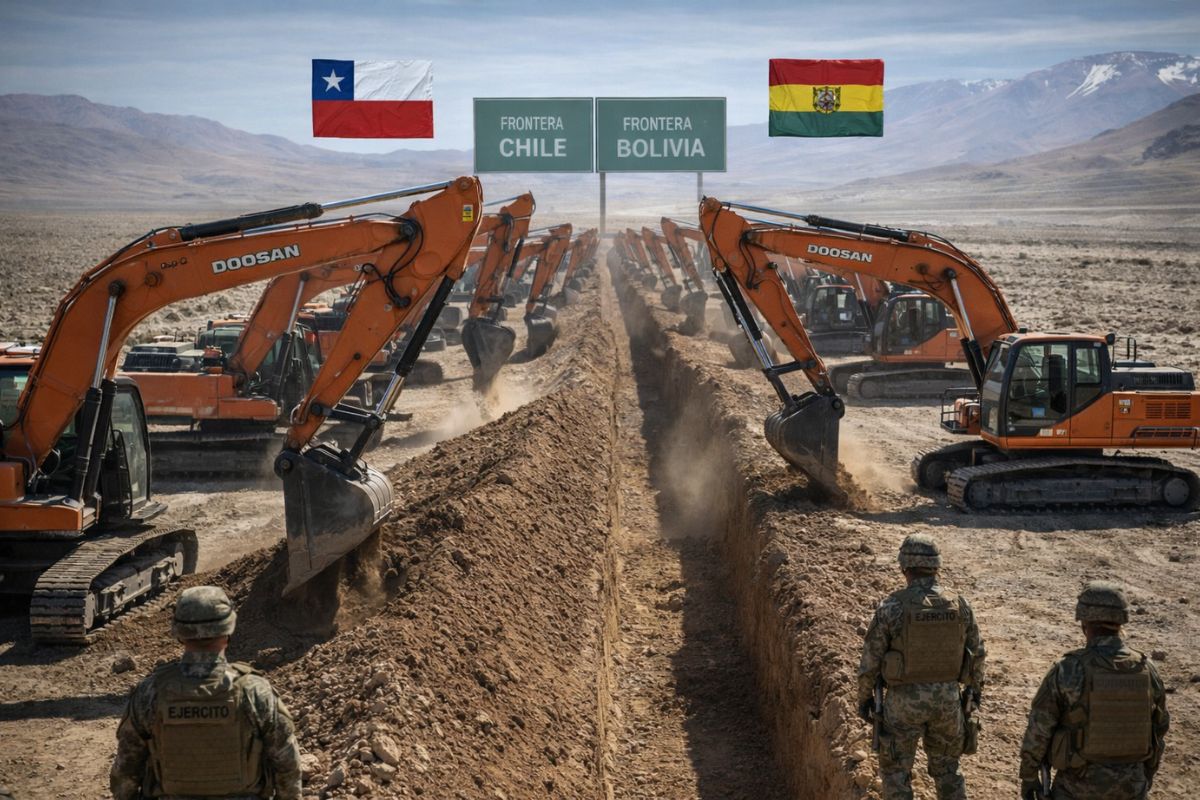
The Order of President José Antonio Kast to Accelerate the Construction of Barriers at the Bolivian Border Opens a New Chapter in Chilean Migration Policy, Mobilizes the Army, Reinforces the Government’s Security Discourse and Signals How the Administration Intends to Address the Irregular Entry of Undocumented Foreigners into the Country.
The construction of barriers at the border between Chile and Bolivia has become the focus of the Chilean political agenda right from the first actions of the new president, José Antonio Kast. The decision was presented as a way to curb irregular immigration and enhance security, turning a campaign promise into a concrete measure early in the administration.
The move did not happen in isolation. It appears as part of a broader package of decisions aimed at migration issues and public order, two areas Kast chose to launch his government. By making the border an immediate priority, the president aims to demonstrate a quick response to a demand that has gained weight in the Chilean public debate in recent years.
A New Administration Marked by an Immediate Gesture of Authority
José Antonio Kast took office as President of Chile on Wednesday, the 11th, and used his early decisions to clarify the political axis of his administration. Among the six decrees signed at the start of his term, three were related to irregular immigration. This fact alone helps to understand the importance attributed to the issue by the new government and shows that the construction of barriers is not an isolated action, but part of a strategy with strong political symbolism.
-
A megaproject worth R$ 89 billion is advancing in Iraq and promises to change the game in global trade by creating a new corridor between Asia and Europe, reducing traditional routes and repositioning the country as a logistics powerhouse.

-
Goodbye bedside table: floating shelves become a trend in 2026 by freeing up space in the bedroom, improving circulation, bringing visual lightness, and integrating technology without taking up floor space.

-
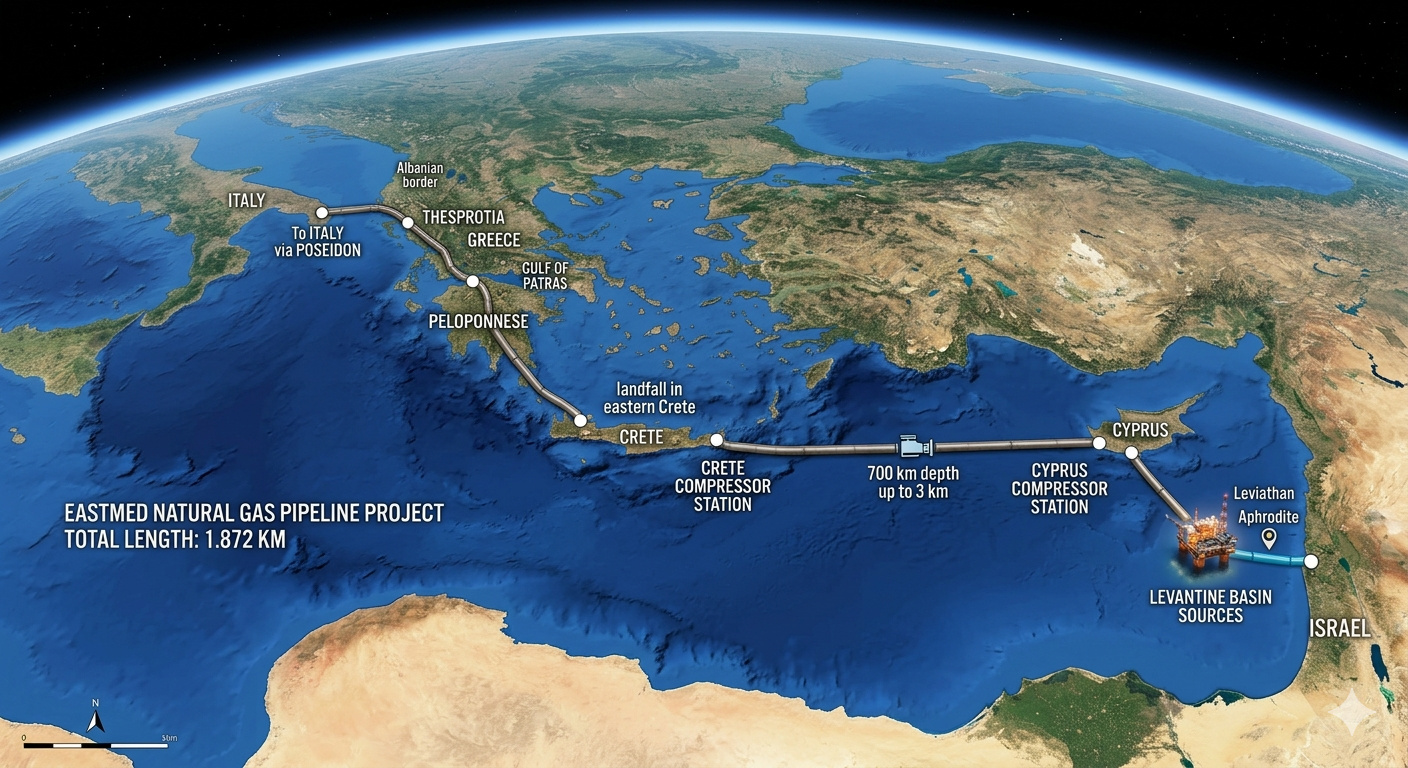
Israel, Greece, and Cyprus signed an agreement in 2020 to transport gas from the Mediterranean to Europe via a 1,872 km pipeline, but Turkey claimed sovereignty over part of the maritime route, and the project never materialized.
-
Israel, Greece, and Cyprus signed an agreement in 2020 to transport gas from the Mediterranean to Europe via a 1,872 km pipeline, but Turkey claimed sovereignty over part of the maritime route, and the project never materialized.

The gesture was also carefully directed. When addressing Army Commander Pedro Varela, Kast not only requested collaboration in increasing the number of personnel involved in controlling the region but also linked military action to efforts to contain the illegal entry into Chilean territory. The message was twofold: on one hand, operational reinforcement; on the other, a public demonstration of command and institutional priority for the border.
What the Measure Means in Practice at the Border with Bolivia
In practice, the proposal for construction of barriers indicates the intention to create physical obstacles in an area considered sensitive for the irregular entry of migrants. By referring to “physical barriers,” the government signals its intention to go beyond administrative reinforcements or occasional patrolling. The measure points to a concrete intervention in border space, with visual, operational, and political effects, aiming to make it more difficult to cross at points used by unauthorized entrants.
The chosen location also helps to explain the relevance of the decision. The border with Bolivia has become a central piece in this debate because it concentrates part of the government’s concerns regarding irregular migration flows. When the border becomes a symbol of state fragility, the response tends to be framed in terms of territorial control. Therefore, the construction serves not only to block crossings: it also functions as a message that the state wants to re-establish a visible presence in a strategic zone.
Security, Immigration, and the Political Calculation Behind the Fulfilled Promise
The main justification presented by the government is to contain irregular immigration. According to official data mentioned in the context of the decision, 337,000 foreigners currently live undocumented in Chile. This number helps to explain why the issue has gained such strength in recent political discourse.
For Kast, the construction of barriers appears as a direct response to a concern that unites immigration control, pressure on public services, and a sense of insecurity within part of society.
But there is also an evident political calculation. Containing irregular immigration was one of the president’s main campaign promises, and implementing it shortly after taking office strengthens the image of a leader willing to act quickly.
Fulfilling a promise in the early days of the administration carries high symbolic value: it conveys the idea of coherence with the electoral discourse and helps to consolidate the support base that expects firmness on issues related to order, crime, and sovereignty.
The Border as a Stage for an Emergency Government
In his first address to the nation, Kast advocated for the idea of an “emergency government” to tackle problems of security, health, education, and employment. Within this framework, the construction of barriers fits as a rapid-impact action, with a direct appeal to the narrative of urgency.
By putting the border among the first showcases of the new mandate, the president attempts to associate his administration with immediate, visible decisions of strong political weight.
This positioning connects to the tougher rhetoric adopted by the president regarding crime and the so-called “adversaries of Chile,” a term he uses to refer to both domestic and foreign criminals.
The logic of the new government is to present security and migration as inseparable themes, broadening the political reach of the border measure. Thus, the barrier stops being perceived merely as a physical structure and starts to integrate a broader narrative of state hardening.
The Contrast with the Previous Government and the Change of Direction in Chile
The decision also marks a direct contrast with the previous administration. During his inauguration, Kast harshly criticized the situation in which he claims to have received the country, and ordered his ministers to conduct audits to check the conditions of the administration handed over by Gabriel Boric’s government.
In this context, the construction of barriers helps to materialize a shift in direction, not only in migration policy but also in the style of governance and the way priorities are presented to the nation.
This contrast gains even more weight because the new president represents a harsher conservative right, associated with firm positions on security, immigration, and state authority. The political message is one of rupture, with less room for ambiguities on the border issue.
By choosing this issue as one of the first fronts of action, Kast transforms the border with Bolivia into one of the first major tests of his promise to restore control and impose a stricter line of governance.
The Debate the Measure Is Expected to Open Inside and Outside Chile
Even when presented as a solution to curb irregular entries, the construction of barriers tends to open a broad debate about effectiveness, scope, and consequences. Physical barriers can hold symbolic weight and complicate certain routes, but they also raise the question of how much this type of initiative solves the structural problem of undocumented migration.
In other words, the construction responds to the desire for control but also exposes the complexity of a phenomenon involving human mobility, enforcement, and institutional capacity.
Moreover, the decision projects effects beyond Chile’s domestic politics. The border with Bolivia is not merely a geographical line; it is a space of circulation, tension, and diplomatic sensitivity. When a government transforms this boundary into a visible priority, the repercussions cease to be solely internal.
The measure begins to engage with neighbors, public bodies, security forces, and regional public opinion, which watches closely how Chile intends to manage its new political phase.
The order from José Antonio Kast to initiate the construction of barriers shows that the new government wants to act quickly, visibly, and firmly on an issue it considers central. By placing the border with Bolivia at the heart of its agenda right at the start of the term, the president transforms an electoral promise into concrete action and raises irregular migration to the status of a national priority.
It remains to be seen how far this strategy will be able to produce practical results and how Chilean society will react to the announced hardening in the early days of the administration. In its view, do measures like this truly help confront irregular immigration, or do they end up exacerbating a problem that requires broader responses?










-

-

-

4 pessoas reagiram a isso.