





 Português
  Inglês
  Espanhol
  3 min de leitura
  0 comentários


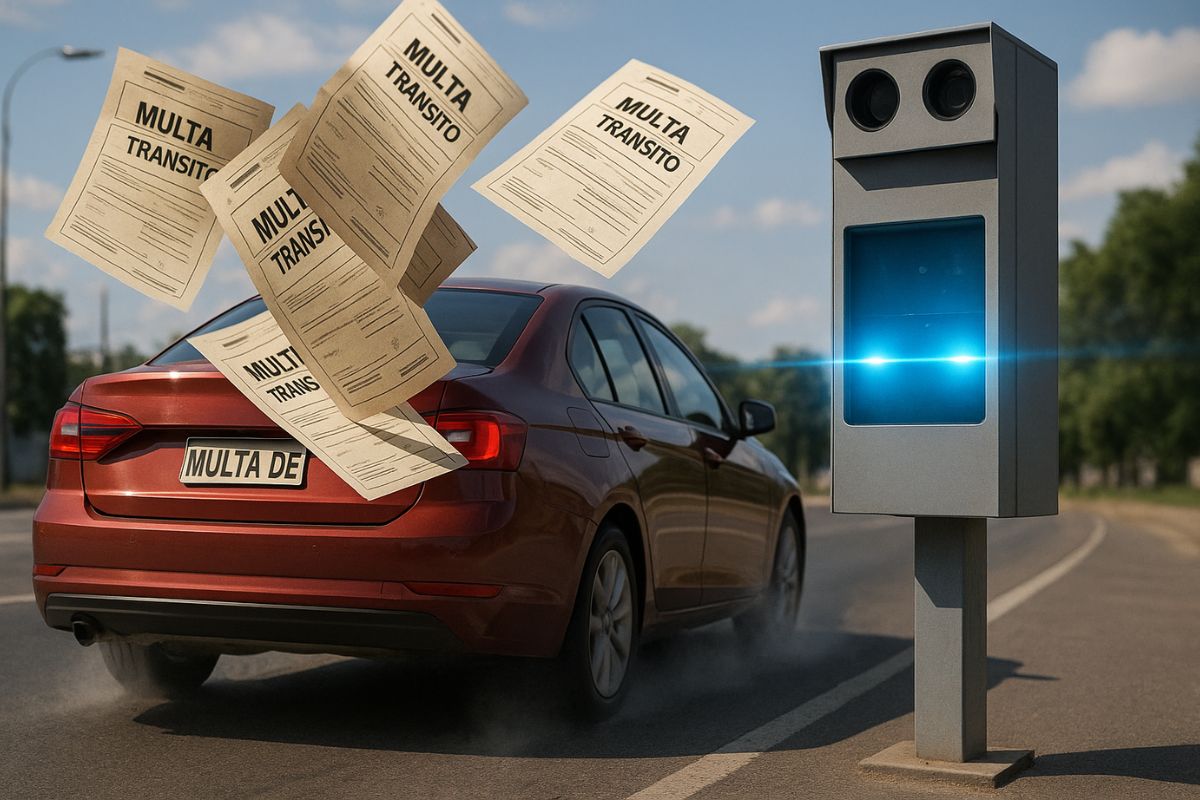
New Radar Is Already in Operation and Can Catch Even Those Who Brake Before. Doppler Technology Expands Enforcement and Promises to End the Famous “Brake Check,” Increasing Fines and Reducing Public Costs
According to a report based on data from Inmetro and Contran, the new radar is already in use in Brazil and promises to change the relationship between drivers and speed enforcement. The technology, nicknamed “snitch,” is able to catch vehicles that brake before the device and then accelerate again, a common practice in Brazilian traffic.
The impact is directly felt in the driver’s wallet: fines ranging from R$ 130.16 to R$ 880.41 can be applied even after passing the radar. For public authorities, the new radar represents savings in installation and maintenance, as well as increasing efficiency in combating accidents that cost billions each year to the country.
How The New Doppler Radar Works
The new radar is based on the Doppler Effect, a physical principle from 1842 that is already used in traditional equipment. The difference lies in the method: instead of measuring speed at a single point, like inductive loop radars on the asphalt, the new version creates a “continuous enforcement area” that can extend up to 50 meters.
-
A bright yellow mushroom imported from Asia escaped from a cultivation farm in the United States in 2010 and is now aggressively spreading across 25 states, destroying entire communities of native fungi in American forests.

-
Buried under China, a colossal machine weighing 20,000 tons began operating as the largest neutrino detector on the planet and, in just 59 days, surpassed results that science took half a century to achieve.

-
Iran enters the center of a climate alert after the war emitted 5.6 million tons of CO2 in two weeks, surpassing the annual pollution of entire countries.

-
Lunar exploration may change after a Chinese probe finds a “cavity” of radiation that reduces the impact on astronauts by up to 20% at certain times on the Moon.

This means that the system not only captures a “snapshot” of speed but a true “short film” of the vehicle’s movement. Thus, the famous “brake check” loses its effect, as the acceleration immediately after the device is also monitored.
Financial Impact for Drivers
The arrival of the new radar represents a blow to the strategy of those trying to save by avoiding fines with harsh braking. Now, any excess is recorded and punished. For the driver, this means that savings disappear and the risk of incurring high costs increases.
The fines can reach nearly R$ 900.00 per infraction, reinforcing that the only way to drive safely and financially smart is to respect the speed limit.
Benefits and Costs for the Public Authority
On the public administration side, the new radar brings significant advantages. The installation cost, which can exceed R$ 100,000, is offset by greater efficiency in reducing accidents and increasing fine collection.
Being a non-intrusive technology that does not require roadwork, maintenance costs are also lower. Moreover, the equipment can enforce multiple infractions at the same time, such as running a red light and illegal lane changes, functioning as a 3-in-1 tool.
Facts and Confirmed Numbers
According to Inmetro and resolutions from Contran:
- The new radar can register speed for up to 50 meters after the installation point.
- A single device can catch different infractions in real-time.
- Maintenance is cheaper and faster, with no need to close lanes.
- It is already approved and being tested in cities such as Curitiba, regions of Minas Gerais, and the interior of São Paulo.
What Changes for the Brazilian Driver
The introduction of the new radar reinforces that the “Brazilian way” of brake checking is coming to an end. The financial lesson is clear: trying to cheat the system doesn’t pay off. The cost of respecting the limit is zero; meanwhile, the cost of insisting on recklessness is increasingly high.
This technological evolution shows that, in addition to increasing safety, intelligent enforcement guarantees a greater economic return for public management.
The new radar is more than just an update: it is a structural change in how traffic is enforced in Brazil. It transforms loopholes into costly traps for drivers and efficiency for public authorities.
And you, do you think the new radar will really reduce accidents or will it just be another way to raise money? Share your opinion in the comments — your experience can enrich the debate.







Seja o primeiro a reagir!