





 Portuguese
  English
  Spanish
  4 min of reading
  5 comments


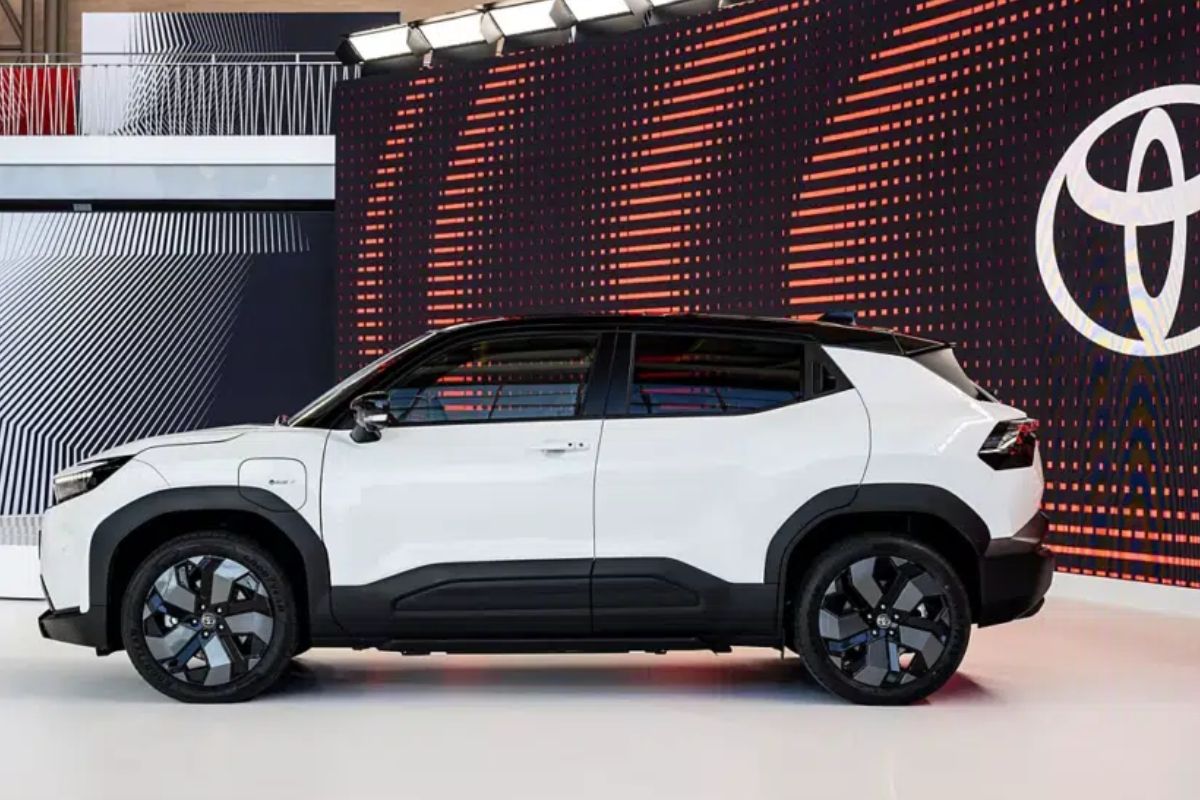


The New Toyota Urban Cruiser Electric Arrives as a Compact Urban SUV, with Modern Design, Spacious Interior, Simple Recharging, and Competitive Range for Daily Commutes, Short Trips, and Family Use Without Compromising Comfort and Efficiency in the Congested Traffic of Cities
Toyota officially presented the new Toyota Urban Cruiser electric as the brand’s latest bet in the zero-emission compact SUV segment, at a time when competition for space among urban electric vehicles is intensifying in Europe and other global markets. The debut consolidated the model at the center of the debate on sustainable mobility for those who need a single car for city and road.
Throughout the first impressions released by experts, the new Toyota Urban Cruiser electric was pointed out as one of the most visually balanced cars in the current lineup, combining compact dimensions, good ground clearance and a design that avoids an overly square utility image. The goal is to deliver a modern, efficient, and connected SUV, without distancing those who still have aesthetic resistance to conventional electric vehicles.
What Defines the New Toyota Urban Cruiser Electric in the Compact SUV Segment

The new Toyota Urban Cruiser electric was designed to occupy a specific place within the brand’s range: that of a compact SUV predominantly for urban use, but with enough breath for weekend trips.
-
For R$ 32,000, a brand new Hyundai car is a rival to the Kwid with a 1.2 engine producing 82 hp, 6 airbags as standard, multimedia with wireless Android Auto, up to 391 liters in the trunk, and a refreshed look for 2026 in India.
-
He bought a new car in 1983, locked it in the barn in 1988, and no one opened the door for 38 years until the family discovered what was stored inside and realized it looked like something out of a movie.
-
A 250cc motorcycle that can reach 560 km with a 14-liter tank, features disc brakes on both wheels and is among the most well-known in Brazil.
-
Man finds over 200 rare cars abandoned on a lot and tries to do the impossible in 8 hours with a surprise at the end.


The body features clean lines and well-defined surfaces, with proportional volumes that avoid the visual excesses common in sports utilities.
At the front, the model adopts sharp headlights and a striking light signature, a solution made easier by the reduced need for a front grille in electric vehicles.
The absence of large air intakes allows for a more closed and aerodynamic look, reinforcing the technological image of the set.
At the rear, elongated taillights and a robust bumper enhance the sense of width and stability, an important characteristic in a compact SUV designed to run on fast roads.
Electric Motor, Battery, and Range for City and Road
On the mechanical side, the new Toyota Urban Cruiser electric was designed with different battery and motor configurations, aimed at distinct driver profiles.
The strategy is to offer more affordable versions for intense everyday use in the city and options with greater battery capacity for those who need to travel frequent intercity stretches.
The range has been sized to keep pace with the market average of 2025 among compact electric SUVs, with an emphasis on energy efficiency and predictability of use.
Energy recovery systems during braking and deceleration help recover charge during urban traffic, while specific driving modes adjust the throttle response and air conditioning use to preserve battery life.
The model is compatible with both home chargers and fast charging points, allowing for overnight charging in the garage or planned stops during trips.
Design That Shuns the Boxy SUV and Targets Those Seeking Balanced Proportions
One of the most highlighted points by those who evaluated the new Toyota Urban Cruiser electric is the design.
Toyota adopted a more refined visual language compared to other utilities in the lineup, with balanced proportions, moderately high belt lines, and well-fitted volumes on the axles, avoiding the feeling of a heavy block atop the wheels.
The wheels integrate harmoniously with the fenders, the hood is not excessively high, and the roofline maintains a smooth arch toward the rear, which improves aerodynamics and facilitates the visual reading of the car in urban environments.
The result is an SUV that maintains the presence of a utility, but does not seem too large for tight parking spaces, garage ramps, or narrow streets in residential neighborhoods.
Interior, Connectivity, and Internal Space for Family Use
Inside, the new Toyota Urban Cruiser electric follows the same logic of modernity and functionality as the exterior.
The dashboard features digital displays for instruments and multimedia center, concentrating driving, navigation, and entertainment information on easily readable surfaces.
The reduction of physical buttons does not hinder intuitive use, as essential controls remain accessible and well-signaled.
The internal space has been designed for families that mainly travel in urban environments, with two rows of seats offering good legroom and headroom.
The height of the body facilitates passenger entry and exit, which is relevant for the elderly and children.
The trunk, adapted to accommodate the battery pack, delivers enough volume for grocery shopping, weekend bags, and daily use, reinforcing the model’s role as the family’s unique SUV.
Who the New Toyota Urban Cruiser Electric Aims to Please
The positioning of the new Toyota Urban Cruiser electric targets drivers looking to migrate to electric mobility without sacrificing a familiar format.
Instead of betting on a low hatchback or a traditional sedan, the brand chose a compact SUV with a contemporary look, comfortable ground clearance, and a stance prepared for rough roads, potholes, and speed bumps.
This profile includes residents of large centers who traverse relatively short daily routes to families needing a car for all uses, including regular travel to nearby cities.
The combination of internal space, competitive range, and recharging compatible with the current infrastructure of charging stations aims to reduce the insecurity of those who still fear running out of battery mid-journey, offering a less traumatic transition to electric.
Given the proposal of the new Toyota Urban Cruiser electric as a zero-emission compact SUV, with good internal space and more elegant design, would you trade your current car for an electric one of this type even while facing an expanding charging network in Brazil?










Ainda não estou plenamente convencido em comprar um carro totalmente elétrico, dadas as precárias condições de infra-estrutura de abastecimento (recarga)
Quanto custa?
Vem para o Brasil?
Sim
Sim. O que falta hoje no Brasil são SUV compactos. Se os filhos por casal hoje está em média de 2 filhos, porque fabricam tantos SUV médios e grandes?