





 Portuguese
  English
  Spanish
 4 min of reading
  48 comments


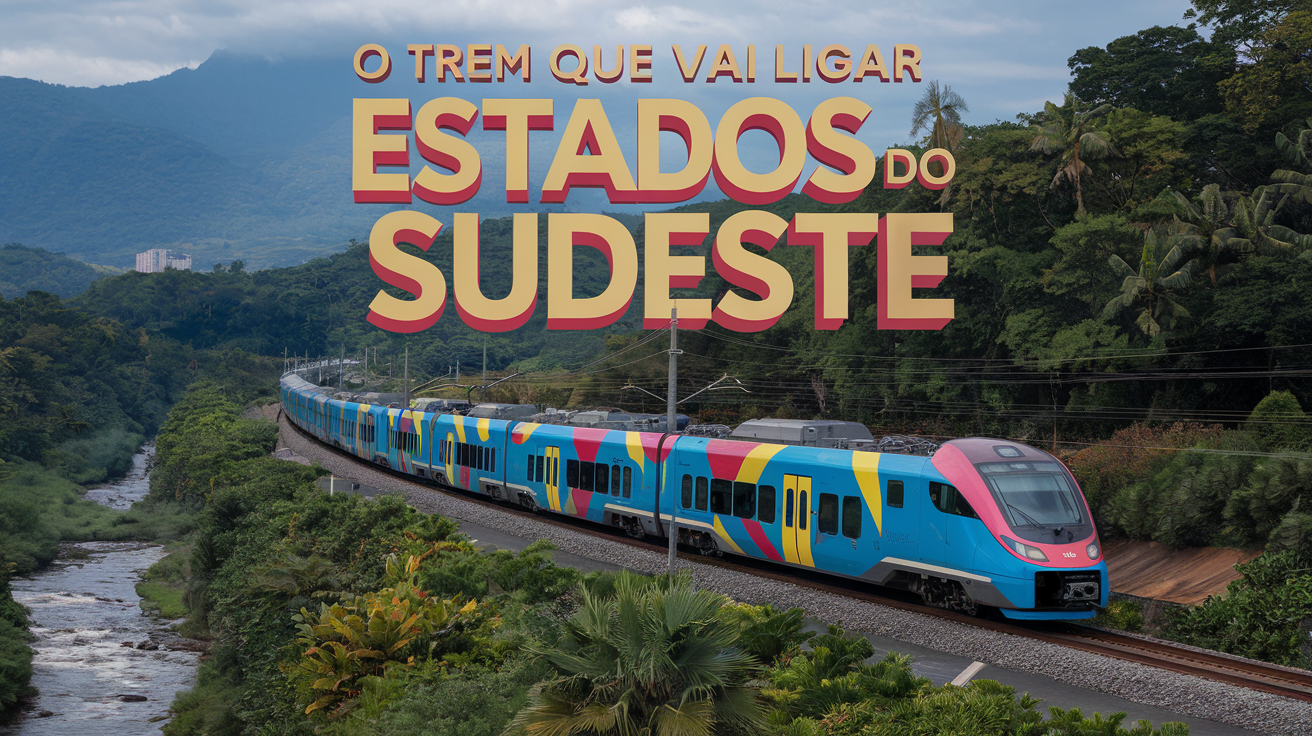


New Tourist Train Promises to Transform Transportation Between States. With Incredible Landscapes and a Million-Dollar Investment, the Line Unites Tradition and Modernity, Connecting Communities and Revitalizing Rail Tourism in Brazil.
The Tracks of the Past Are Ready to Guide the Future of Brazilian Tourism.
An ambitious project that combines modernity and historical recovery has just been announced in Brazil and promises to revolutionize the way passengers and tourists view rail transportation in the country.
With a route that crosses two of the most beautiful and culturally rich regions of the Southeast, this passenger train will not only bring comfort and integration between states but also a new perspective for economic development and local tourism.
-
50 viaducts, 4 tunnels, 28 bridges, and 40 kilometers of bike paths: BR-262 in Espírito Santo will receive 8.6 billion reais for the largest engineering project in the state’s history, inspired by the Immigrant Highway in São Paulo.

-
Brazil produces too much clean energy and doesn’t know what to do with it: over 20% of solar and wind capacity was wasted in 2025 while investors flee and 509 renewable generation projects were abandoned in the last year.

-
Piauí will produce a new fuel that replaces diesel without needing to change anything in the truck’s engine and reduces pollutant gas emissions by half: truck drivers from all over the Northeast are already celebrating the news that will arrive later this decade.

-
A new Brazilian shopping center worth R$ 400 million will be built in an area equivalent to more than 4 football fields, featuring 90 stores, 5 cinemas, a supermarket, a college, and parking for 1,700 cars, potentially generating 3,000 jobs.


What makes this initiative even more impressive is its ability to transform the relationship between transportation, leisure, and cultural preservation.
Historical Connection Between States and Strategic Cities
The new railway line formalized by the Federal Government will connect the cities of Três Rios in Rio de Janeiro and Sapucaia in Minas Gerais.
The route also includes the city of Chiador in the state of Minas Gerais, totaling 36 kilometers of tracks that traverse stunning landscapes, including the banks of the Rio Paraíba do Sul.
As announced by the Ministry of Transportation, the operational contract was signed at a ceremony held in Brasília on December 11 of this month.
The occasion was attended by key figures, such as the executive secretary of the Ministry, George Santoro, and the National Secretary of Rail Transportation, Leonardo Ribeiro, as well as mayors, representatives from the National Land Transportation Agency (ANTT), and private entities.
Investments That Drive the Local Economy
The execution of the project involves an investment of R$ 36 million by the Centro-Atlântica Railway (FCA), which will be responsible for restoring the railway section.
According to the Ministry of Transportation, part of this amount will be allocated to the transfer of assets to the Civil Society Organization of Public Interest (Oscip) Friends of the Train, located in Recreio (RJ).
This financial contribution is not limited to the recovery of railway infrastructure. It also reinforces the commitment to use transportation as a leverage for the economy and tourism.
The tourist train positions itself as a catalyst for the development of the communities along its route, bringing new businesses and job opportunities.
Integrated Tourism and Historical Preservation
According to George Santoro, the project not only modernizes the railway network but also rescues the symbolic and historical value of the tracks.
He emphasized that the train has a dual role: “We are preserving freight transport while simultaneously creating a tourist train for a region of rare beauty.
This optimizes the use of the railway asset and adds value to the local economy.”
Leonardo Ribeiro also highlighted the transformative impact of the project.
“This train will generate jobs, increase municipal revenue, and promote integrated development in the region. With modern railway legislation, Brazil is better prepared for initiatives like this,” said the secretary.
Natural and Cultural Attractions
The new tourist route will traverse cities strategically positioned between the states of Minas Gerais and Rio de Janeiro, creating a connection between culture and nature.
In addition to the enchanting landscapes of the Rio Paraíba do Sul, the line passes through historical areas that help tell the history of Brazil.
The proximity to major urban centers, such as Juiz de Fora (MG) and the capital of Rio de Janeiro, enhances the tourism appeal of the initiative.
For visitors from these urban hubs, the train will offer a unique leisure experience, combining the joy of travel with the discovery of places that exude history and tradition.
Sustainable Development and Job Creation
The project also stands out for its sustainable approach.
The use of the railway as an alternative mode of transport reduces greenhouse gas emissions while promoting economic activities based on ecological and cultural tourism.
Additionally, the revitalization of the tracks and the operation of the train create a positive cascading effect on the economy.
From the construction and maintenance of the infrastructure to the opening of new tourism ventures, such as inns, restaurants, and craft shops, the region is preparing to reap the benefits of this investment.
The New Era of Brazilian Rail Transportation
This project not only revitalizes the railway connection between Minas Gerais and Rio de Janeiro but also symbolizes a broader movement of revaluation of rail transportation in Brazil.
In a country where railways once played a central role in the economy, the new tourist train emerges as a revival of that tradition, adapted to the needs and expectations of the 21st century.
The initiative is also an opportunity to showcase the potential of Brazilian railways, not just as a transportation solution but as a heritage to be preserved and explored.
A Promising Future for Rail Transportation
The tourist train between Três Rios and Sapucaia is an example of how Brazil can integrate past, present, and future in projects that benefit not only local communities but also the national economy.
With modern railway legislation and significant investments, the country is taking an important step towards valuing its natural and cultural riches.
And best of all, this transformation begins with a simple train ride, which promises to delight tourists and residents.
Do you believe this initiative can inspire other regions of Brazil to revitalize their rail lines and promote local tourism?








Avante Brasil,enquanto nós torcemos pelo desenvolvimento do transporte ferroviário no País,temos visto muitos brasileiros torcendo pelo contrário…..
Senhores, Três Rios e Sapucaia são, ambas, cidades do estado do Rio de Janeiro. A distância entre elas é pequena. A forma como a iniciativa é apresentada não reflete a realidade. Não que ela (iniciativa) não deva ganhar vida. Deve sim. Toda projeto que traga prosperidade deve ser apoiado, mas com os pés no chão. Sem gerar expectativas onalcansáveis.
Pergunta a: como se dará a integração entre os Estados do Rio e de Minas com esse projeto?
Sempre amei trem, estamos atrasados com nossas ferrovias de passageiros,.Que eu utilizei algumas vezes no passado!
Temos que ligar o Brasil todo por ferrovias, respeitando o meio-ambiente e fazer passagem para animais.
Quem sabe um dia volte toda América do Sul a se conectar por vias férreas de passageiros!