





 Portuguese
  English
  Spanish
  3 min of reading


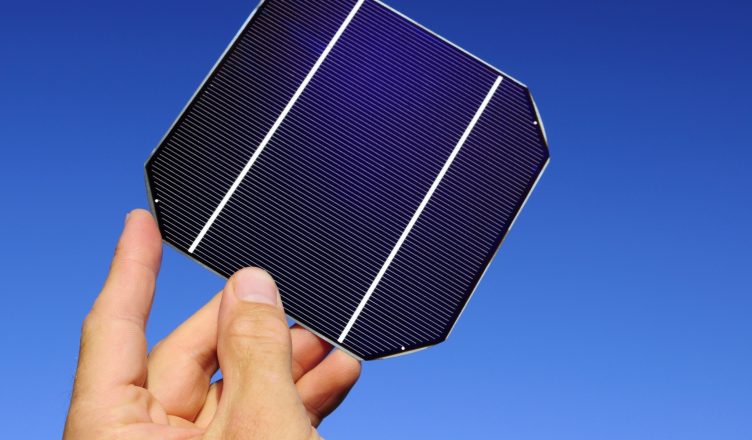
Scientists Discovered That Designing Solar Panels in Checkered Patterns Increases Their Capacity to Absorb Solar Energy by 125%
Researchers claim that this breakthrough could lead to the production of thinner, lighter, and more flexible solar panels that could be used to power more homes and a wider range of solar energy products.
Read Also
- Analyst, Developer, Engineers, and More Are Wanted for Job Vacancies at Localiza on This Day 08
- Analyst, Developer, Engineers, and More Are Wanted for Job Vacancies at Localiza on This Day 12
- Eneva Discovers Evidence of Oil in the Parnaíba Basin
- Should Petrobras Be Privatized or Not?
The study – led by scientists from the University of York and conducted in partnership with the NOVA University of Lisbon (CENIMAT-i3N) – investigated how different solar energy surface designs impact the absorption of sunlight in solar cells, which together form solar panels.
Scientists found that the checkerboard design improved diffraction, which increased the likelihood of sunlight being absorbed, which is then used to create electricity.
-
Renewable energy advances over protected areas in Brazil, and a survey by the Energy Transition Observatory reveals silent impacts that challenge environmental conservation and pressure sensitive traditional territories.

-
Rio Grande do Sul accelerates energy transition: State invests in renewable technologies and consolidates decarbonization strategies and pathways to attract billions in new industrial investments.

-
With 160,000 m² of collectors, an area larger than 20 football fields, Silkeborg, in Denmark, hosts a solar thermal plant that heats 19,500 homes and could become the largest solar heating plant in the world.

-
A study reveals the expansion of renewable energy procurement in Brazil and shows how companies are taking advantage of opportunities to reduce expenses, ensure energy efficiency, and strengthen strategic environmental commitments.


Renewable Energy Industry Thinking About the Future
The renewable energy sector is constantly seeking new ways to increase light absorption by solar cells in lightweight materials that can be used in products ranging from tiles to boat sails and camping equipment.
Solar-grade silicon – used to create solar cells – consumes a lot of energy to produce, so creating thinner cells and altering the surface design would make them cheaper and more environmentally friendly. New solar panels Dr. Christian Schuster from the Department of Physics said: “We found a simple trick to increase the absorption of thin solar cells.
Our investigations show that our idea actually rivals the improved absorption of more sophisticated designs – while absorbing more light in-plane and less light near the actual surface structure.
“Our design rule addresses all relevant aspects of light capture for solar cells, paving the way for simple, practical yet excellent diffractive structures, with potential impact beyond photonic applications.
“This project offers potential to further integrate solar cells into thinner and more flexible materials, thereby creating more opportunities for solar energy use in more products.”
New Design for Solar Energy Panels
The solar energy study suggests that the design principle could impact not only the solar cell or LED sector, but also applications such as acoustic noise shielding, wind panels, non-slip surfaces, biosensor applications, and atomic cooling.
Dr. Schuster added: “In principle, we would deploy ten times more solar energy with the same amount of absorbing material: ten times thinner solar cells could allow for rapid expansion of photovoltaic energy, increase solar power production, and significantly reduce our carbon footprint.
“Indeed, as refining silicon raw material is an energy-intensive process, ten times thinner silicon cells would not only reduce the need for refineries but also cost less, boosting our transition to a greener economy.”










Seja o primeiro a reagir!