





 Portuguese
  English
  Spanish
  5 min of reading
  0 comments


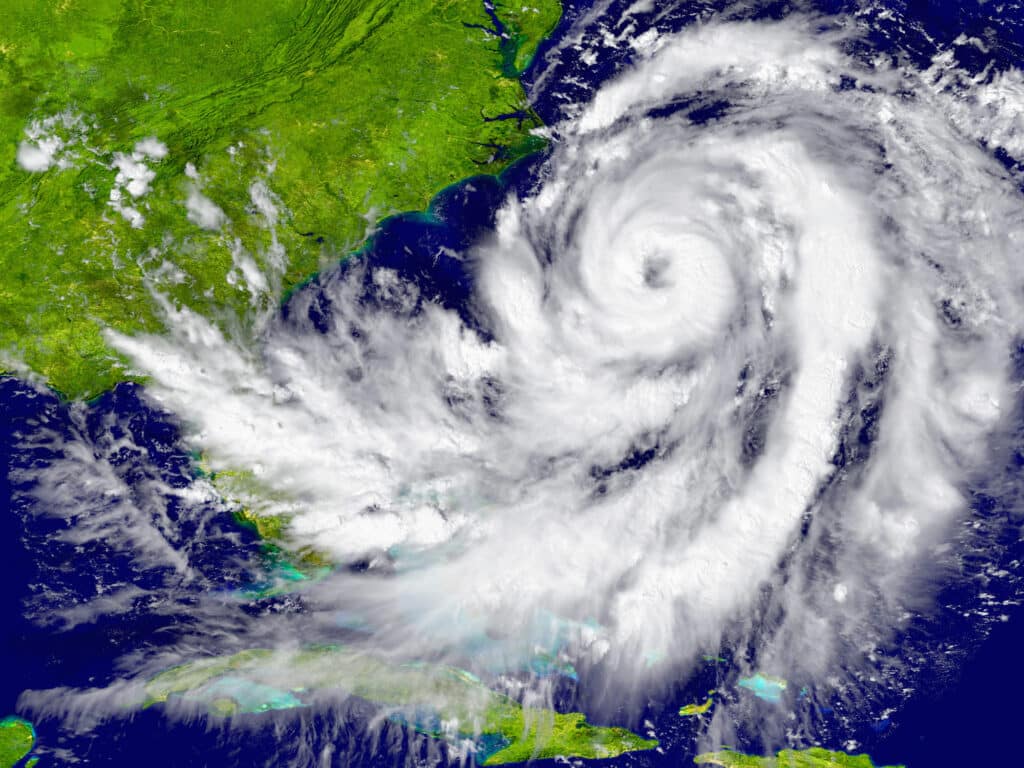
2024 Set All Climate Records: Sea Level Rose 0.59 cm and 600 Extreme Events Struck the Planet
The clear signs of human-induced climate change reached new heights in 2024, and some consequences will be irreversible for hundreds or thousands of years, according to the Global Climate State Report 2024 from the World Meteorological Organization (WMO).
The report also highlights the enormous economic and social impacts caused by extreme climate phenomena.
The document “The State of the Global Climate 2024” reinforces the warnings already made by Copernicus and other sources about how close we are to reaching the 1.5 degree Celsius limit.
-
Archaeologists find an intact tomb over 2,500 years old, with more than 100 preserved objects, weapons, jewelry, and human remains never touched.

-
Volcanic lava transforms into threads as fine as human hair that travel over 30 kilometers by wind and fall like cutting rain on roofs and backyards in Hawaii and Iceland.

-
Son of a seamstress from the rural area of Ceará who did not speak English wins a scholarship of over 2 million reais at Williams College, one of the top 10 universities in the United States, covering everything including dormitory, meals, and annual trips to Brazil.

-
Bill Gates revealed that the true secret behind every great achievement is not a brilliant leap but rather small improvements repeated over the years, and the data from his own career and the fight against climate change prove that he is right.


According to the report, global temperatures are between 1.34 and 1.41 degrees Celsius above the average recorded from 1850 to 1900 due to greenhouse gas emissions, reduced aerosols, and other factors.
In any case, we are very close to the 1.5 degree threshold, which already represents a significant increase, bringing serious consequences such as the rise of extreme climate phenomena, melting polar ice caps, and irreversible sea level rise. This report serves once again as an urgent call to action.
In the new Global Climate State report, the WMO confirms that last year was the hottest in the 175-year observational record, being the first year to exceed the average temperature of the pre-industrial period (1850-1900) by 1.5 ºC.
Furthermore, the report updates indices related to atmospheric warming at the surface, ocean warming, melting polar ice caps, sea level rise, ocean acidification, growing concentrations of greenhouse gases, among other factors.

Extreme Climate Phenomena
All these indicators point to the growing difficulty of fulfilling commitments made in the Paris Agreement. The report especially emphasizes the importance of strengthening early warning systems in the face of increasingly frequent and destructive extreme climate events, which cause major material and human losses.
All elements that contribute to these early warning systems—such as atmospheric and hydrological monitoring, weather, hydrological and hydraulic forecasting on various timescales, risk assessment, automation of procedures, communication and dissemination of alerts with clear protocols, and training of affected communities and decision-makers—need to be reinforced to minimize the effects of these extreme phenomena, for which a swift response is essential.
The WMO has proven experience in developing and implementing all essential components for the effective functioning of early warning systems.
Last year set all climate records and had the highest concentration of CO₂ in the last 800,000 years.
The rate of sea level rise has doubled since the start of measurements, according to the WMO. In addition to being the hottest year on record, 2024 broke all types of climate records.
More than 600 extreme events were recorded, 151 of them unprecedented, causing the displacement of 824,500 people—the highest number since 2008, according to the report published on Wednesday by the WMO, an agency linked to the UN.
The report confirms what this institution had already anticipated in January: 2024 was the hottest year on record, with an average temperature 1.55 °C above pre-industrial levels.
This record surpasses what was established just a year earlier in 2023, demonstrating that all the hottest years on record occurred in the last decade, between 2015 and 2024.
Moreover, greenhouse gas concentrations reached the highest level in the last 800,000 years. To put this in perspective, it is estimated that our species emerged about 200,000 years ago.
600 Extreme Climate Events
The rate of sea level rise has more than doubled since the start of satellite measurements, increasing from 2.1 millimeters per year during the 1993-2002 period to 4.5 millimeters per year between 2015 and 2024. Although an increase of a few millimeters might seem small, it puts millions of people living in coastal areas, such as in cities like Los Angeles, New York, London, Mumbai, Tokyo, or Shanghai, at risk.
“The rise in sea level will bring cascading and aggravated impacts,” warns the report. The loss of coastal ecosystems, salinization of groundwater, flooding, and damage to coastal infrastructure will result in “risks to livelihoods, settlements, health, well-being, food security, population displacements, water security, and cultural values in the short and long term,” the authors highlight.
Glacier retreat is also accelerating, as in the last three years they have lost more ice mass than ever, threatening the drinking water source for millions of people worldwide.

Our Planet Is Emitting More Warning Signs
“Our planet is emitting more warning signs, but this report shows that it is still possible to limit the long-term increase in global temperature to 1.5 degrees Celsius,” said UN Secretary-General António Guterres. “Leaders need to act to achieve this goal, harnessing the benefits of clean and cheap renewable energy for their populations and economies, with the new national climate plans expected this year,” he added, referring to the report.
Guterres refers to the 1.5 degrees Celsius limit, a threshold that countries worldwide committed not to exceed in the Paris Agreement.
In this historic pact, the international community promised to reduce emissions to limit the increase in global temperature to two degrees, or ideally to 1.5 °C by the end of the century, compared to pre-industrial levels, to avoid even more catastrophic climate impacts than the current ones.
That a single year has surpassed this barrier does not mean, according to the report, a breach of the Paris Agreement—for that, a 20 to 30 year average would need to be calculated, experts clarify—yet it represents a significant psychological impact as it is something unprecedented.
Heat Waves, Extreme Rains, and Floods, the Most Frequent Events
Of the 616 extreme events recorded globally, most (137) were heat waves, followed by extreme rains (115) and floods (103). There were also 297 unusual events. These phenomena left 1.1 million injured and 1,700 dead, though the report clarifies that these numbers do not represent a comprehensive tally.
“Another record year of heat. Global warming continues unabated, just as predicted since the 1980s,” highlighted Stefan Rahmstorf, a researcher at the Potsdam Institute for Climate Impact Research. Rahmstorf reminds us that the only way to halt this crisis is to rapidly abandon fossil fuels, emphasizing that “we have the solutions, but we are hindered by misinformation campaigns and pressure from the fossil fuel industry.”







Seja o primeiro a reagir!