





 Portuguese
  English
  Spanish
  4 min of reading
  6 comments


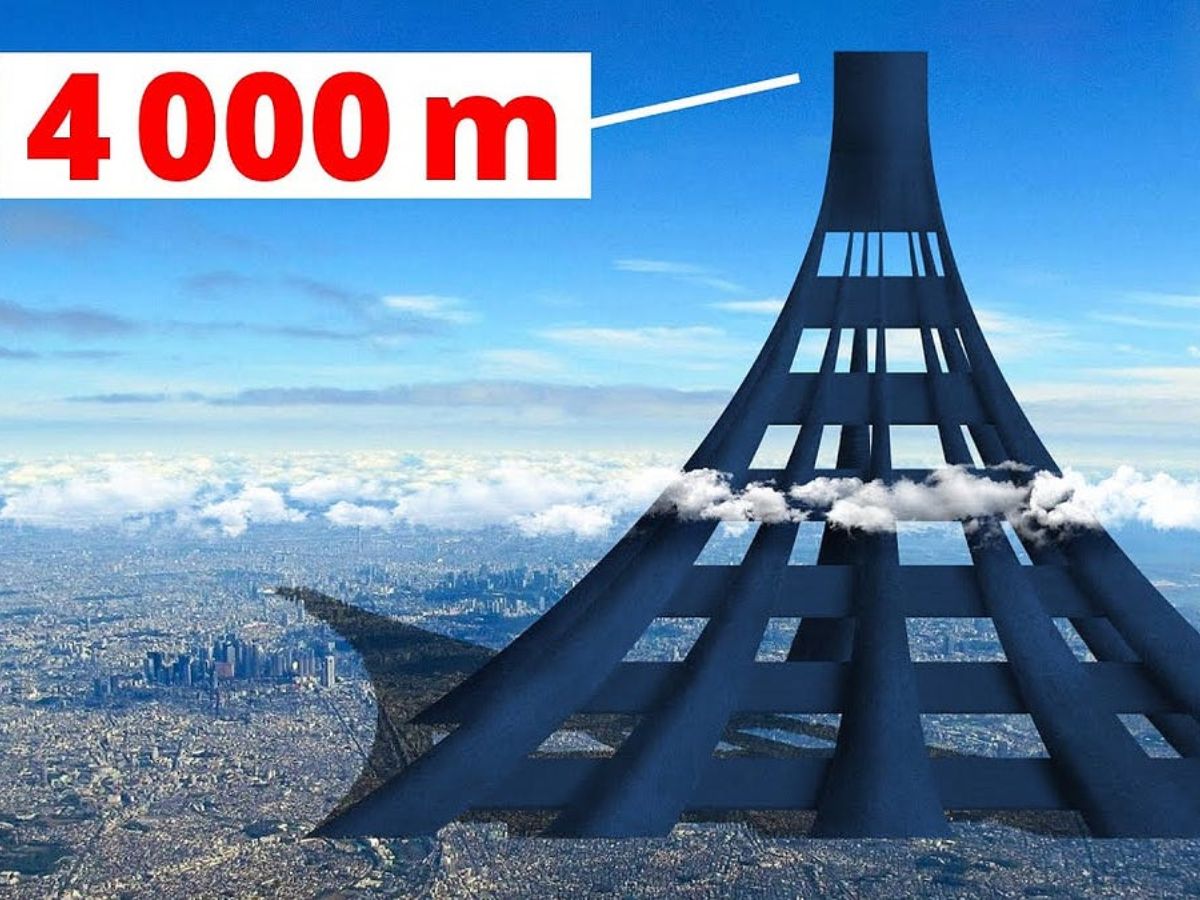


Meet the X-Seed 4000, the Conceptual Project for a 4km High Mega-Galactic Skyscraper That Imagined the Future of Tokyo but Was Never Built
The X-Seed 4000, proposed in 1995 by Taisei Corporation, is one of the most ambitious mega-galactic skyscraper projects ever conceived. Intended for Tokyo Bay, this arcology, standing 4 kilometers tall, was designed to house up to one million people, combining ultra-modern living with nature.
Inspired by Mount Fuji and powered by solar energy, the X-Seed 4000 generated debates about its true intention and viability. Understand the vision, design, challenges, and legacy of this monumental mega-galactic skyscraper, a true vertical city.
X-Seed 4000, the Birth of the Idea for a Mega-Galactic Skyscraper
In 1995, the Japanese construction company Taisei Corporation unveiled the X-Seed 4000 to the world. This colossal project was conceived for Tokyo Bay, Japan, as a futuristic, self-sufficient arcology. Its dimensions were truly impressive: 4,000 meters tall, a maritime base with a diameter of 6 kilometers, and 800 floors. This mega-galactic skyscraper would accommodate between 500,000 and 1 million inhabitants.
-
A couple buys an old chalet, breaks the kitchen floor for renovation, and finds over a thousand coins of gold and silver hidden since the English Civil War over 4 centuries ago.

-
Rigid bags with their days numbered: new trend prioritizes comfort in 2026.

-
YouTuber creates an excavator equipped with a giant 4.5-meter sword to challenge his brother to a rematch, and the invention quickly goes viral on social media.

-
The U.S. Army surprises the world by presenting the UH-60MX Black Hawk helicopter capable of flying without pilots, controlled by a tablet, featuring the MATRIX system, smart sensors, and full autonomy in real combat and rescue missions.


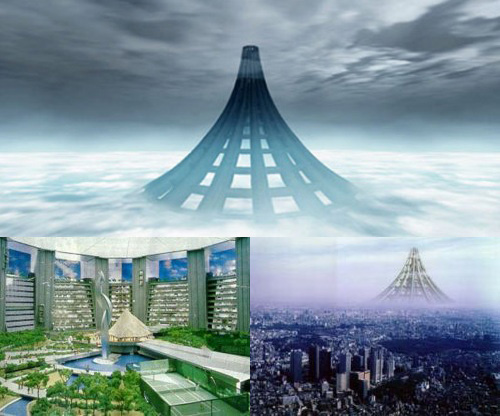
The shape of the X-Seed 4000 was inspired by the iconic Mount Fuji. The aim was to create an environment that integrated “ultra-modern and technological life” with “interaction with wildlife and nature.” It would be a vertical city where residents would never need to leave, powered by solar energy and featuring internal climate control.
Main Specifications of the X-Seed 4000:
Height: 4,000 meters
Base Diameter: 6 km (maritime)
Floors: 800
Capacity: 0.5 to 1 million inhabitants
Estimated Cost: US$600 billion – US$1.7 trillion
The True Intention Behind the X-Seed 4000
Since its introduction, the X-Seed 4000 has been classified as “conceptual.” Experts debate whether the true intention was construction or if the project served other purposes. Georges Binder, director of Buildings & Data, stated that “the goal of the plan was to gain some recognition for the company, and it worked.” This view suggests that the mega-galactic skyscraper served as a powerful marketing tool and a demonstration of visionary capability for Taisei Corporation.
Taisei Corporation itself later indicated that it had no plans to initiate construction. This reinforces the idea that the X-Seed 4000 functioned as a “conceptual flagship”. Even if not built, the project is widely discussed, exemplifying how “paper architecture” can influence discourse and public perception, regardless of its feasibility.
Design and Engineering of a Mega-Galactic Skyscraper
The design of the mega-galactic skyscraper X-Seed 4000 was a fusion of aesthetics and functionality. Its concave cone shape, similar to Mount Fuji, offered structural stability against wind and earthquakes. The structure would utilize over 3 million tons of steel, along with possible advanced alloys and glass. The internal layout envisioned a mixed-use city, with residential, commercial, office areas, and spaces that would allow interaction with nature.
Building on a maritime base in Tokyo Bay would address land shortages but introduce risks of tsunamis and require advanced geotechnical engineering. One of the biggest challenges would be controlling the internal environment. Due to its height of 4 km, it would require active regulation of atmospheric pressure, oxygen levels, and humidity to prevent altitude sickness on the upper floors. Energy for this arcology would predominantly come from solar sources, supplemented by other renewable sources. Internal mobility would be guaranteed by advanced systems such as magnetic levitation trains (Maglev).
Why Did the Mega-Galactic Skyscraper X-Seed 4000 Never Come to Life?
Despite the bold vision, various obstacles rendered the construction of the X-Seed 4000 unfeasible. The financial costs were prohibitive, with estimates ranging from US$600 billion to a staggering US$1.7 trillion. Such an amount exceeded the GDP of many nations at the time, making financing practically impossible.
From an engineering standpoint, building and maintaining a mega-galactic skyscraper of this scale would push existing materials and technologies to their limits. Issues such as pumping concrete to extreme heights, wind loads, and the need for robotic maintenance posed significant challenges. Additionally, the location in Tokyo Bay, part of the Pacific Ring of Fire, exposed the structure to high risks of earthquakes and tsunamis. The urban integration of a city for a million people and the logistics of evacuation during emergencies were also complex obstacles.
The Impact of a Conceptual Mega-Galactic Skyscraper


Although the mega-galactic skyscraper X-Seed 4000 remained a concept, its impact is enduring. It stimulated innovation and expanded the boundaries of architectural and engineering thought. Visionary projects like this serve as “thought experiments,” forcing experts to confront the limits of current technology and imagine future possibilities.
Compared to other conceptual mega-structures, such as the Shimizu Megacity Pyramid and the Ultima Tower, the X-Seed 4000 stands out for its monumental scale. It occupies an important place in the discourse on futuristic urbanism and arcology, raising questions about how to reconcile innovation with heritage and nature. The value of “unbuilt” projects like the X-Seed 4000 lies in their ability to inspire and provoke reflection on the future of cities and the human drive to build on an epic scale, serving both as inspiration and as a cautionary tale about the inherent responsibility of such ambitions.





Um país cheio de terremotos. Tá ****.
O pior de tudo é a vcs aqui saberem que é um projeto cogitado a 30 anos, não deu certo, e vcs colocarem no título como se o edifício fosse ser construído, ” vai abrigar” , vai abrigar o quê? Se não vai ser construído, que tipo de página vcs são?
Utopia megalomaníaca,ideia mais **** coisa de japonês e árabe