





 Português
  Inglês
  Espanhol
  4 min de leitura
  0 comentários


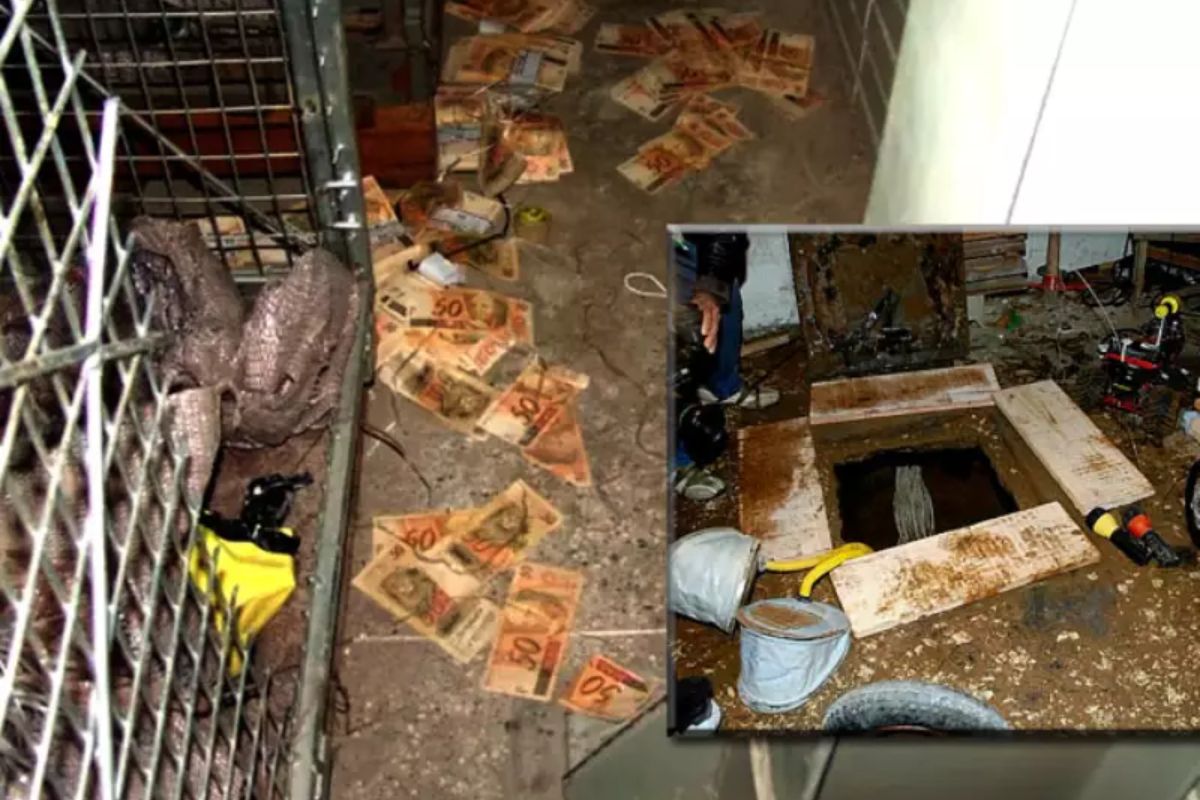
In August 2005, Fortaleza was the stage for one of the greatest financial crimes in Brazil: R$ 164 million stolen from the Central Bank through a sophisticated tunnel.
Considered the second largest bank robbery in Brazil in terms of value, the theft at the Central Bank in Fortaleza in 2005 shocked with its audacity and planning. Without direct violence, a gang took R$ 164 million by digging an 80-meter tunnel to the vault. The police would only discover the crime two days later, initiating a complex investigation and revealing a plot of ingenuity, betrayal, and violence.
Three Months Digging Toward the Vault of the Central Bank of Fortaleza
The planning of the theft from the Central Bank started months before the execution. The group rented a house on Rua 25 de Março, number 1071, in downtown Fortaleza, strategically close to the bank. To justify the intense movement of earth and people in a residential area, they set up a front: a fictitious landscaping company that supposedly worked with grass and soil.
For three months, about 40 people worked on digging a tunnel for the theft from the Central Bank of Fortaleza. The work, with an estimated cost of R$ 500 thousand, resulted in an underground passage 80 meters long, 70 centimeters in diameter, and 4 meters deep, passing under the busy Avenida Dom Manuel.
-
Brazilian city gains industrial hub for 85 companies that is equivalent to 55 football fields.

-
Peugeot and Citroën factory in Argentina cuts production by half and opens a layoff program for more than 2,000 employees after Brazil drastically reduced purchases of Argentine vehicles.

-
A Brazilian city gains a factory worth R$ 300 million with the capacity to process 200 thousand tons of wheat per year, a mill of 660 tons/day, silos for 42 thousand tons, and an industrial area of 276 thousand m².

-
Havan will leave the shopping mall in Blumenau to inaugurate something that the chain has never done before: a megastore in half-timbered style in the Historic Center of the city, which is expected to be completed in May and change the landscape of local retail.


The tunnel was lined and had electric lighting and even an air conditioning system to combat the intense heat of Fortaleza’s underground. The sandy soil facilitated the excavation, but the heat required extra precautions, as evidenced by burn ointments and isotonic drinks found at the site. About 30 tons of earth were discreetly removed in bags.
Night and Day Removing R$ 164 Million

The final phase occurred between the afternoon of Friday, August 5, and noon on Saturday, August 6. The criminals managed to break through the floor of the vault of the Central Bank of Fortaleza, a structure of concrete and iron 1.10 meters thick, using professional tools, possibly with diamond tips. To transport the rubble and later the money, they set up a system of carts on improvised tracks.
Insider information seems to have been crucial. The thieves knew how to avoid or neutralize the sensors and surveillance cameras of the Central Bank of Fortaleza – which only filmed, without recording. They also focused on specific R$ 50 bills that had been collected and were unnumbered, awaiting incineration, making tracking difficult. The amount taken, R$ 164 million, was so large that it would fill the equivalent of six thousand-liter water tanks.
The Shocking Discovery and the Dispersed Escape
The theft was only discovered on the morning of Monday, August 8, when the employees of the Central Bank arrived for work. This gave the criminals an advantage of about 44 hours to escape. The group quickly dispersed, following pre-established escape plans to different destinations, including the neighboring city of Boa Viagem (CE), São Paulo, Piauí, Bahia, and other states.
Investigation, Arrests, and the Trail of Violence


The investigation began immediately. Some fingerprints were found at the scene. A crucial mistake led to the first arrest: one of the members bought 11 cars at once, paying in cash from the theft at the Central Bank. The police became suspicious and intercepted a car carrier truck in Minas Gerais transporting the vehicles, arresting José Charles Moraes and finding R$ 6 million in three of the cars.
Despite the efforts, the recovery of the money from the Central Bank was low: only R$ 53 million out of R$ 164 million were officially recovered. The Federal Police estimate that only 20 to 30% of the total was reclaimed, raising suspicions that part of the money may have been diverted by corrupt police during the seizures. A total of 26 people were arrested over the years.
The investigation into the robbery of the Central Bank of Fortaleza also revealed a dark side. Many involved in the theft became targets of other criminals. Several were kidnapped, extorted, and murdered, even after ransom payments, as in the case of Luiz Fernando Ribeiro (Fernandinho), one of the financiers, killed in October 2005.
Among the notorious arrests are Antônio Jussivan Alves dos Santos (Alemão), identified as the leader; Moisés Teixeira da Silva (Tatuzão), considered the intellectual mentor; Marcos Rogério Machado de Morais, the “engineer” of the tunnel (who escaped in 2011); and Deucimar Neves Queiroz, a security staff member at the Central Bank who provided insider information. Even a mayor of Boa Viagem was implicated for financing part of the operation and assisting in the escape.
The Robbery of the Central Bank That Became a Movie
The theft from the Central Bank of Fortaleza became one of the most famous criminal cases in Brazil, gaining international attention for its complexity and audacity. The story inspired the film “Robbery of the Central Bank“, released in 2011, which became a box office success in the country.









-

-

2 pessoas reagiram a isso.