





 Portuguese
  English
  Spanish
  4 min of reading
  0 comments


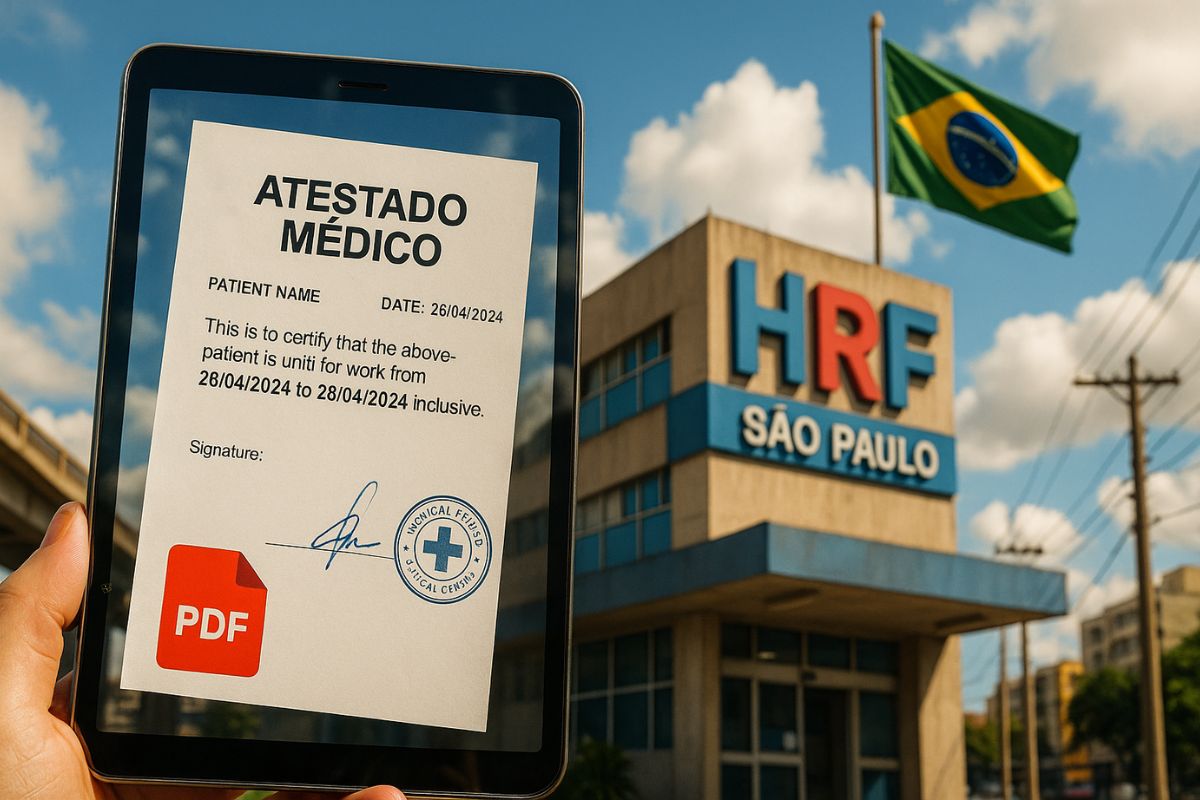
The Digital Medical Certificate, Since Signed with ICP-Brazil Certification, Has Legal Validity Equal to That of the Printed Document; With the New Atesta CFM Platform, Valid from 2025, Companies and Public Bodies Must Verify the Authenticity Online and Cannot Refuse the Electronic File
The medical certificate in PDF, when digitally signed with ICP-Brazil certification, has the same legal validity as the physical document delivered on paper. The rule applies to in-person and telemedicine consultations, and companies are required to accept it, as long as its authenticity can be proven by the electronic signature.
The change consolidates the digitization of the medical justification process, bringing more legal security and less bureaucracy for workers and employers. The advancement also accompanies the implementation of the Atesta CFM platform, which will become mandatory in March 2025 for the issuance and national validation of all certificates, physical or digital.
Why the Digital Medical Certificate Has Legal Validity
The validity arises from the digital signature with ICP-Brazil certification, the same standard used in official documents and electronic records.
-
The Senate approves a bill that criminalizes misogyny, hatred, or aversion towards women, and includes the crime in the Racism Law with a penalty of up to 5 years.

-
Chamber Approves Bill That Allows Pepper Spray for Women Over 16 and Imposes Strict Rules for Purchase, Possession, and Use as Self-Defense

-
Chamber Approves Law to Combat Leucaena, Fast-Growing Plant That Dominates Land and Threatens Native Species in Various Regions of the Country

-
Asset Division: Know What Cannot Be Divided in Case of Divorce


This signature contains encrypted data that guarantees the authorship and integrity of the file, preventing alterations or forgeries.
In contrast, a scanned certificate, one that is hand-signed and then converted to PDF, does not have legal value.
In these cases, the employer may require the original printed document.
The distinction is fundamental: only the digitally signed file has legal recognition, according to Law 14.063/2020 and the regulations of the Federal Council of Medicine.
The New Atesta CFM Platform and the Verification Code
From March 5, 2025, all certificates must be issued or validated by the Atesta CFM platform, developed by the Federal Council of Medicine.
The system creates a unique verification code, allowing companies and public bodies to confirm the authenticity of the document in seconds.
The doctor can issue the certificate directly through the website or application, using their digital certificate and professional CPF, which eliminates fraud and facilitates the control of absences.
The centralized registry will also allow the INSS and the Ministry of Labor to cross-check information automatically.
Telemedicine and Issuance of Certificates Online
With the regulation of telemedicine, the doctor can issue certificates during virtual consultations, as long as there are sufficient clinical elements to evaluate the patient.
The resulting digital document has the same legal weight as an in-person certificate, as long as it contains a digital signature and CRM number.
The employer cannot refuse the document simply because it was issued via teleconsultation, unless there is suspicion of fraud or formal inconsistency.
In such cases, the employer can check the authenticity directly on the Atesta CFM platform or with the state CRM.
What the Company Can and Cannot Do
The rules for accepting the digital medical certificate are straightforward:
May require verification if there is doubt about its authenticity, using the CFM validation code.
May refuse only documents with alterations, incomplete data, or without a valid digital signature.
Cannot refuse correctly issued certificates, including those from telemedicine, under penalty of violating the worker’s rights.
For employers, the new format brings more transparency and security, as digital verification reduces the risk of forgeries and allows for secure electronic filing.
Integration with the INSS and Absence Periods
A provisional measure from June 2025 determined that medical certificates for up to 30 days can be accepted by the INSS without an in-person examination, provided they are issued with a digital signature and validated electronically.
For longer absences, a medical examination remains mandatory.
The integration of Atesta CFM into the social security system will allow the INSS to automatically confirm the authenticity of documents, speeding up the granting of benefits and reducing waiting lines for examinations.
Mandatory Content of the Certificate
To ensure legal validity, the digital document must include:
Complete identification of the patient.
Absence period with start and end dates.
Name and CRM of the issuing doctor.
Digital signature with ICP-Brazil certification.
Verification code generated by Atesta CFM (starting in 2025).
Security and Impact on Workers and Companies
The digitization of certificates represents a milestone in the modernization of health and labor relations.
In addition to reducing fraud, the digital model protects patient data and simplifies human resources management.
Doctors gain agility in recording, companies gain reliability in processes, and workers are guaranteed the right to legitimate absences without relying on traveling to deliver paperwork.










-

-

-

-

-

-

36 pessoas reagiram a isso.