





 Portuguese
  English
  Spanish
  4 min of reading
  25 comments




Mars? Not at All! Understand How Elon Musk Plans to Reach the Largest Planet in the Solar System with This New and Bold Mission!
Elon Musk is no stranger to radical and innovative concepts in the field of space travel. While many believed that his company, SpaceX, was still primarily focused on Mars or returning to the Moon, recent developments show that Musk’s target is now even more ambitious: Jupiter.
From Mars to Jupiter: A Shift in Focus
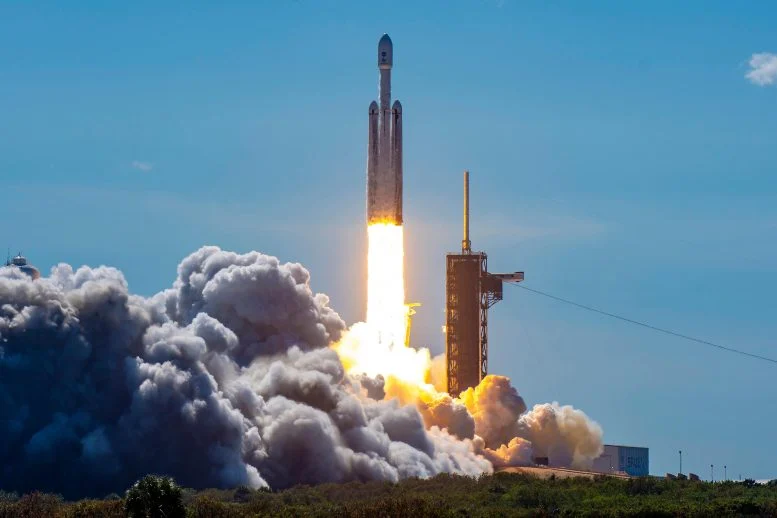
For years, Mars has been an important part of Musk’s plans for space colonization. However, attention is now turned to one of Jupiter’s moons, Europa.
-
A “silent skill” is allowing Brazilians to earn up to R$ 22,000 per month without a degree and become indispensable for companies that rely on millions of data to survive.

-
Researchers at the Toyota Research Institute found that if a human uses robotic arms to flip a pancake 300 times in an afternoon, the robot learns to do it on its own the next morning, and this is currently the most promising method to solve the biggest bottleneck in modern robotics.

-
Goodbye iron: a common item in households is starting to lose space to technology that smooths clothes in minutes without an ironing board and with less energy consumption.

-
Antarctica reveals an unusual clue high in the Hudson Mountains, and what appeared to be just an isolated rock began to expose a secret hidden under the ice for ages.

This strategic shift is largely due to NASA’s Europa Clipper mission, which aims to explore the conditions of this moon for the existence of life. The moon Europa, covered by an ice layer, hides a saltwater ocean that may contain the necessary ingredients to sustain life.

This mission represents a crucial collaboration between NASA and SpaceX, with the Falcon Heavy rocket being used to launch the Europa Clipper probe toward Jupiter.
For Elon Musk, this shift from Mars to Europa is not just a change of destination but a quest for answers in places even more distant than we imagined.
Why Is Europa Important?


The NASA Europa Clipper mission will be the first to conduct an in-depth scientific study of Europa, which orbits Jupiter.
Europa has become a growing focus for scientists studying the possibility of life beyond Earth. Unlike Mars, which may have harbored life in the past, Europa is a place that may host life now, in the present.
Europa’s subsurface ocean is protected by a layer of ice, and there are indications that it may have enough energy and nutrients to support life forms.
For 5.5 years, the probe will travel 2.9 billion kilometers through space to reach Jupiter. After that, it will spend four years observing one of Jupiter’s more than 90 moons.
If the Europa Clipper mission, expected to arrive at Jupiter in 2030, confirms that Europa’s ocean has the necessary conditions for life, it will be a monumental scientific discovery. Elon Musk is betting that this mission could be the beginning of a new era of space exploration.
After entering orbit around Jupiter, the Europa Clipper will take about a year to adjust its trajectory in preparation for its first flyby of Europa.
Next, the spacecraft will spend approximately three years performing dozens of passes by the moon and transmitting the collected data back to Earth. During this period, it will investigate nearly the entire surface of Europa.
Falcon Heavy: The Engine of the Mission
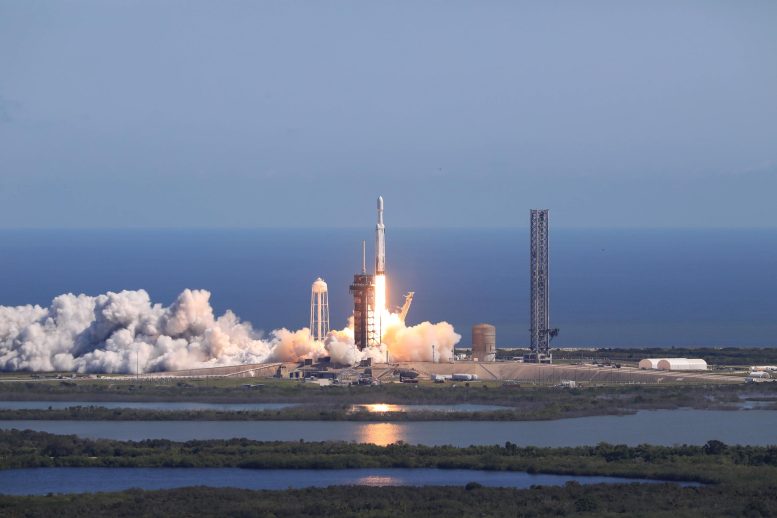
The Europa Clipper mission is only possible thanks to the Falcon Heavy rocket from SpaceX. While rocket reuse has become a hallmark of the company, this mission required the maximum power from the Falcon Heavy’s boosters.
For the first time, SpaceX sacrificed its boosters, allowing them to explode in the ocean to provide the necessary thrust to send the probe 2.9 billion kilometers away.
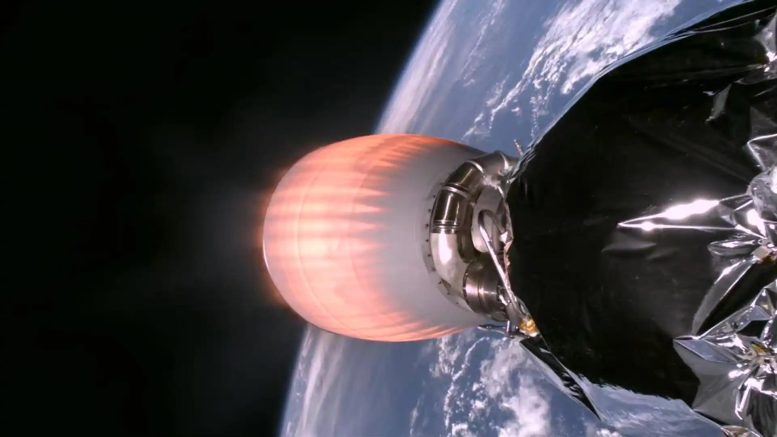
This contribution from SpaceX to NASA’s mission shows how commercial space exploration organizations are becoming fundamental parts of governmental missions.
At the same time, Musk continues to advance his technological and philosophical ambitions, exploring the farthest corners of the solar system.
What Comes After Europa?
While the current focus is on the habitability of Europa, the conclusion of this mission may open doors for new explorations. If life is discovered, or if we find signs that it is possible, the search for extraterrestrial life will become an even higher priority.
Jupiter may just be the beginning. Other moons in the solar system, like Saturn’s Enceladus, also have subsurface oceans and could harbor life forms.
Exploring these watery worlds could completely transform the way we see our place in the universe.
The Philosophical and Scientific Implications
For Musk, the search for new frontiers is not just a matter of technology, but also a philosophical issue. Finding life on Europa or anywhere else in the solar system would fundamentally change our understanding of the universe and our place within it.
Even the discovery of microbial life could redirect space agencies’ efforts from colonizing planets to finding life on other celestial bodies.
While Mars is still a dream for humanity’s future, Musk sees in Europa and other locations in the solar system an opportunity to change the game once again. The journey to Jupiter has already begun, and with it, the chance to answer one of humanity’s greatest questions: are we alone in the universe?
The success of this mission and the discoveries it may bring have the potential to usher in a new era of space exploration, where we not only seek new places to live but also new forms of life to meet.







Se não for ele esta próximo dele. É assustador .
ELON MUSK AINDA VAI IMPLODIR A TERRA.
Podem acreditar viu, é a mais pura verdade 🤣🤣🤣🤣