





 Portuguese
  English
  Spanish
  3 min of reading
  11 comments


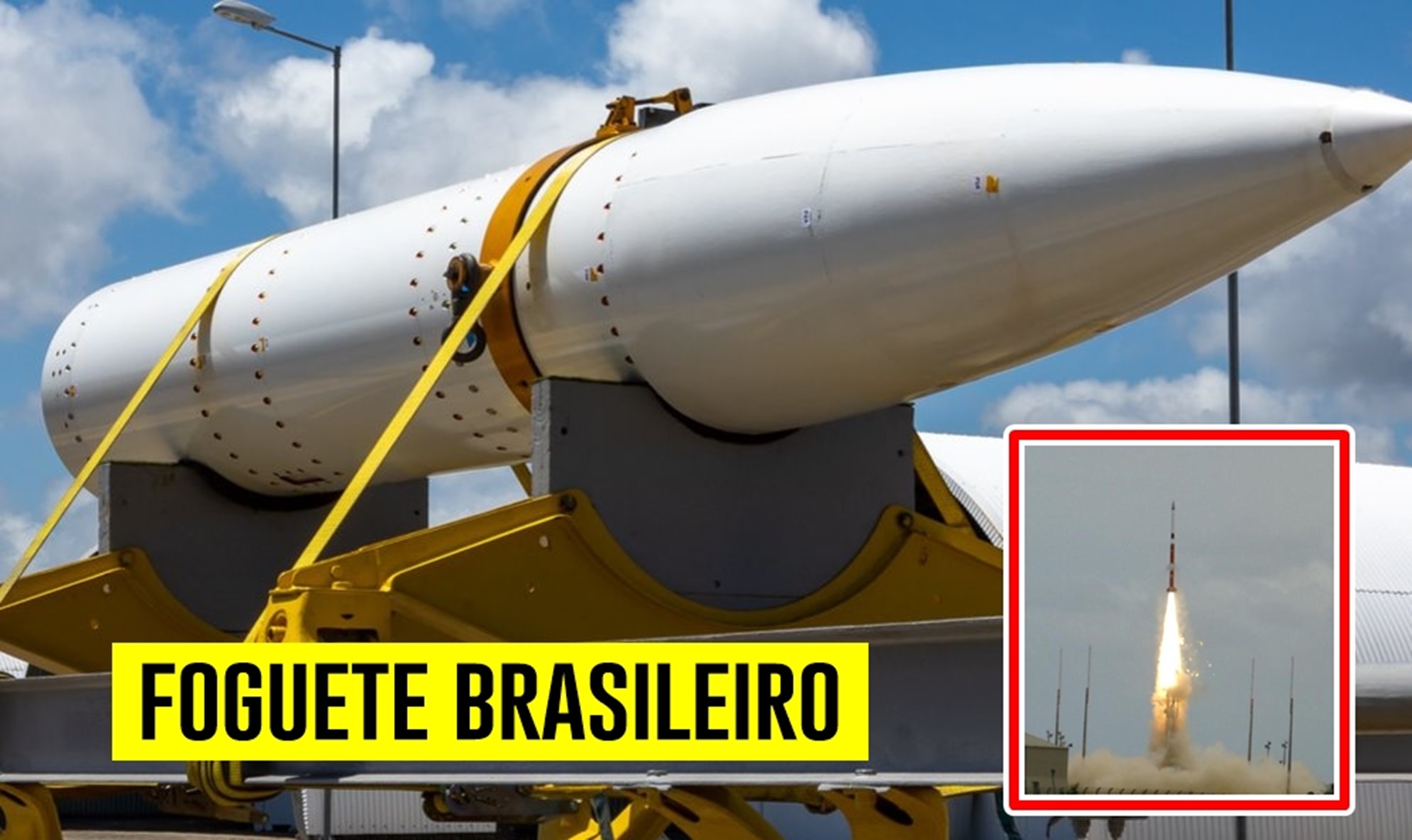


On November 29, Brazil Will Make Its Mark in the Space Scene with the Launch of a Brazilian Rocket Measuring 8 Meters, Weighing 1,500 Kg, and Capable of Reaching 150 Km in Altitude at 6,000 Km/h.
The Barreira do Inferno Launch Center (CLBI), located in Parnamirim, in the metropolitan area of Natal, will once again be the stage for important space activities in Brazil. On November 29, the Brazilian Air Force (FAB) will initiate the first phase of Operation Potiguar with the launch of the Brazilian sounding rocket VS30 V15.
The mission’s main objective is to train technicians, test equipment, and validate launch processes.
Strategic Resumption
Established in 1965, the CLBI was once the main center for space launches in Brazil, but in recent years, it has focused its activities on tracking rockets and satellites.
-
Motorola launched the Signature with a gold seal from DxOMark, tying with the iPhone 17 Pro in camera performance, Snapdragon 8 Gen 5 that surpassed 3 million in benchmarks, and a zoom that impresses even at night.

-
Satellites reveal beneath the Sahara a giant river buried for thousands of kilometers: study shows that the largest hot desert on the planet was once traversed by a river system comparable to the largest on Earth.

-
Scientists have captured something never seen in space: newly born stars are creating gigantic rings of light a thousand times larger than the distance between the Earth and the Sun, and this changes everything we knew about stellar birth.

-
Geologists find traces of a continent that disappeared 155 million years ago after separating from Australia and reveal that it did not sink, but broke into fragments scattered across Southeast Asia.

The reactivation of suborbital launch capabilities is seen as a strategic milestone for the country, reducing dependence on the Alcântara Launch Center in Maranhão, which is nearly fully committed for 2025.
“The operation represents a leap for the Potiguar organization, which will reactivate its capability to engage in suborbital launches and can compete for market demands in the segment“, reported the FAB.
Additionally, Brazil will be able to launch experiments, collect detailed data, and recover payloads sent to space, consolidating its technological capacity in the aerospace sector.
Details of the Brazilian Rocket VS30 V15
The VS30 V15 rocket, designed by the Aerospace Institute (IAE), is a single-stage, unguided sounding model with characteristics that make it ideal for suborbital missions. The Brazilian rocket will be launched via a rail, reaching speeds of up to 6,000 km/h and a maximum altitude of 154.9 kilometers.
Check out the technical specifications of the VS30 V15:
- Length: 7.911 meters
- Total Weight: 1,500 kg
- Payload Mass: 278.46 kg
- Type of Propulsion: solid propellant (900 kg)
- Maximum Speed: 6,000 km/h
- Flight Time: 6 minutes and 20 seconds
- Microgravity Time: up to 5 minutes
- Maximum Altitude (Apogee): up to 154.9 km
These features allow for the creation of a microgravity environment for up to five minutes, ideal for scientific experiments.
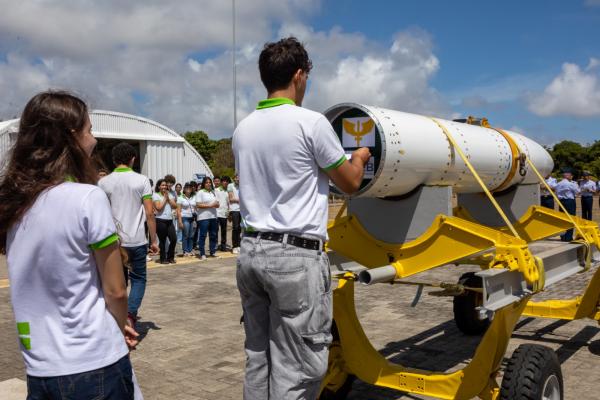
Operation Potiguar: Phases and Objectives
Operation Potiguar is divided into two phases. The first will focus on training the team and verifying equipment and processes. The second phase, scheduled for the second semester of 2025, will use another Brazilian rocket VS30 V15 to qualify the recovery system of the upper part of the vehicle, the so-called Suborbital Microgravity Platform (PSM). This stage is crucial for increasing Brazil’s autonomy in suborbital launches.
Strategic Impact
The reactivation of Barreira do Inferno has a direct impact on the development of the Brazilian aerospace sector. With the ability to carry out suborbital launches locally, Brazil is better positioned in the international market, meeting the growing demand for low-cost launches for scientific experiments.
“The country will be able to launch an experiment, collect all data, and recover the payload sent to space“, emphasizes the FAB. Furthermore, the CLBI, with its history of over three thousand launches since 1965, regains its prominent role in space operations.
With the success of Operation Potiguar, Brazil will be able to consolidate its capacity to operate independently in suborbital missions. In addition to relieving the burden on the Alcântara Center, Barreira do Inferno has the potential to once again become a strategic point for rocket launches, contributing to the advancement of science and technology in the country.








Somos tupiniquins mesmo ,isso se trata de segurança nacional, parece que vivemos em uma granja mal botou o ovo sai cantando ,fora esquecido o que aconteceu na base de Alcântara, os olhos do mundo aguardará.
Grande avanço,levando em conta, que a Ucrânia seguro a Rússia, principalmente por meio de artilharia de 30 km só,, imagina um arsenal desse que tem capacidade de alcançar. 150 km rs,,, e importante, além de dominar tecnologia, mas também, ter capacidade de, fabricar MILHARES desses mísseis.
Enquanto isso nos Estados Unidos:
Foguete starship e capturado na torre!
Rover perseverança pousa em marte!
Brasil nem preocupa com a população,imagina um programa espacial 🤣