





 Portuguese
  English
  Spanish
 5 min of reading
  0 comments


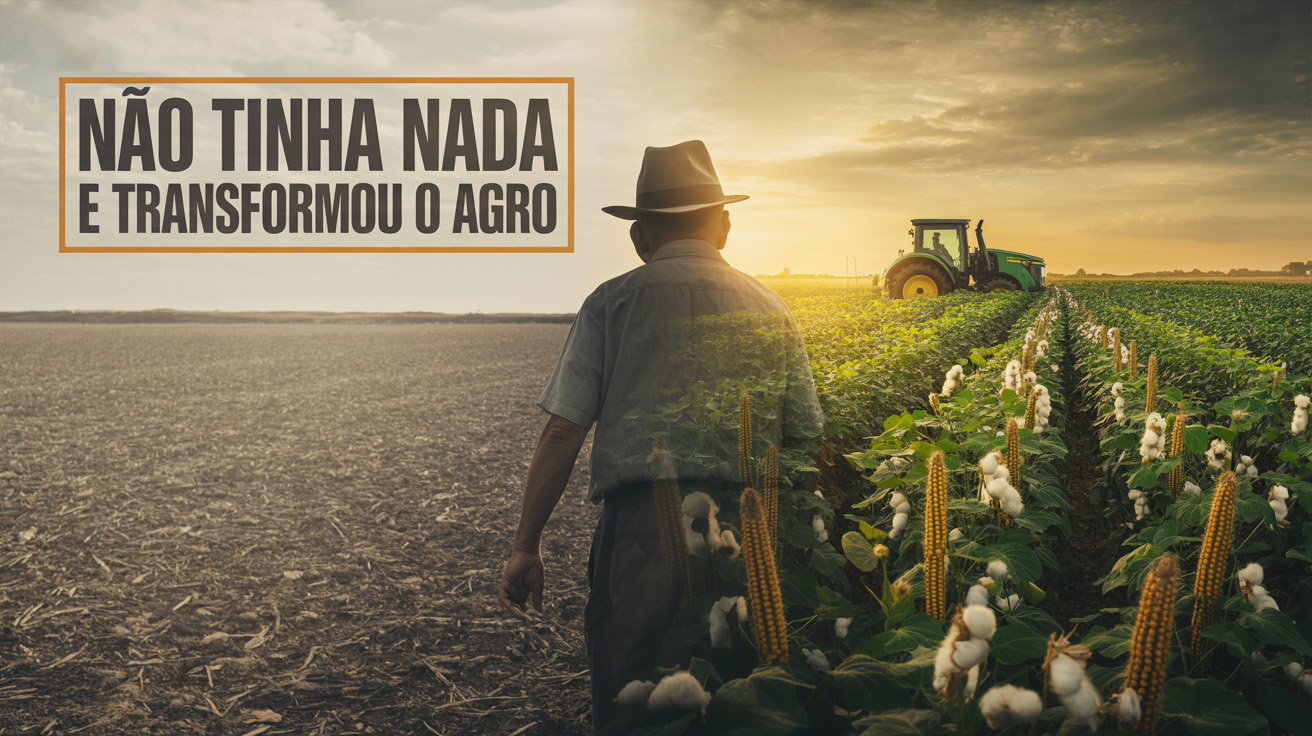
Brazilian Producer Transforms Soil in Western Bahia, Revolutionizes Agribusiness with Technology, Educates Employees, and Inspires the Sector by Leading Large Cotton Projects.
Júlio Cézar Busato, now recognized as one of the leading figures in agribusiness in Brazil, has a trajectory marked by overcoming challenges and pioneering efforts.
The story of the rural producer, originally presented by Forbes Magazine, reveals how dedication, investment in technology, and valuing people have transformed Western Bahia into a nationally significant agricultural hub.
Humble Origins and Expansion in Agribusiness
Born in Casca, a municipality in Rio Grande do Sul, Busato grew up on a small property of 86 hectares.
-
The government requests the Federal Revenue Service for a new system to automate the income tax declaration, reducing errors, time, and bureaucracy for millions of Brazilians.

-
Friends have been building a small “town” for 30 years to grow old together, with compact houses, a common area, nature surrounding it, and a collective life project designed for friendship, coexistence, and simplicity.

-
Pix in installments, international Pix, and contactless payment without internet: the Central Bank revealed the new features coming to the tool that is already used by almost every adult in Brazil.

-
This small town in Germany created its own currency 24 years ago, today it circulates millions per year, is accepted in over 300 stores, and the German government allowed all of this to happen under one condition.


As a young man, he oversaw soil management and tractor operations.
Together with his brothers, he faced the challenges of family farming before moving to Bahia and leading Grupo Busato, currently responsible for cultivating 28,000 hectares of cotton and another 32,000 hectares of soybeans and corn across nine farms located in São Desidério, Serra do Ramalho, and Jaborandi.
Strategic Choice for Western Bahia
The decision to invest in Bahia was made in the 1980s, when Busato was seeking new agricultural frontiers.
As reported in an interview with Forbes Magazine, he evaluated regions like Mato Grosso but opted for the western Bahia due to its irrigation potential, logistical infrastructure, and the food demand in the Northeast.
In 1987, the family settled in São Desidério and began planting soybeans and corn on leased lands, despite the lack of roads, electricity, and other basic services at the time.

Overcoming Challenges and Transforming the Soil
The beginning was difficult: the region’s soils, considered poor and sandy, presented low fertility, a scenario that deterred many producers.
According to Forbes Magazine’s findings, Busato bet on using modern agricultural machinery, taking advantage of the flat terrain, which allowed these areas to be transformed into highly productive lands over four decades.
The ability to operate large machines on flat land was crucial for this turnaround in agricultural production in western Bahia.
Technological Innovation and Cotton Success
The adoption of the center pivot irrigation system marked a turning point.
In 1997, by installing five pivots to irrigate 210 hectares, Busato intended to plant beans but was surprised by an infestation of whitefly, a common pest in the crop.
Upon hearing a friend’s suggestion, he decided to lease an additional 300 irrigated hectares and invest in cotton.
Since then, cotton has become the flagship crop of Grupo Busato, which now maintains 7,000 irrigated hectares.
In the 2023/2024 harvest, productivity was remarkable: according to the Bahia Cotton Producers Association, the group harvested 363 arrobas of cotton per hectare, with 148 arrobas in lint and 215 in seed, numbers higher than the regional average for irrigated areas, which is around 350 arrobas per hectare.
Political Leadership and Social Impact
Besides technological advancements, Busato is also recognized for his political and institutional leadership role.
According to information from Forbes Magazine, he previously presided over the Association of Farmers and Irrigators of Bahia, representing 1,300 producers, and Abapa, where he promoted initiatives like Cotton Brazil and Sou de Algodão.
These projects aim to promote traceability and sustainability of Brazilian cotton, as well as open international markets for the fiber produced in the country.
The producer was also one of the founders of these entities, establishing himself as a national reference by revolutionizing Brazilian agribusiness.
Education and Training of Workers
Another distinctive aspect of Busato’s work is his investment in the education of workers.
As reported by Forbes Magazine, upon arriving in Bahia, he noticed that many of his employees were illiterate.
Busato personally dedicated himself to educating and training his team, reading tractor operation manuals, answering questions, and promoting inclusion.
Many of these employees are still part of the group today, highlighting the social impact of this initiative.
Passion for Machines and Cutting-Edge Technology
Busato’s passion for machines has been with him since adolescence.
At the age of 13, he was already operating open-cab tractors.
Today, Grupo Busato tests and uses state-of-the-art equipment, including tractors, sprayers, and harvesters with up to 847 horsepower.
The Busato brothers are also exclusive dealers of Fendt in the region, a brand of the AGCO group recognized worldwide for its technology.

Bahia as a National Reference in Grain and Cotton Production
The agricultural landscape of Western Bahia has changed dramatically.
According to updated data from June 2025, Bahia accounts for 89.9% of the state’s grain production and 3.3% of the national total.
Cotton is a highlight: in the 2023/2024 harvest, the state produced 1.45 million tons of the fiber, about 19% of the national volume, becoming the second-largest producer in Brazil, behind only Mato Grosso.
Brazil at the Top of the Global Cotton Market
The growth of the sector is also reflected in the international arena.
According to Forbes Magazine, Brazil became the world’s largest cotton exporter in 2024, surpassing the United States, as a result of technological advancements and the innovative management of producers like Busato.
Future of Agribusiness: Biofuels and New Horizons
After 40 years of dedication to the field, Busato remains attentive to new trends.
Today, he bets on Bahia’s potential for biofuel production and believes the region is ready to advance further, propelling Brazilian agribusiness towards global prominence.
In light of a trajectory that combines innovation, investment in people, and overcoming challenges, Júlio Busato’s story raises a question: How far can Brazilian agribusiness go with the upcoming generations of leaders and technologies?








-

-

2 pessoas reagiram a isso.