





 Portuguese
  English
  Spanish
  11 min of reading
  6 comments


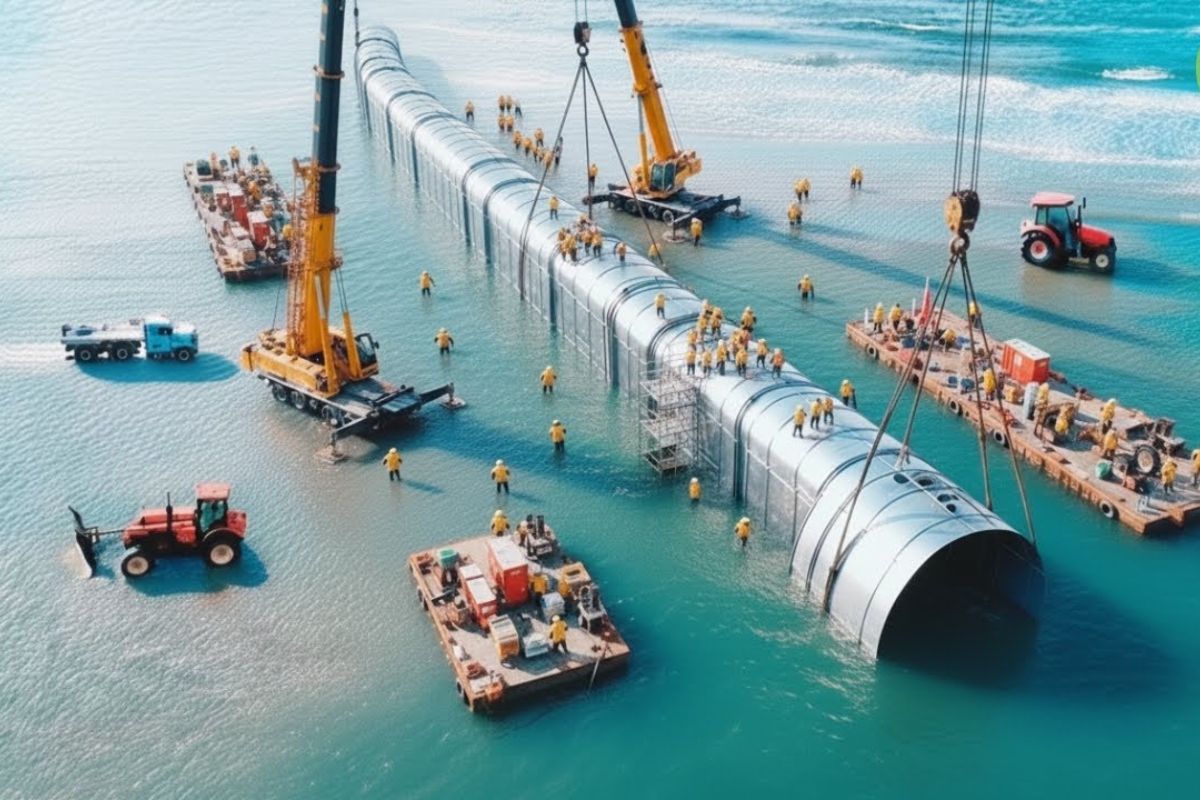


With About 10 Billion Dollars, The Coastal GasLink Mega Pipeline Advances Through Forests, Rivers, And Mountains, Creates 25,700 Jobs, And Connects Interior Reserves To Liquefaction In Kitimat
Canada is redesigning its energy map with a mega pipeline of approximately 670 km, planned to cross dense forests, overcome mountain ranges, and open a direct route to the Pacific Ocean. The operation, estimated at around 10 billion dollars, targets a declared goal: reduce energy dependence on the United States and reposition the country in the global market.
In practice, the mega pipeline has turned into a continuous operation, with work fronts 24 hours a day, helicopters in recurring operation, crossings of hundreds of watercourses, and isolated worksites in the middle of the woods. At the same time, the project has accumulated controversies related to conflicts in indigenous territory, environmental impacts, and questions about the real distribution of gains.
The Energy Dependence That Pushed Canada To The Pacific
Canada has plenty of gas, but for decades, it had few routes to turn this resource into economic advantage. International geological estimates point to approximately 2.4 trillion cubic meters in proven natural gas reserves. The problem is geographic: the largest producing areas are located inland in Alberta and northeastern British Columbia, separated from the coast by extensive mountain ranges.
-
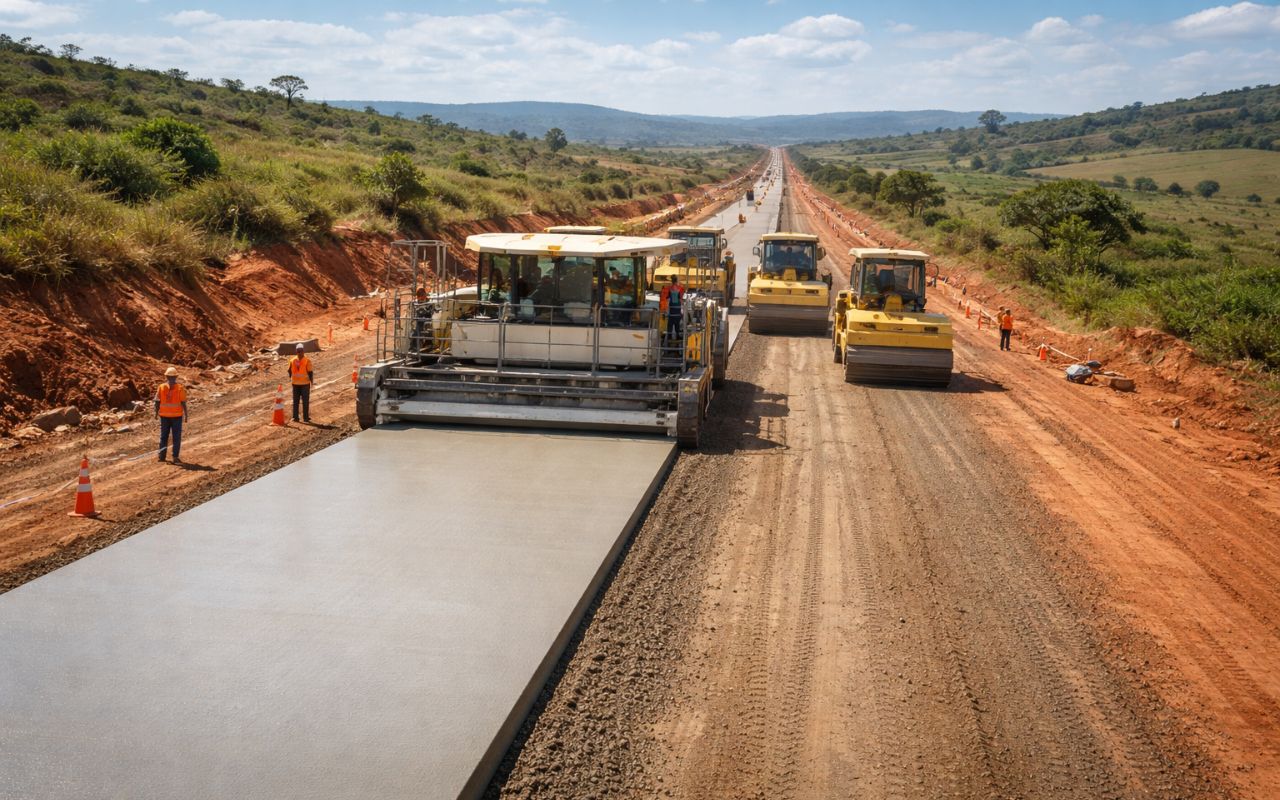
New CCR concrete paving technology promises roads up to 3x more durable, less maintenance, and cost reduction in Brazil.
-
Made from recycled plastic, plastic wood is gaining space in the construction industry because it does not rot, resists moisture, and reduces maintenance costs over the years.

-
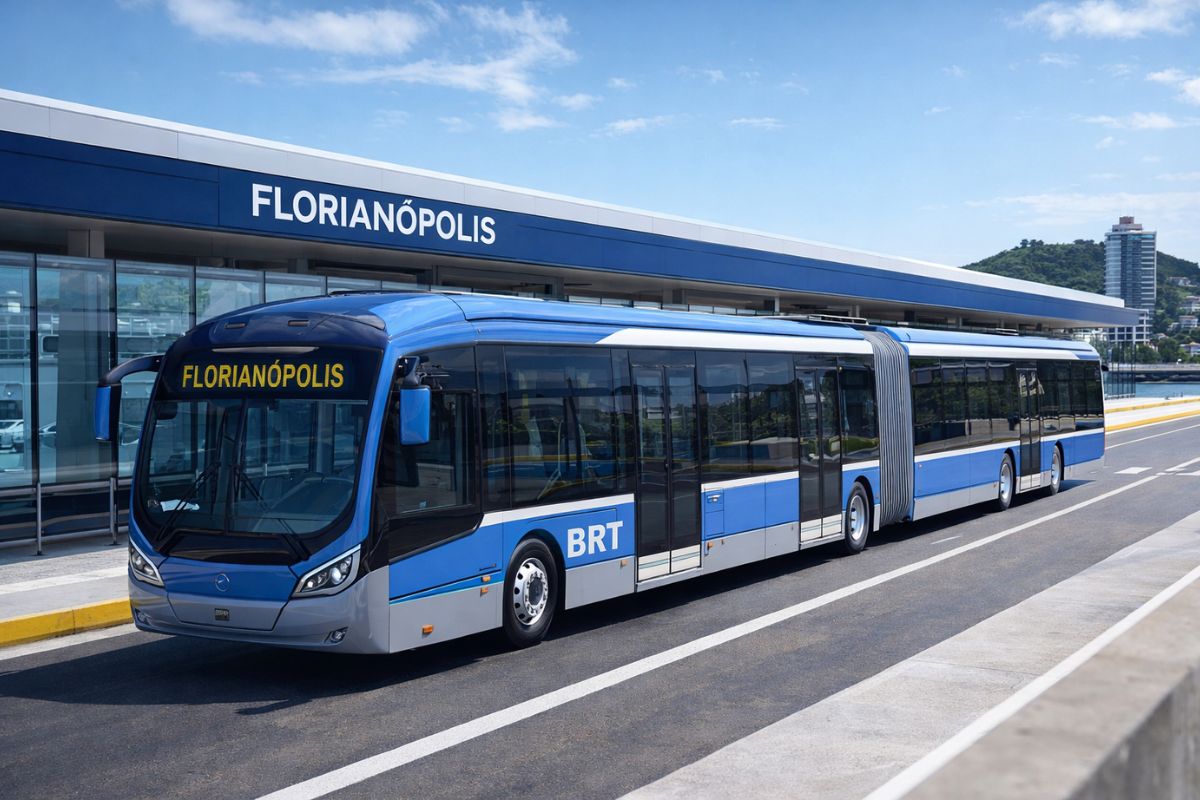
Florianópolis will receive a million-dollar BRT that will begin construction in 2026 with nearly 400 million in funding from the federal government and the Inter-American Development Bank, and the map already shows the routes for the exclusive bus corridors.
-
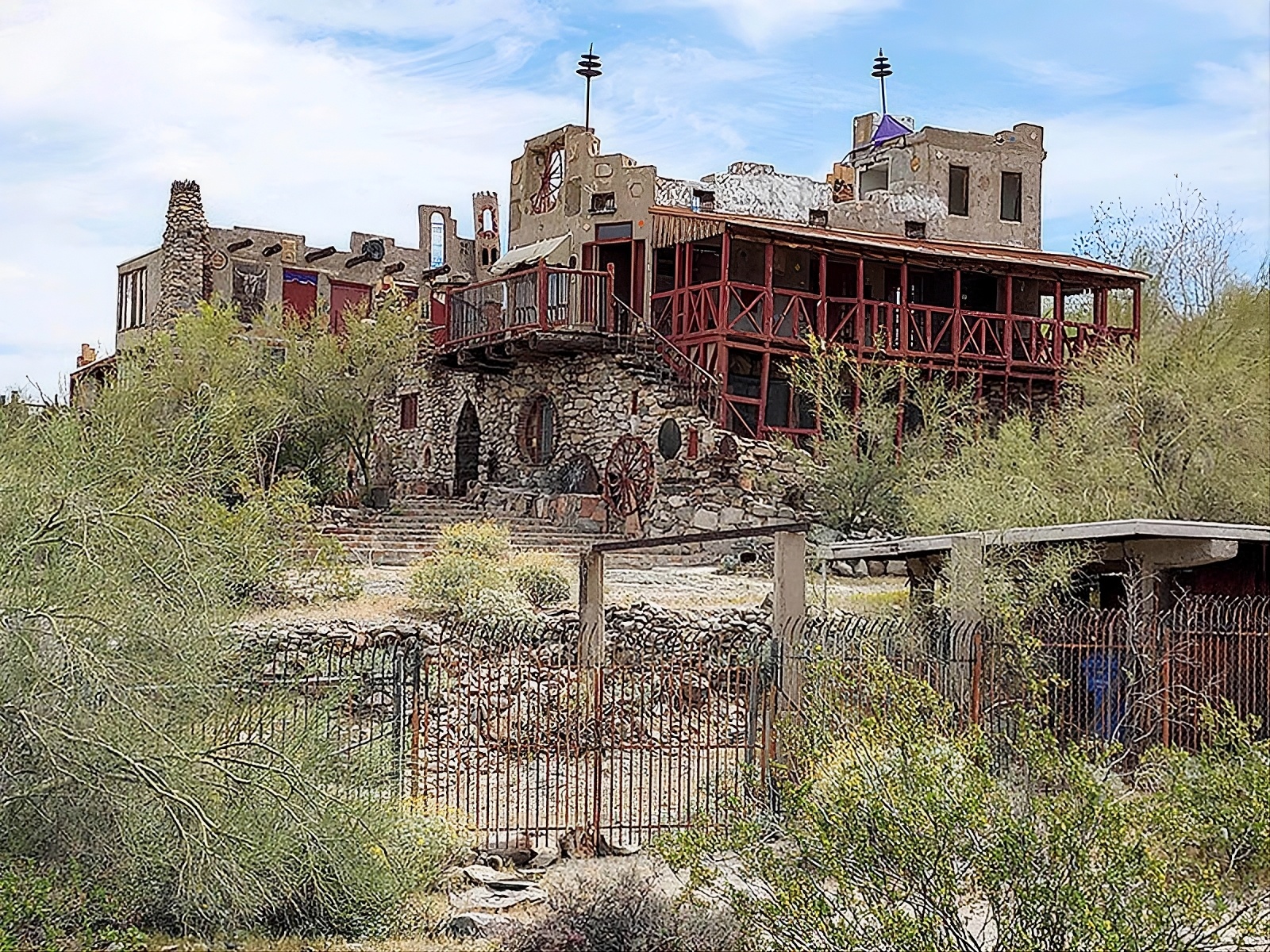
Without a blueprint, without an engineer, and using scrap from the dump, a father spends 15 years building an 18-room castle for his daughter, featuring tram tracks, 13 fireplaces, and over 700 m², which may now be demolished.

Without a direct corridor to the sea, the country operated for a long time with a dominant alternative: selling gas to the United States through pipelines.
In 2024, Canada exported natural gas at a record level, with an average exceeding 250 million cubic meters per day. However, volume did not mean proportional gain.
With advances in domestic extraction, the United States began to have an oversupply, pressuring prices and driving Canadian revenues down by nearly 30% compared to previous years. Canada exported more, but earned less.
At this point, the mega pipeline gained strategic strength: to create a maritime export route to access markets with potentially higher prices, especially in Asia, and weaken dependence on a single buyer.
The 670 Km Mega Pipeline That “Divides” The Country’s Energy History
The mega pipeline was conceived to connect the Dawson Creek region in northeastern British Columbia to Kitimat on the Pacific coast. The length mentioned in the planning appears as approximately 669 km, rounded to 670 km, in terrain that does not behave like a simple continuous strip.
The project began to be designed back in 2012 when the then-transCanada, later TC Energy, was selected to design, build, and operate the corridor.
The official construction started in 2019, after years of preparation, licensing, and adjustments. The route needed to cut through forests, cross rivers, and advance through successive mountainous areas.
The mega pipeline has a diameter of 41.22 inches, large enough for an adult to stand inside, and was designed to transport approximately 2.1 billion cubic feet of gas per day, equivalent to about 59 million cubic meters per day.
This volume is what sustains the logic of the project: take the gas from the interior and push it, on an industrial scale, to the Pacific door.
Why Did The Cost Jump To About 10 Billion Dollars?
The budget is one of the central points of the story. The cost projection was revised upward and, around 2023, it rose from 6.4 billion to approximately 10 billion dollars. This leap helps to explain why the mega pipeline became known as one of the energy projects with the largest budget overruns in recent Canadian history.
A recurring factor in technical descriptions is the combination of geographic difficulty and operational demand. The work was not just “putting pipes.”
Before installation, teams had to drill, stabilize slopes, build drainages, and reinforce slopes. In many stretches, the safe working window is short, and the climate changes on the same day can be severe, with temperature variations exceeding 20°C and alternating between sun and snow.
Moreover, financing was also structural. TC Energy sold 65% of the project’s capital and raised loans and guarantees, which reinforces the reading that the “energy independence” pursued by the mega pipeline was built largely with debts and financial partnerships.
Extreme Construction In The Mountains: The Challenge That Defines The Mega Pipeline

On the map, the mega pipeline appears as a line. On the ground, it crosses the Western Cordillera, with sections of inclines above 45 degrees, comparable to climbing a continuously sloped staircase to the height equivalent of a tall building.
There are sectors with rocky cliffs, others with soft slopes and muddy plateaus, where heavy machinery can sink and move centimeter by centimeter.
After heavy rains, the soil can shift between 5 and 15 cm per day, raising the risk of landslides. With precipitation exceeding 40 to 50 mm in a few hours, instability increases significantly compared to dry conditions.
The mega pipeline also had to deal with areas where summer worsens the terrain: thawing softens the soil, making it unable to support weight.
In some periods, worksites were closed for weeks waiting for short windows of favorable weather. In inaccessible areas, the project resorted to cable cranes, winch systems, and air transport, with segments of pipes weighing dozens of tons suspended in the air.
This combination of risk and precision is repeated by those describing the execution: a misalignment of inches during a lift can jeopardize the operation and put the team at risk. It is the type of scenario in which the mega pipeline advances, but always under the logic of “mistakes are costly.”
Seven Hundred Crossings Of Water And Logistics In Isolated Territory
Along the route, the mega pipeline had to cross more than 700 streams and rivers, from small watercourses to larger, cold rivers with fast currents. Each crossing required a specific solution.
In sections with controllable flow, temporary steel and wood bridges were built to support heavy equipment for a short period.
Where the terrain allowed, teams waited for winter, when rivers freeze and create solid surfaces several centimeters thick.
For larger rivers with continuous flow, the alternative was to install the pipeline below the riverbed, with drilling, excavation, and installation in nearly frozen water conditions, close to 0°C.
The access infrastructure also became a chapter of its own. In areas without roads and electricity, teams opened hundreds of kilometers of temporary roads, usable only for a few seasons. When these routes became impassable, helicopters took over the transport of pipes, machines, and personnel.
This context gives rise to one of the most cited metrics: the route alone is said to have generated more than 25,700 jobs, with 24-hour operations. This number appears as one of the arguments to defend the immediate economic impact of the mega pipeline.
The Conflict With The Wet’suwet’en And The Pressure On Rights And Consent
The mega pipeline does not cross “empty land.” The route passes through approximately 22,000 square kilometers of unceded Wet’suwet’en territory, where traditional authority is attributed to hereditary chiefs, not the elected councils recognized by the Canadian government.
This is where the core of the conflict originates. While some councils established economic agreements, traditional leaders claimed they never granted permission for the mega pipeline to cross their territory.
Tensions also grew for environmental reasons: the route crosses more than 206 ecologically sensitive watercourses, many of which are spawning areas for salmon, a species of cultural and economic importance to local communities.
There is also the link to the gas’s origin. The mega pipeline was designed to transport gas extracted by hydraulic fracturing, a method criticized for risks to water and public health.
Wet’suwet’en leadership has stated that the project violated their traditional legal system and the principle of free, prior, and informed consent associated with the United Nations Declaration on the Rights of Indigenous Peoples, adopted by Canada at federal and provincial levels. A UN committee even called for an immediate suspension of construction until there was genuine consent.
The response, according to the described timeline, was the application of the law. Between 2019 and 2021, the Royal Canadian Mounted Police spent nearly 20 million Canadian dollars on security in the territory.
Operations in January 2019 and February 2020 involved armed police, dogs, and helicopters. The local conflict grew into national protests, with railroad blockades and road disruptions between 2019 and 2022.
In 2021, tensions escalated with the approval of a reroute that allowed for the destruction of a protected archaeological site, about 200 meters from a protest camp.
Even with delays and concessions, the project continued. Among the elements cited to unlock progress were compensations and contracts, including 1.8 billion dollars in contracts awarded to local and indigenous businesses.
Why The Mega Pipeline Only Makes Sense With Liquefaction In Kitimat
One point is often neglected outside the sector: gas in a pipe is still just gas. To export across oceans, it is necessary to liquefy it, reduce volume, and facilitate transport by ships. This is where LNG Canada in Kitimat comes in, described as the largest energy construction site in Canadian history.
The liquefaction and export plant on the Pacific coast has an approximate cost of 28.8 billion dollars. When the mega pipeline and associated infrastructure are combined, the total cost to take the gas from inland to the ocean reaches approximately 40 billion dollars. The complex occupies an area of about four square kilometers, with storage tanks, steel modules, port structure, and a workforce in continuous operation.
Phase 1 was designed with two liquefaction trains. The gas arrives via the coastal link, undergoes impurity removal, and is cooled to below 161°C, transitioning from gas to liquid. Once liquefied, the volume is reduced about 600 times, allowing for storage and pumping onto LNG ships.
The design capacity of Phase 1 is 14 million metric tons of LNG per year, equivalent to about 19 to 20 billion cubic meters annually, or nearly 1.7 billion cubic meters per month. The priority target described is Asian markets such as Japan, South Korea, and China.
By 2024, the integrated system, mega pipeline, and liquefaction plant came into operation, marking for the Canadian media the boundary between a “before and after” in the country’s energy industry.
The Risky Timing: Canada Reaches The Ocean When The Ocean Is “Already Full”
The mega pipeline and LNG Canada reached operational moment in a delicate scenario. In 2024, global natural gas prices fell to their lowest level in nearly four years due to prolonged oversupply.
The United States, which for decades had been Canada’s major customer, were no longer as dependent on Canadian gas with the shale boom and the construction of multiple LNG terminals over the past decade.
Meanwhile, competitors were advancing. Qatar was expanding the North Field with low costs and long-term contracts, while Australia had already established a stable customer base in Asia over the past 10 to 15 years.
Therefore, Canada entered the maritime market just as the market began to cool.
There is also the factor of climate horizons. LNG projects are planned to operate for 30 to 40 years, while global climate goals point toward drastic reductions in fossil fuel use before 2050.
If demand for LNG falls faster than expected, structures valued in the tens of billions could become physically existing assets but economically fragile.
Who Owns The Project: Multinational Joint Venture And Value Flows Outward
Although the mega pipeline is described as a Canadian turnaround, the corporate structure of LNG Canada is multinational. Shell holds 40% and acts as the operator.
Petronas has 25%, PetroChina 15%, and Mitsubishi and Korea Gas Corporation 5% each. No Canadian company holds controlling stake.
The British Columbia government described the ensemble as the largest private investment in its history.
But there is a relevant detail in the spending: in Phase 1, only about 2.5 to 4.1 billion dollars were spent directly within the province, while 7 to 11.1 billion dollars flowed outward in the production of modules, equipment, and central systems. Steel modules were manufactured in Asia and shipped by sea to Kitimat.
The critical reading that emerges from this design is straightforward: British Columbia bears environmental and social risks, while a considerable part of the value of higher economic density may concentrate outside.
The Milestone Of 2025: First Commercial LNG Shipment And The Pacific Route Opened
After more than a decade of preparation, controversy, and construction, at the end of June 2025, the first commercial LNG shipment departed from Kitimat, symbolizing the effective opening of the Pacific route for Canadian gas.
The recurring question at this milestone is why Canada did not prioritize exports to Europe via the east coast. The described answer goes through geography and politics: the east would have fewer reserves, and transferring gas from the west to the Atlantic would require thousands of additional kilometers of pipelines, with even greater risks and costs. Additionally, environmental opposition on the east coast is described as strong and persistent, with several projects canceled.
The goal is thus to operate as a steady flow. The first shipments are treated as tests under real conditions, with a focus on operational stability, temperature control, pumping, and port coordination.
The Cascading Effect: Cedar LNG And The Discussion About A Phase 2
With the infrastructure already installed, Kitimat is starting to function as a hub that can attract other projects. One example cited is Cedar LNG, a floating facility with an approximate capacity of 3.3 million tons of LNG per year, smaller than LNG Canada, but promising greater flexibility and a smaller land footprint.
At the same time, discussions about expanding Phase 2 of LNG Canada are resurfacing because the original design left technical space to increase capacity if the market permits.
If implemented, the additional phase could almost double the capacity, turning Kitimat into one of the largest LNG export centers on the North American Pacific coast. The critical point, again, is long-term demand.
Environmental Impacts And Risks In The Chain: From Fracking To The Ocean
The environmental dimension of the mega pipeline appears in multiple layers. There is the risk associated with methane: if leaks reach 2% to 3%, the climate advantage of LNG over coal could practically disappear, as methane has a warming impact about 84 times stronger than carbon dioxide in the first 20 years.
Along the route, the crossing of watersheds and sensitive watercourses intensifies concerns about sediments, water quality, and salmon populations over the years, with potentially lasting effects.
At the source of the gas, hydraulic fracturing uses millions of liters of water mixed with chemicals per well, with potential contamination of groundwater and air.
Around Dawson Creek, local doctors reported an increase in health issues, such as prolonged nosebleeds, respiratory diseases, heavy metals detected in drinking water, and certain rare cancers. Causal relationships are still debated, but the overlap in time and space is described as sufficient to keep communities uneasy.
The risk of accidents also appears with records of spills. In 2020, two diesel spills occurred in Wet’suwet’en territory.
In August 2021, an additional spill of approximately 1,000 liters was reported at a construction camp.
There are also reports of violations of erosion control, improper waste management, and delays in implementing ecological protection plans.
What The Mega Pipeline Really Changes For Canada
The mega pipeline and LNG Canada consolidate a structural change: Canada stops being just a gas seller through pipelines to become a maritime LNG exporter, with direct access to the Pacific.
This reduces absolute energy dependence on the United States and creates the possibility of pricing more aligned with global markets.
But this turnaround comes with structural costs and risks as well: debt and budget overruns, prolonged social conflicts, environmental impacts, and the uncertainty of an energy market that could transform radically in the coming decades.
In addition, there is the multinational nature of the value chain, which raises questions about where the largest industrial gains will reside.
In the end, the mega pipeline is not just a corridor of pipes. It functions as a strategic divide: Canada chooses to cross mountains, link inland and ocean, enter the LNG game, and accept the tensions and risks that come with this decision.
What is your reading: Was the mega pipeline the inevitable exit for Canada to free itself from energy dependence on the United States, or a risky investment that came too late to the global market?









Excellent move. Canadian energy needs access to the Pacific. It’s finally happening, and there will be less dependence on US markets, and higher prices in international markets.
An all around winner +
A pipeline straight north to the frozen tundra make more sense where a ready to process oil refinery can process the sludge into premium gas for our luxury cars.
Except this is about LNG. Liquid Natural gas. Not oil.
When Pierre Trudeau brought in the metric system. It was his idea years ago to break our dependence on the US market. Nobody listened.