





 Portuguese
  English
  Spanish
  3 min of reading
  4 comments


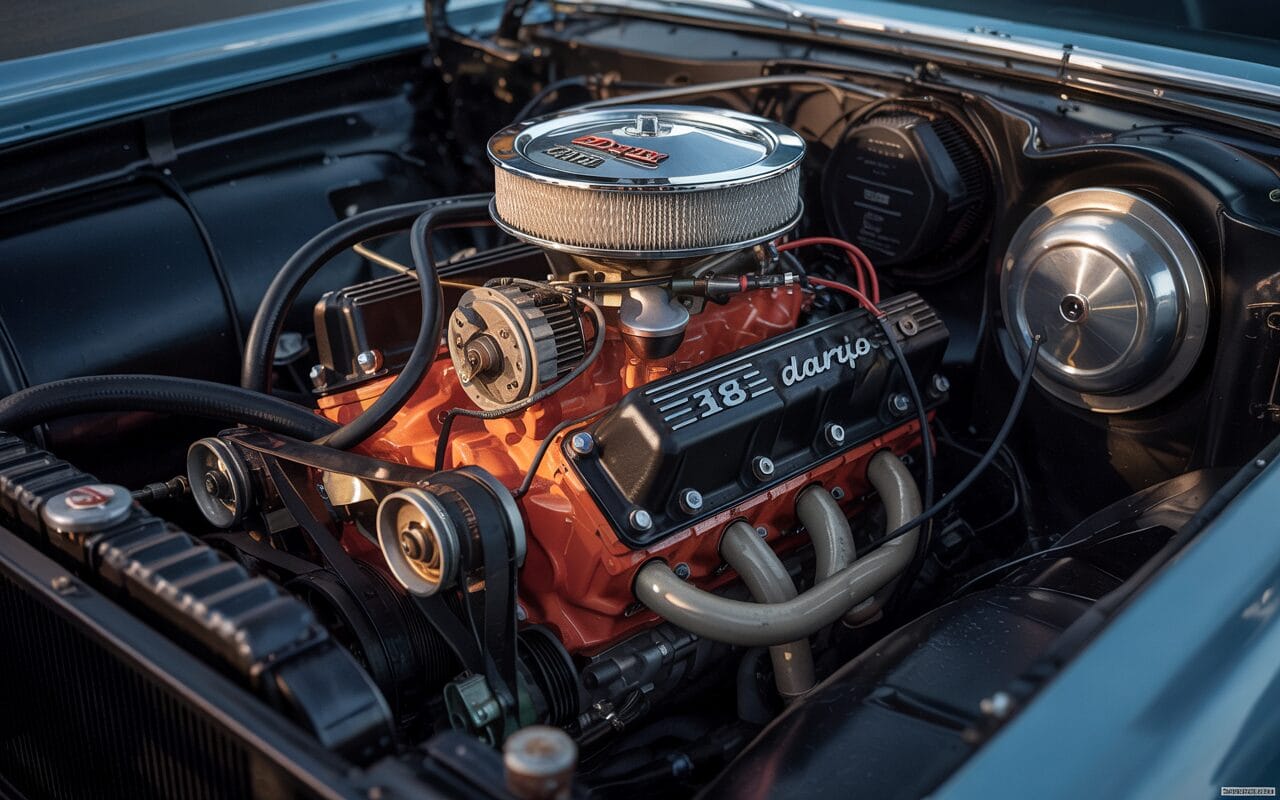


Dodge Dart V8: The Car With The Largest Engine Ever Made In Brazil Marked An Era On National Roads
The Dodge Dart V8 became known not only for its robust size and imposing appearance but also for housing the largest engine ever manufactured in Brazil. Launched in the United States in 1960 as the smallest and most affordable model of the Dodge division, the Dart quickly became one of the brand’s best-selling cars. Its success crossed borders and reached Brazil in 1969, where the model stood out as one of the most sophisticated and powerful vehicles ever produced here. In this article, we will revisit the history and technical details of the Dodge Dart V8, which consolidated itself as an icon of the Brazilian automotive industry.
Dodge Dart V8: Impressive Performance And Respectable Engine
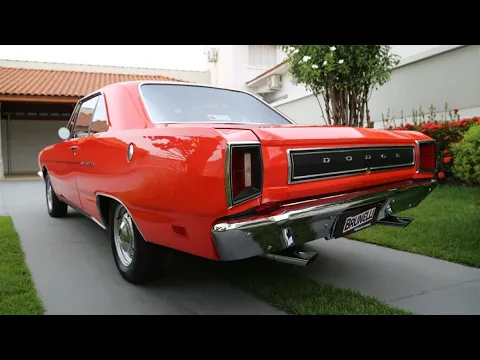

The trajectory of the Dart began in the 1950s, with Chrysler Corporation’s expansion into the European market. In Brazil, the company began operating under the business name Chrysler do Brasil S.A. in 1967, following the acquisition of Simca in São Bernardo do Campo (SP).
The fourth generation of the Dart arrived in Brazil in a version that was significantly updated from the North American model, which had been launched just three years earlier. With four doors, almost 5 meters in length, and a harmonious design, the Dart filled the space between the Chevrolet Opala and the Ford Galaxie, standing out for its concave rear window and sophisticated finishing.
-
Costing R$ 16,000, the new Yamaha features a 125 cc hybrid engine with electric assistance, delivers 8.3 hp, includes ABS, optimized fuel consumption, Y-Connect connectivity, 25 liters of storage space, and a surprising 4-year warranty in the urban segment.
-
OMODA & JAECOO grows in Europe in 2026 with an integrated strategy of sales, innovation, local production, and technological advancement in the United Kingdom, Italy, and Spain.
-
OMODA & JAECOO expands after-sales service in Brazil with competitive maintenance, a 7-year warranty, and high availability of parts for technological SUVs.
-
OMODA & JAECOO appoints Alessandra Souza as executive marketing director in Brazil and accelerates brand expansion with a focus on innovation, networking, and hybrid portfolio.


Under the hood, a 5.2-liter V8 engine that also equipped Dodge trucks. Featuring wedge-shaped combustion chambers and valves actuated by hydraulic lifters, the engine delivered 198 hp at 4,400 rpm and 41.5 kgfm of torque at 2,400 rpm. Weighing 1,480 kg, the performance was impressive: 0 to 100 km/h in just 12 seconds, a top speed of 173 km/h, and 1,000 meters covered in 33 seconds.
Autonomy And Consumption: Performance With Thirst
Despite its high performance, the high consumption was a striking characteristic. At a constant speed of 100 km/h, the Dart V8 achieved around 6.6 km/l, and with a tank of 62 liters, its autonomy revolved around 400 km.
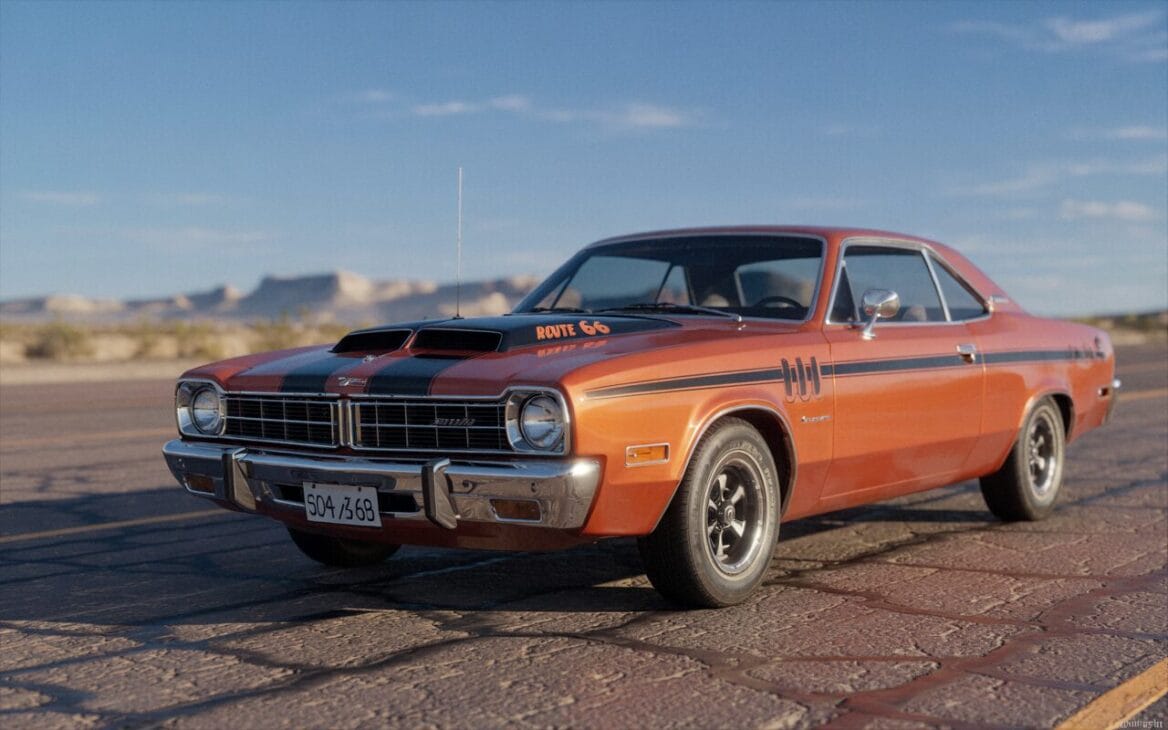
The dynamic behavior was good but compromised on uneven surfaces due to the heavy rear axle. Another negative point was the drum brakes on all four wheels, without vacuum assistance.
The competition’s response came quickly: Ford launched a simpler version of the Galaxie with a 4.8-liter and 190 hp engine. In response, Chrysler introduced the Dart Super-Standard, with a simpler appearance, an unpainted grille, and the removal of moldings and hubcaps, aiming to reduce the price and increase competitiveness.
Evolution And Luxury Versions Of The Dart V8
Following the arrival of the Super-Standard, the conventional version began to be called Dart Luxo, reaching over 10,000 units produced in the 1970s. The major novelty of 1971 was the coupe body, which quickly surpassed the sedan in sales volume, coming to represent 70% of production. The model started to feature a vinyl roof, power steering, air conditioning, three-speed automatic A-727 transmission, and front disc brakes as options.
The Dart Gran Sedan, launched in 1973, replaced the luxury version and had limited production, generally intended for corporate fleets and government agencies. Electronic ignition was implemented in 1975 as standard equipment, but significant changes would only come in 1979, with a restyling inspired by the American Dart of 1974, which increased the overall length of the model by 18 cm.
The Dodge Dart V8 stood out for uniting power, striking design, and sophistication in a still-forming market. Even with high consumption and some technical limitations, such as the heavy rear suspension and outdated brakes, the model left its mark on the history of the national automotive industry.
With one of the most powerful engines ever produced in Brazil, the Dart V8 remains an icon of the 60s and 70s, remembered with respect by collectors and enthusiasts. A true classic that represents the peak of the era of giants on wheels in Brazilian soil.








Cresci nesta época e meu pai trabalhou na Chysler do Brasil nos anos 70 tivemos várias versões e nunca me esqueço de um Dart 4 portas vinho , era um avião, infelizmente nos anos 80 ela se foi , e ainda me lembro dos Polaras , inclusive um automático. Saudades destes tempos.
Super interessante e informativo ! Show
O motor mais potente, em 1973, era o do Dodge Charger RT com 215 cv e não o Dodge Dart que era a versão mais despojada da linha Dodge. Havia também o motor V8 do Ford Maverick GT que possuia 197 cv, mas era mais rápido que o Dart devido ao seu menor peso.