





 Portuguese
  English
  Spanish
  6 min of reading
  4 comments


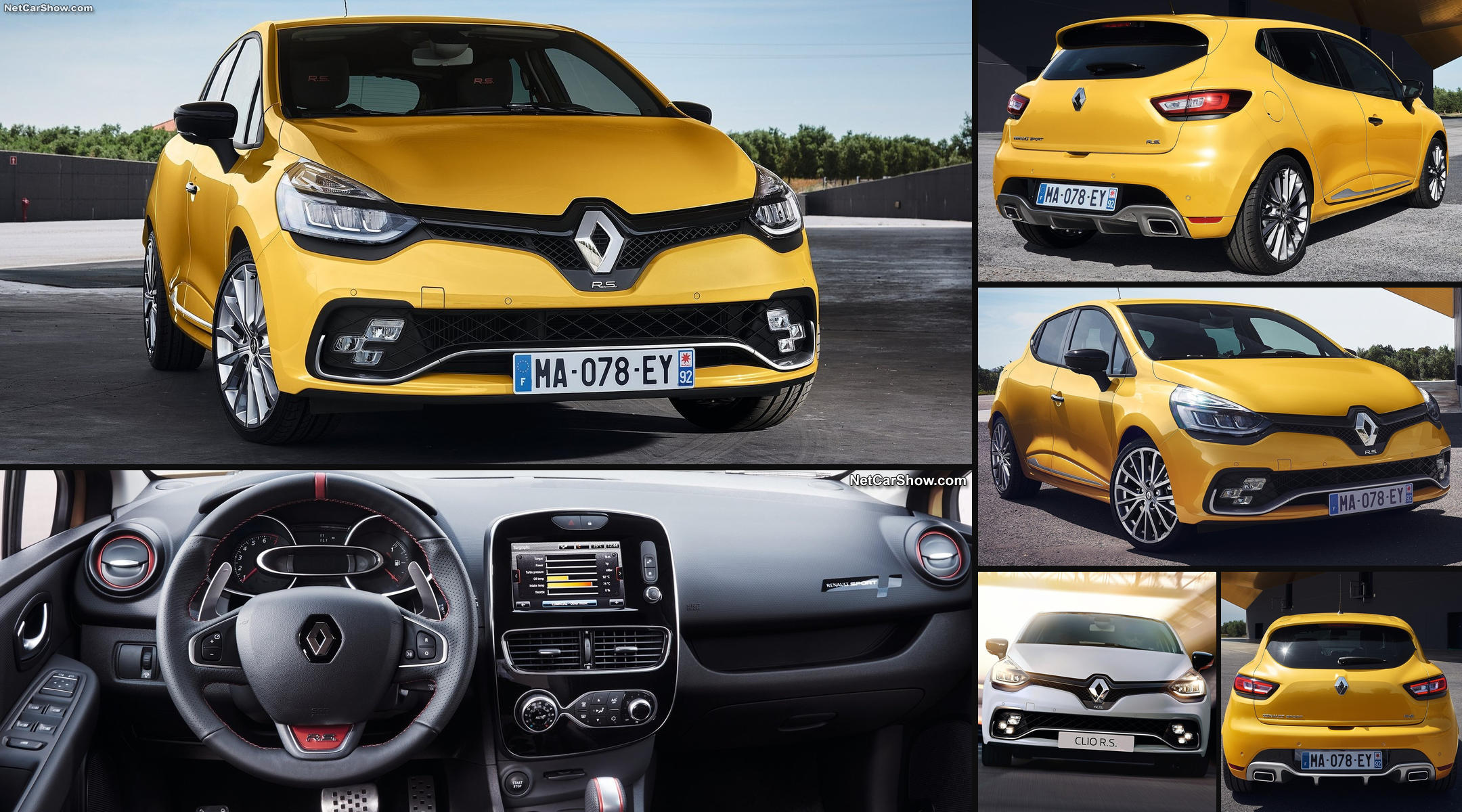


The Renault Clio RS, the French sports car that stagnated in Brazilian dealerships, became a joke at the time — but today it is regarded as a cult rarity among hot hatch enthusiasts. Discover why.
When the Renault Clio RS landed in Brazil, many expected an accessible, lightweight, and agile French sports car capable of rivaling established models like the Peugeot 206 GT or even the VW Golf GTI. But the reception was lukewarm — to say the least. The model stagnated in dealerships, was labeled as a “bare-bones car with a strong engine,” and spent years overlooked even by Renault fans. Years later, the same car that was a source of mockery returned as a European icon of hot hatches, valued in the used market and coveted by enthusiasts worldwide.
But after all, what happened to the Renault Clio RS? Why did it fail in Brazil but was celebrated in Europe? And why is it considered one of the most fun cars ever made by Renault?
The Birth of a Rocket: Clio RS and The Renault Sport Lineage
The acronym “RS” stands for Renault Sport, the high-performance division of the French automaker responsible for competition models and street sports cars with a strong track DNA. The lineage began in the late 1990s when Renault decided to transform the unassuming Clio into a true compact rocket for the streets.
-
Son of a seamstress from the rural area of Ceará who did not speak English wins a scholarship of over 2 million reais at Williams College, one of the top 10 universities in the United States, covering everything including dormitory, meals, and annual trips to Brazil.

-
Bill Gates revealed that the true secret behind every great achievement is not a brilliant leap but rather small improvements repeated over the years, and the data from his own career and the fight against climate change prove that he is right.

-
With 22 thousand tons of steel, a height nearly three times greater than the Eiffel Tower, and a cost of R$ 1.6 billion, China is building the highest bridge on the planet over a colossal canyon, reducing a crossing time of over 2 hours to just over 2 minutes.

-
With more than 635,000 doctors, Brazil sees competition increasing in large cities, and recent graduates are competing for shifts at an accelerated pace while the countryside still faces shortages.


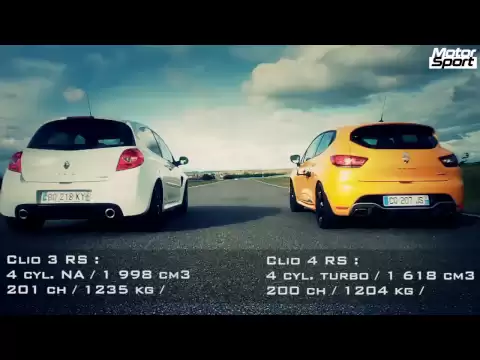

The result was the Clio RS 172 (later RS 182), equipped with a 2.0 naturally aspirated engine with 172 hp, a 5-speed manual transmission, reworked suspension, and much less weight than its rivals of the time. With no electronic gimmicks, it was the typical enthusiast’s car: simple, lightweight, powerful, and edgy.
In Europe, the Clio RS quickly became a success, winning awards from the specialized press and excelling in comparisons against giants like the Ford Fiesta ST, Mini Cooper S, and even larger models, such as the Alfa Romeo 147 GTA.
Arrival in Brazil: Why Did the Renault Clio RS Fail?
In 2002, Renault decided to import a few units of the Clio RS to Brazil. The expectations were high: the French brand was beginning to consolidate its presence in the national market and saw in the model a chance to show that it could also make real sports cars.
But what arrived in stores was a shock for the Brazilian consumer:
- High price (around R$ 65,000 at the time)
- Simple design and spartan interior
- Few comfort items
- No visual “sporty” appeal for the average consumer
Despite the 2.0 16V naturally aspirated engine with 172 hp, the Clio RS was misunderstood. It was a French sports car without the looks of a sports car, which put off the average buyer. And to make matters worse, the car was sold alongside much cheaper and visually similar domestic versions of the Clio.
The typical consumer saw no reason to pay so much for a “2-door Clio,” and enthusiasts were not willing to take a risk on a little-known model with no tradition in the country. The result: the car stagnated in dealerships and was quickly discontinued. Some units were even sold at significant discounts or as “stale stock.”
Performance and Handling: The Clio RS Was Ahead of Its Time
Despite its commercial failure, anyone who had the chance to drive a Renault Clio RS knows that it delivered a rare driving experience. The naturally aspirated engine revved high, the manual transmission was precise, and the total weight of the car was around 1,050 kg — a perfect recipe for pure driving fun.
Among the technical highlights:
- F4R 2.0 16V Engine – 172 hp at 6,250 rpm
- Torque of 20.4 kgfm at 5,400 rpm
- 0 to 100 km/h in 7 seconds
- Top speed: 222 km/h
- Power-to-weight ratio: 6.1 kg/hp
The suspension was firm, the steering communicative, and the brakes were designed for the track. The car was a proper hot hatch, made for those who enjoyed driving.
The Comeback: Clio RS Becomes an European Icon and Cultivated in Brazil
Over the years, the Clio RS became a true cult car in Europe. Versions like the Clio RS 182 Trophy, RS 200, and RS 220 Trophy were acclaimed by journalists and collectors. Even older models began to be sought after in the used market.
In Brazil, time was also generous to the Clio RS. Today, it is increasingly rare to find one in good condition, but the few survivors are treated as collector’s gems. At car meetings or specialized groups, it’s common to hear praise about the performance and the “analog spirit” of the French sports car.
Interestingly, what was once a weak point — the discreet appearance — is now an advantage for purists, who prefer cars with real performance that don’t attract attention on the streets.
Why Did the Clio RS Become So Valued?
The phenomenon of the Clio RS is not unique. Several sports cars from the 1990s and 2000s have gone from “sales failures” to cult objects, mainly due to factors such as:
- Pure performance: naturally aspirated engines, manual transmissions, and reduced weight.
- Driving sensations: direct steering, road feedback, involvement with the machine.
- Rarity: few units sold in Brazil made it even more coveted.
- International reputation: abroad, the Clio RS was highly awarded and celebrated.
Today, a well-preserved Clio RS 2.0 16V can exceed R$ 60,000 in the used market — a price that seems contradictory to its original failure but makes total sense in light of its rarity and historical appeal.
The RS Lineage Continues: Successors and The End of Renault Sport
After the original Clio RS, Renault launched several updated versions of the model:
- Clio RS 197 (2006) – with a more modern look and a 6-speed transmission.
- Clio RS 200 (2009) – considered the peak of drivability.
- Clio RS 220 Trophy (2015) – with an automated transmission and specific suspension adjustments.
However, in 2021, Renault announced the end of the Renault Sport division, replaced by a new electrification and performance strategy called “Alpine Cars”.
As a result, the Clio RS ceased production, and the remaining models gained even more value among enthusiasts.
The Clio RS in Brazil Today: Those Who Have It, Don’t Sell
Unlike other more popular sports cars of the time, such as the Astra GSi or VW Golf GTI, the Renault Clio RS is so rare in Brazil that there are practically no units available for sale frequently. The few listings that appear on sites like OLX or Webmotors are quickly snatched up by collectors.
Additionally, specific replacement parts for the model (such as suspension, ECU, intake, and exhaust) are hard to find, which makes the car an almost exclusive option for experienced enthusiasts.
The Renault Clio RS is a typical example of a car undervalued in the present and glorified in the future. A legitimate French sports car, misunderstood in a market that still did not value real performance without visual appeal or status.
Today, it is recognized as one of the best hot hatches of its generation, a symbol of the French school of automotive engineering aimed at enjoyment behind the wheel.
And more than that: it is a living proof that cars with soul withstand the test of time, even when they fail in the showroom. If you find a Clio RS for sale, think twice before ignoring it — you may be looking at one of the last pure sports cars from the analog era.







Carro francês continua sendo uma piada, mecânica péssima, durabilidade zero,em cada buraco que passa fica uma peça.
Para vc, bom deve ser o Gol 16 válvulas!
Meu irmão teve um clio 1.0 8v 2005 por uns cinco anos, tempos depois que vendeu o carro disse que foi o melhor que teve, sendo que mora no litoral onde a maioria das ruas são paralelepípedos e exigem muito da suspensão.
Mentira. Este carro nunca chegou a ser colocado a venda no Brasil. Foi estudado para colocar, como o Megane RS, mas ambos era inviável ao mercado brasileiro, infelizmente.