





 Portuguese
  English
  Spanish
  3 min of reading
  0 comments


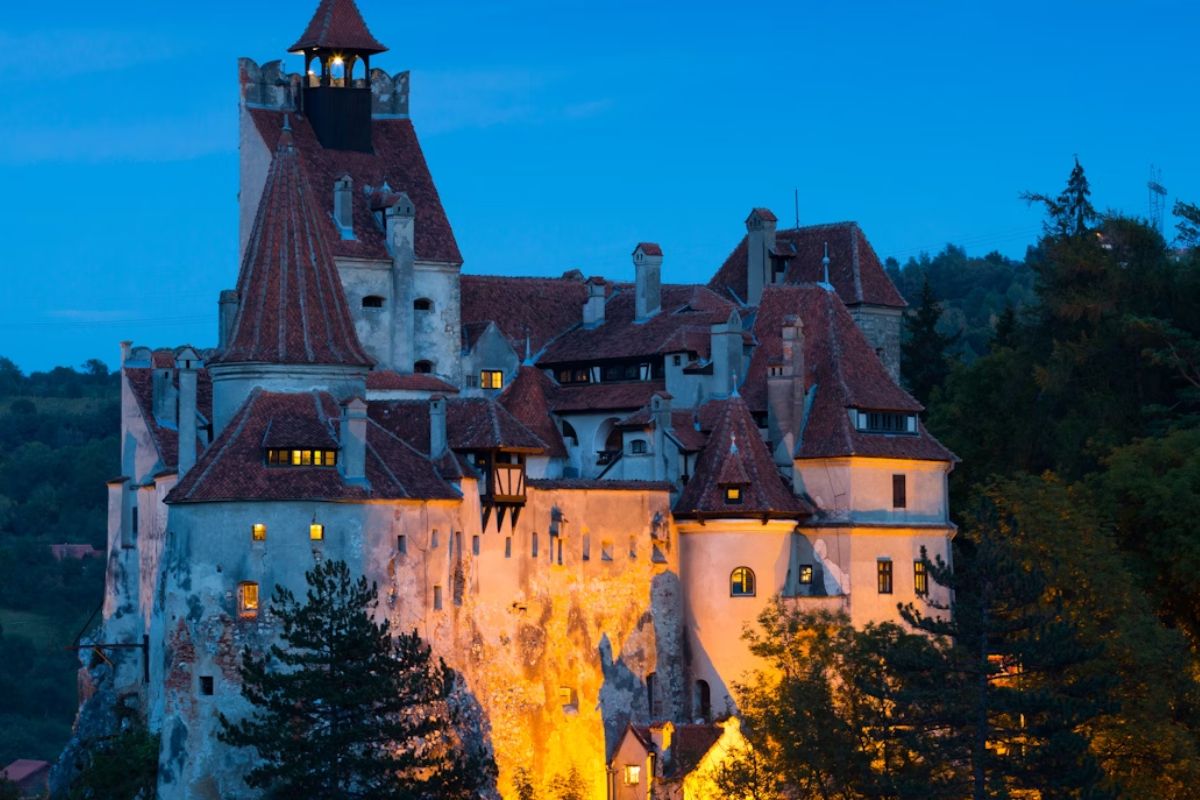
We Uncover The Rumors About The Sale Of Dracula Castle (Bran Castle). Discover Its Real History As A Medieval Fortress And Royal Residence, And The Legend That Immortalized It.
Bran Castle, in Romania, is world-famous as the “Dracula Castle“. Its imposing image evokes the dark figure of the vampire from literature, attracting thousands of tourists. Recently, speculations about its sale to a “new millionaire owner” have resurfaced.
We will explore the rich real history of the fortress, its unique architecture, the origin of the Dracula legend, and how to visit it today, uncovering the facts behind the myth.
Bran Castle: Between The Dracula Myth And The Reality Of An Historical Fortress In Romania
Nestled in Transylvania, Bran Castle feeds popular imagination. The association with Count Dracula, immortalized by Bram Stoker, has transformed it into a global icon. Many visitors seek the vampire’s lair, even though this connection is more tourist marketing than historical fact.
-
A couple buys an old chalet, breaks the kitchen floor for renovation, and finds over a thousand coins of gold and silver hidden since the English Civil War over 4 centuries ago.

-
Rigid bags with their days numbered: new trend prioritizes comfort in 2026.

-
YouTuber creates an excavator equipped with a giant 4.5-meter sword to challenge his brother to a rematch, and the invention quickly goes viral on social media.
-
The U.S. Army surprises the world by presenting the UH-60MX Black Hawk helicopter capable of flying without pilots, controlled by a tablet, featuring the MATRIX system, smart sensors, and full autonomy in real combat and rescue missions.

Beyond the myth, Bran Castle has a rich historical identity as a strategic fortress from the 14th century and later as a cherished royal residence. The tension between the legend and authentic history is central to its narrative. The site is, in fact, a “Romanesque Fortress” with deep historical context.
Is Dracula Castle For Sale? The Truth About The Rumors And The Current Management
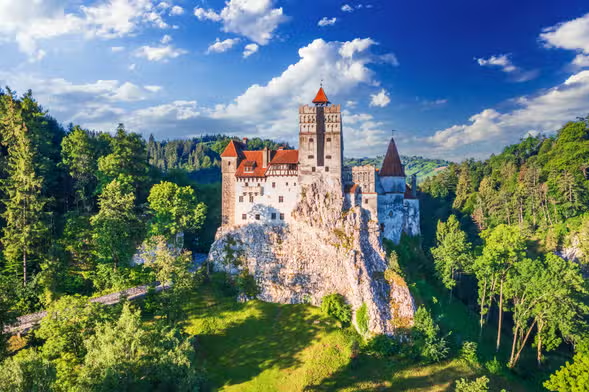
In recent years, news about the sale of Bran Castle has repeatedly emerged. However, Bran Castle is not for sale at the moment. Castle representatives have refuted these claims, stating that they are based on old and largely inaccurate articles from 2007 to 2009.
The ownership of Bran Castle belongs to Archduke Dominic von Habsburg and his sisters, grandchildren of Queen Marie of Romania. The castle was returned to the family in 2006, after being confiscated by the communist regime in 1948. Since 2009, it has operated as the country’s first private museum. The current owners are focused on investments and renovations, such as a new elevator and a multimedia exhibit, and not on selling the heritage.
The Architecture And The Rich History Of Bran Castle
The history of the site dates back to the 13th century. The Teutonic Knights built a wooden fortress there called Dietrichstein, which was destroyed by the Mongols in 1242. The construction of the current stone castle began in 1377, authorized by King Louis I of Hungary to the Saxons of Brașov.
This initial “Romanesque Fortress” was characterized by thick stone walls, round towers, and narrow windows for defense. Over the centuries, Gothic elements were added, such as pointed arches and spires. In the 20th century, Queen Marie of Romania transformed the austere fortress into an elegant royal summer residence, with the help of Czech architect Karel Líman. Electricity, running water, and an elevator were installed, and the interiors were decorated with murals and Renaissance furniture.
Visiting Dracula Castle Today: Attractions, Tips, And What To Expect From The Romanian Fortress

Today, Bran Castle operates as a museum. It displays art, furniture, and artifacts collected by Queen Marie, offering a glimpse into the royal era of the castle. Visitors can explore the royal apartments, the Great Hall, and discover secret passages.
A recent addition is the “Time Tunnel”, a multimedia experience in the castle’s old well, which transports visitors through the history and legends of the site. At the base of the hill, a small open-air museum showcases traditional Romanian peasant structures. The castle receives over half a million visitors annually, with information about hours and tickets available online.








-

Uma pessoa reagiu a isso.