





 Português
  Inglês
  Espanhol
  5 min de leitura
  22 comentários




The Future of Engines Is Here: China Develops Ammonia Engine Technology, An Innovative and Clean Fuel That Promises to Replace Hydrogen and Drastically Reduce Carbon Emissions
The quest for alternative and sustainable fuels is a global priority in the fight against climate change. In this context, China has taken a significant step by developing an engine that uses ammonia as fuel, an innovation that could revolutionize the automotive industry and drastically reduce carbon emissions. This article explores the technical details and implications of this new technology.
The Ammonia Engine: A Viable Alternative
The Guangzhou Automotive Group (GAC), in collaboration with Toyota, has developed a 2.0-liter internal combustion engine that safely and efficiently uses liquid ammonia. This engine promises a power output of 120 kW (161 hp) and a 90% reduction in carbon emissions compared to conventional fuels.
Ammonia (NH₃), composed of one nitrogen atom and three hydrogen atoms, is primarily known as a fertilizer. Its potential as fuel lies in its combustible properties and the fact that, when burned, it does not emit carbon, hydrocarbons, or CO₂. However, its energy density is approximately half that of gasoline, standing at 3.6 kWh per liter. Furthermore, ammonia can be produced cleanly, using processes that capture carbon and employ renewable energy sources, although most current production still uses the Haber-Bosch process, which emits large amounts of CO₂.
-
OMODA & JAECOO grows in Europe in 2026 with an integrated strategy of sales, innovation, local production, and technological advancement in the United Kingdom, Italy, and Spain.

-
OMODA & JAECOO expands after-sales service in Brazil with competitive maintenance, a 7-year warranty, and high availability of parts for technological SUVs.

-
OMODA & JAECOO appoints Alessandra Souza as executive marketing director in Brazil and accelerates brand expansion with a focus on innovation, networking, and hybrid portfolio.

-
Jaecoo 7 with super hybrid SHS system exceeds 1,200 km of combined range with a 1.5 turbo engine, high-density battery, and intelligent energy management.


Technical Challenges of the Ammonia Engine
Despite its advantages, using ammonia as fuel presents several technical challenges. One of the most significant issues is the high toxicity and corrosiveness of ammonia, which poses substantial risks in handling and storage. Additionally, ammonia combustion produces nitrogen oxides (NOx) and unburned ammonia, both of which are harmful pollutants. GAC claims to have addressed these issues by developing technologies that enable more efficient and safer ammonia combustion.
Another challenge is the low flame propagation speed of ammonia, which complicates engine operation at high RPMs or under low-load conditions. This means that the engine may struggle to provide sufficient power in certain situations. To overcome this, GAC engineers are exploring the use of auxiliary fuels or additives that could improve ammonia combustion characteristics.
Moreover, the infrastructure needed for ammonia production and distribution still poses a significant challenge. Most current ammonia production is not clean, using the Haber-Bosch process that emits large amounts of CO₂. For ammonia to be a truly sustainable option, it is crucial to develop “green” production methods that utilize renewable energy sources.

Ammonia Engine in the Global Context
The development of the ammonia engine by GAC and Toyota is situated in a global context where the demand for sustainable solutions is on the rise. Hydrogen has long been considered the leading alternative to fossil fuels, with the global hydrogen market projected to surpass $200 billion by the end of 2025. However, ammonia may become a serious competitor due to its capacity to reduce carbon emissions and its viability in various applications.
Ammonia presents itself as a clean fuel not only for cars but also for ships, airplanes, trucks, and trains. Its handling is simpler than that of hydrogen, as it is liquid at room temperature and does not require expensive compression or cryogenic liquefaction equipment. In the passenger vehicle sector, GAC and Toyota have demonstrated that it is possible to use ammonia in internal combustion engines, opening the door for future applications in this sector.
Potential Use of Ammonia as Fuel
The use of ammonia as fuel represents a promising alternative for various sectors beyond the automotive. In the maritime sector, for example, ammonia can be used in ship engines, significantly reducing CO₂ and other pollutant emissions. The International Maritime Organization (IMO) has set ambitious goals for emission reduction in the sector, and ammonia can play a crucial role in meeting these targets.
In the rail sector, ammonia can also be a viable alternative for locomotives, especially on routes where electrification is not practical or economically viable. Furthermore, ammonia can be used in airplanes, although the technical and safety challenges are greater in this sector due to the high toxicity of the substance.
Another potential application of ammonia is in heating and power generation systems. Ammonia can be used in fuel cells to produce electricity cleanly and efficiently. Some initiatives are exploring the possibility of using ammonia to store and transport hydrogen, as ammonia is easier to handle and transport than pure hydrogen.
Challenges and Perspectives
Despite the promising potential of ammonia as fuel, there are still several challenges to overcome. The production and distribution infrastructure needs to be expanded and adapted to ensure the safe handling of the substance. Additionally, it is necessary to develop technologies that can minimize the production of NOx and unburned ammonia during combustion.
Public acceptance and government regulation will also play a crucial role in the adoption of ammonia as fuel. It will be necessary to educate the public about the benefits and risks associated with the use of ammonia, as well as to establish regulations that ensure the safety and efficiency of new technologies.
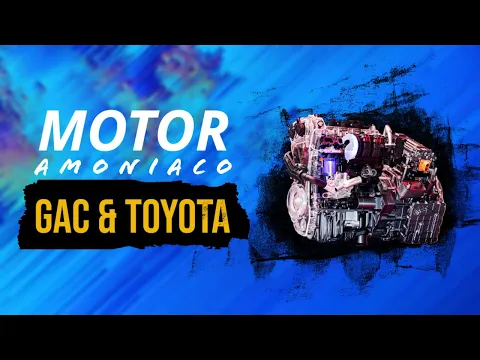

The introduction of the ammonia engine by GAC and Toyota represents a significant advancement in the search for sustainable alternative fuels. Despite the technical and infrastructure challenges, the potential to drastically reduce carbon emissions makes this technology promising. The collaboration between GAC and Toyota could pave the way for wider adoption of ammonia as fuel, provided that economic, technical, and safety barriers are overcome.
The development of engines that use ammonia instead of hydrogen or conventional fossil fuels like gasoline and diesel could pave the way for a future with lower carbon emissions. The automotive industry and other sectors will closely monitor this innovation to assess its practical applications and its impact on global sustainability.










Já trabalhei utilizando amônia e o risco é elevado. Asfixiante e tóxica e sru armazenamento e dob pressão. Tanto h2 como NH3 são perigosos para uso veicular.
Para mim o álcool é o caminho para reduzirmos de imediato as emissões.
Outra alternativa é o metanol ou algum derivado de menor risco.
Mal escrita pra ****….
O álcool não existe não?