





 Português
  Inglês
  Espanhol
  4 min de leitura
  18 comentários


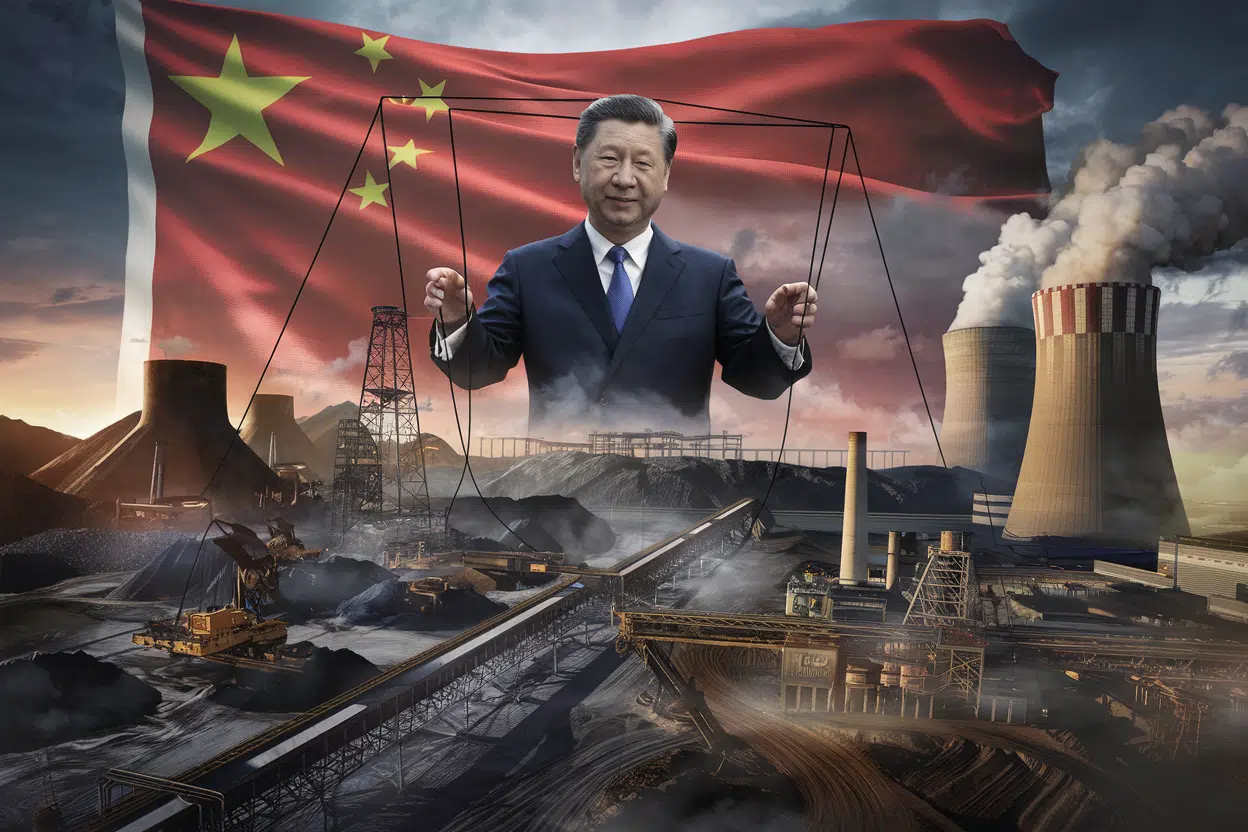


Chinese Dominance In The Energy Sector And Brazilian Mining Raises Concerns About National Security And Socio-Environmental Impacts
Since the beginning of the 21st century, the relationship between Brazil and China has significantly strengthened, becoming a central axis for the acquisition of essential raw materials by the People’s Republic of China. This bond has positioned Brazil, the largest economy in Latin America and one of the world’s leading exporters of agricultural products, as a strategic partner for the Asian giant.
A recent article in Diálogo Américas, a publication controlled by the U.S. military, revealed major concerns from the U.S. Department of Defense. The document outlines the challenges and Chinese interests in Brazil, reflecting a growing unease about Chinese influence in key sectors such as energy and mining.
Visits by senior Brazilian military commanders to China, such as that of Army Commander General Tomás Miguel Miné in July 2024, along with courses for senior officers in Beijing, have sparked intense debate in Brazilian society, highlighting the complexity of this association. Discussions on social media and media platforms reflect a wide range of opinions on this partnership, with many Brazilians expressing concern about the growing Chinese influence.
-
Brazilian city gains industrial hub for 85 companies that is equivalent to 55 football fields.

-
Peugeot and Citroën factory in Argentina cuts production by half and opens a layoff program for more than 2,000 employees after Brazil drastically reduced purchases of Argentine vehicles.

-
A Brazilian city gains a factory worth R$ 300 million with the capacity to process 200 thousand tons of wheat per year, a mill of 660 tons/day, silos for 42 thousand tons, and an industrial area of 276 thousand m².

-
Havan will leave the shopping mall in Blumenau to inaugurate something that the chain has never done before: a megastore in half-timbered style in the Historic Center of the city, which is expected to be completed in May and change the landscape of local retail.


The Deep Economic Penetration of China In Brazil’s Mining And Energy Sectors
This complexity is reflected in trade statistics. Since 2009, China has been Brazil’s largest trading partner. In 2023, trade flows between the two countries reached a record of US$ 157.5 billion, with Brazilian exports at US$ 104.3 billion and imports at US$ 53.2 billion.
Furthermore, China has invested approximately US$ 70 billion in the Brazilian market. Although these numbers may seem beneficial, experts warn about Brazil’s increasing dependence on China, which could lead to deindustrialization and economic slowdown. The concern is that by becoming excessively reliant on a single trading partner, Brazil may face difficulties in diversifying its economy and promoting industrial innovation.
This dependency landscape is particularly notable in the energy sector, where Chinese influence is rapidly expanding. In 2023, the State Grid Corporation of China (SGCC) secured the largest energy transmission contract in Brazil’s history, valued at US$ 3.4 billion. This project involves the construction and operation of 1,513 kilometers of direct current transmission lines, consolidating China’s dominant position in the Brazilian energy sector.
Experts such as William Tobin warn about the risk of this influence being used to manipulate bidding processes and favor Chinese companies, which poses economic, socio-environmental, and national security risks. Dependence on Chinese technologies and equipment may limit Brazil’s ability to develop its own energy infrastructure and reduce its autonomy.
Socio-Environmental Risks And National Security
The enormous infrastructure projects driven by Chinese investments in Brazil also raise socio-environmental concerns. The construction of energy transmission lines can negatively impact indigenous communities and the environment.
Moreover, Chinese control over strategic sectors may allow China to exert unwanted political pressure on Brazil. These concerns intensify when considering Chinese influence in other strategic industries, such as technology. Dominance in sectors like solar panel production and electric vehicles illustrates how Chinese presence can broadly affect Brazilian politics and economy.
Chinese dominance is not limited to the energy sector. China has extended its influence to the production of solar panels and electric vehicles. According to consultancy Wood Mackenzie, China will control 80% of the global capacity for solar components by 2026. In Brazil, 98% of imported solar panels come from China, increasing the country’s economic dependence and cyber vulnerability.
This trend of dominance is also observed in the niobium market, a mineral essential for various high-tech industries. The impact of this dominance reflects on Brazil’s capacity to innovate and compete in global markets, raising concerns about data security and critical infrastructure.

Niobium Control: A Strategic Threat
Chinese control over niobium is particularly concerning. Brazil holds 91% of the world’s niobium reserves, crucial for steel production, semiconductors, and lithium-ion batteries. Since acquiring a 15% stake in the Companhia Brasileira de Metalurgia e Mineração (CBMM) in 2011, Chinese entities have increased their stake, reaching 26% of niobium production in Brazil in 2020.
This control has significant implications not only for the technological and energy industries but also for defense, underscoring the need for careful assessment of the risks associated with this strategic influence. The importance of niobium for military and civilian technology makes control over this resource a matter of national security.
In conclusion, the growing presence of China in Brazil’s strategic sectors presents complex and multifaceted challenges. While Chinese investments have contributed to infrastructure development and economic growth, they have also generated dependence and vulnerabilities that require careful attention and management by Brazilian authorities.
The need for a balanced strategy that promotes sustainable development and economic autonomy is essential to ensure that Brazil can benefit from this partnership without compromising its sovereignty and security. Public policies should aim to diversify trading partners and strengthen the national industry, ensuring that Brazilian interests are preserved in the long term.









Revista controlada por militares norteamericanos .. Isso já diz tudo. A famosa guerra de narrativas na qual está em jogo quem se beneficia mais do Brasil.
Acorda !!!! GOVERNO ****. !!!!!!
Os corruptos estão entregando o Pais aos chineses praticamente , não mas a gente e anti americano . Vão toma no **** uma vez colônia sempre colônia só q agora dos china