





 Portuguese
  English
  Spanish
  4 min of reading
  8 comments


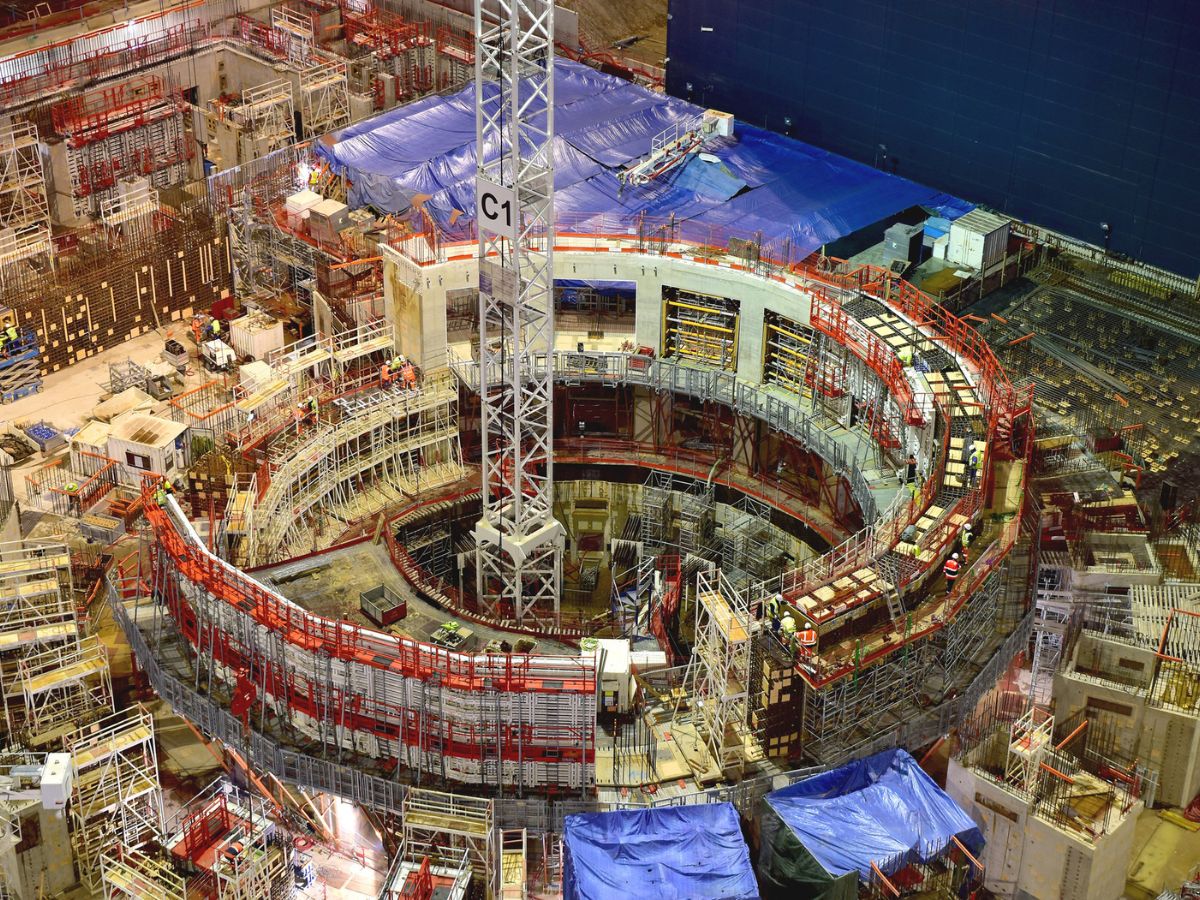


Located in France, the ITER Project Is Assembling the Largest Tokamak in the World to Prove the Viability of Fusion Energy, the Same That Powers the Sun
The International Thermonuclear Experimental Reactor (ITER) project is one of the largest scientific efforts in history, uniting 35 nations to build a machine capable of generating clean and safe energy through nuclear fusion. At the center of this endeavor is the Tokamak, an experimental reactor designed to confine a superheated plasma at 150 million degrees Celsius.
To contain this temperature, ten times higher than that of the Sun’s core, Tokamak technology relies on a colossal magnetic field. This field is generated by giant superconducting magnets and needs to be strong enough to prevent the plasma from touching the walls of the reactor. The success of ITER and its Tokamak is a crucial step for the future of fusion energy.
What Is a Tokamak and How Does It Confine a Plasma at 150 Million Degrees?
A Tokamak is a ring-shaped device that uses magnetic fields to confine plasma, which is the state of matter necessary for nuclear fusion. Inside it, hydrogen isotopes (deuterium and tritium) are heated to extreme temperatures so their nuclei can fuse, releasing a huge amount of energy.
-
A couple buys an old chalet, breaks the kitchen floor for renovation, and finds over a thousand coins of gold and silver hidden since the English Civil War over 4 centuries ago.
-
Rigid bags with their days numbered: new trend prioritizes comfort in 2026.

-
Florianópolis will receive a million-dollar BRT that will begin construction in 2026 with nearly 400 million in funding from the federal government and the Inter-American Development Bank, and the map already shows the routes for the exclusive bus corridors.
-
YouTuber creates an excavator equipped with a giant 4.5-meter sword to challenge his brother to a rematch, and the invention quickly goes viral on social media.


The magnetic “cage” that confines the 150 million-degree plasma is generated by a system of superconducting magnets. The magnetic field reaches a strength of 11.8 Tesla, about 250,000 times stronger than the Earth’s magnetic field. This colossal force is the only thing preventing the superheated plasma from destroying the reactor’s metal walls.
The Monumental Engineering of the ITER Tokamak in France
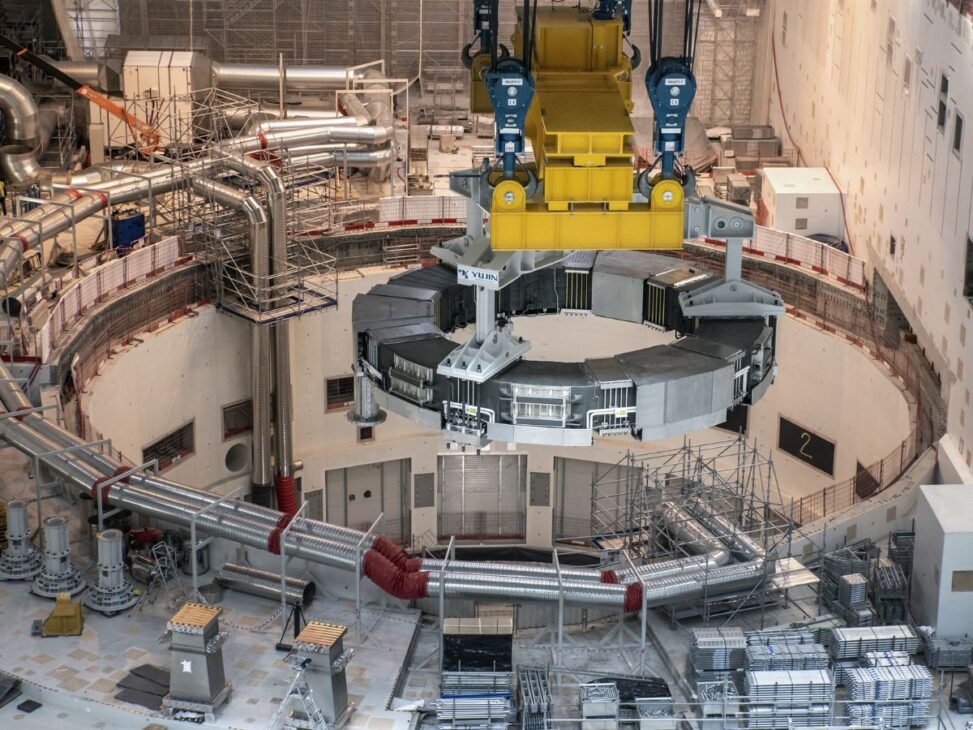
The Tokamak of the ITER project is the largest and most powerful ever built. The entire machine will be 24 meters tall, 30 meters wide, and will weigh 23,000 tons, equivalent to three Eiffel Towers. It is made up of around one million individual components.
Among the main parts are the Central Solenoid, the most powerful magnet in the system, and the 18 Toroidal Field (TF) coils. These “D”-shaped coils, when energized, create the main magnetic field. All of this is housed within the Criostato, a gigantic vacuum chamber that keeps the magnets at a temperature of -269°C.
The Status of Assembly in 2025
The year 2025 is crucial for the assembly of the Tokamak. The installation of the 18 toroidal superconducting magnets is underway, one of the most important milestones of construction. In January 2025, the project achieved a significant advancement with the installation of the fourth module of the Central Solenoid, the “backbone” of the magnetic system.
In April 2025, another milestone was reached: the first vacuum vessel sector module was inserted into the Tokamak pit, three weeks ahead of schedule. The assembly of each of these modules is a high-precision process, now being carried out in much less time thanks to the experience gained by the team.
The Challenges of a Global Project, Costs, Delays, and Precision Welding
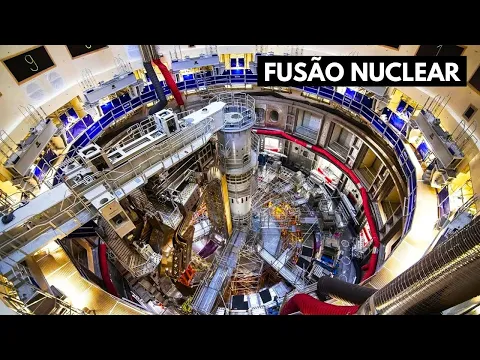

A project on the scale of ITER faces immense challenges. Construction, which began in 2009, has already undergone three schedule and budget reviews. The total cost of the project has increased by approximately 5 billion euros, and the COVID-19 pandemic, along with other supply chain disruptions, caused delays.
The date for the most powerful fusion experiments has been pushed back to 2039. The complexity of the assembly is also a technical challenge. Welding the vacuum vessel requires customized robots, and the giant components, manufactured in different parts of the world, need to be aligned with a tolerance of only 2 millimeters.
The Final Goal of the ITER, Generate 10 Times More Energy and Test Nuclear Fusion
The ITER was not designed to be a commercial power plant, but rather an experiment to prove that fusion is a viable energy source. Its main goal is to generate 500 MW of power from only 50 MW injected to heat the plasma. This represents an energy gain of ten times (Q=10).
The success of the Tokamak of ITER will pave the way for a source of energy with immense advantages: abundant fuel (extracted from water and lithium), zero carbon dioxide emissions, and intrinsic safety, as a severe accident is physically impossible. The project is a global investment in a cleaner and more sustainable energy future.






O comentário “notável ” do articulista foi dizer que não há possibilidade de acidentes ?!?!
Olhem as variáveis: temperatura que chega a 150 milhões de graus Celsius, precisa de ímãs potentíssimos, para manter aquele inferno longe dos componentes do reator, tem ainda uma câmara de vácuo da zorra, para não deixar os ímãs se aquecerem com aquele inferno, pois o calor acaba com suas propriedades magnéticas, precisa ter fonte de energia externa para fazer essa câmara de vácuo funcionar e todo o sistema de apoio ao reator. Se qualquer destas variáveis falhar, teremos um plasma a 150 milhões de graus, sem qualquer obstáculo se espalhando por toda a parte. Não há risco de acidentes🤣🤣🤣🤣🤣
Creio firmemente q tudo isso é uma poderosa a meaça a todos os humanos,vai q no futuro um outro GOVERNANTE RESOLVE UTILIZAR tal ferramenta para outros FINS?
Podem ter certeza que não é para energia limpa,e sim para fazer uma nova bomba nuclear poderosa….
“Seu principal objetivo é gerar 500 MW de potência a partir de apenas 50 MW injetados para aquecer o plasma. Isso representa um ganho de energia de dez vezes (Q=10).”
Um dos vários problemas é que a organização do ITER costuma usar o termo “potência de fusão”, que deveria ser chamado de “potência do plasma”, como sendo a “potência do reator”. Os proponentes do ITER confundiram a razão de ganho de energia do plasma (tecnicamente conhecido como Q-fusion) com a razão de ganho de energia do reator (tecnicamente conhecida como Q-engineering). Eles pegaram o valor para o Q-fusion e convenceram não-especialistas que era o valor do Q-engineering. Eles fizeram isso não apenas trocando os valores de Q, mas também escondendo a potência de entrada real necessária para o reator. Além disso, organização usa a unidade megawatts (MW), mas raramente especifica se são megawatts térmicos (MWₜ) ou se são megawatts elétricos (MWₑ), levando a mais confusão em torno da real capacidade do reator.
A principal medida técnica do sucesso do ITER será feita por uma comparação da energia do plasma produzido (saída), projetado para ser de 500 MWₜ, com a energia térmica injetada no plasma (entrada), projetada para ser de 50 MWₜ. No entanto, a produção de 50 MWₜ de energia de aquecimento injetada, que entra na câmara do reator como ondas de radiofrequência e feixes neutros energéticos, exigirá o consumo mínimo de 150 MWₑ. O reator também exigirá o consumo de 150 MWₑ adicionais para operar, principalmente para fornecer energia ao ímã supercondutor e ao sistema criogênico. O sistema geral do reator é projetado para consumir 400 MWₑ ao iniciar e 300 MWₑ em operação em estado estacionário, enquanto o reator está funcionando.
O objetivo real do projeto do reator ITER é produzir um plasma de 500 MWₜ em operação nominal, para pulsos de 400 segundos, enquanto 50 MWₜ de energia térmica são injetados no reator, resultando em um ganho de 10x a potência de aquecimento do plasma, não a potência do reator. Esse é o Q-fusion. Quando o ganho de energia é calculado usando toda a potência elétrica necessária e usando um método de cálculo menos conservador (saída de calor versus entrada de eletricidade), o ITER produzirá energia térmica a uma taxa de 1,6x em vez de 10x a energia elétrica que consumirá, ou seja, com Q-engineering = 500 MWₜ/300 MWₑ = 1,6. Usando um método de cálculo mais conservador (saída de eletricidade versus entrada de eletricidade), o ITER terá um ganho (negativo) entre 0,67 e 0,91 em vez de um ganho (positivo) de 10.