





 Português
  Inglês
  Espanhol
  3 min de leitura
  0 comentários


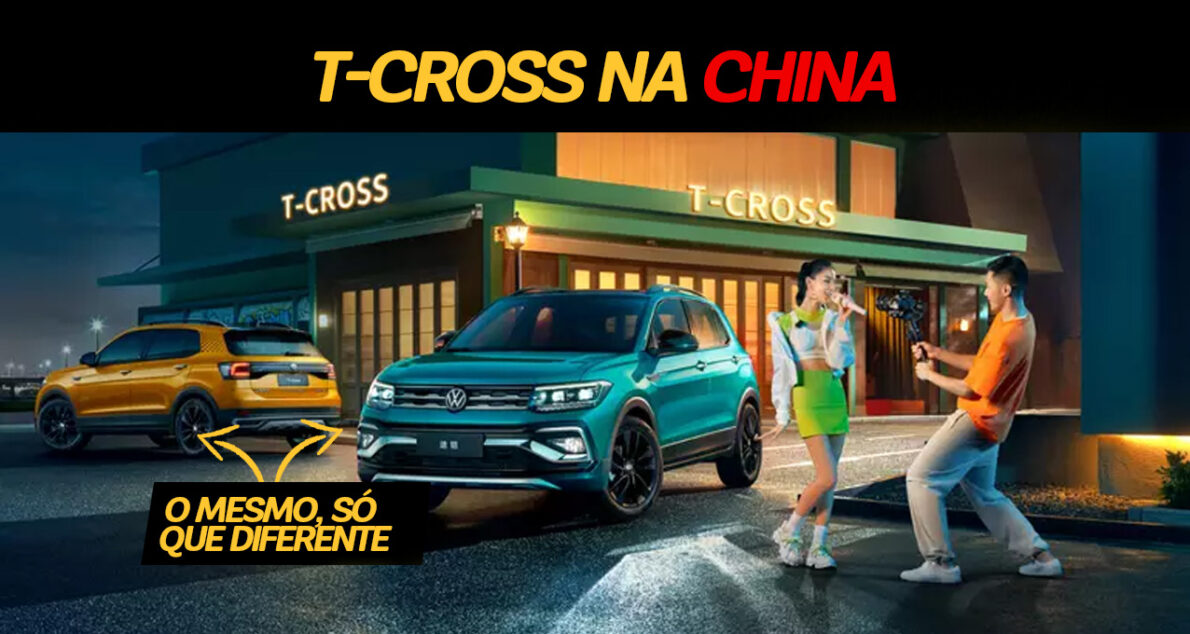
When We Think of a Car Model, We Usually Imagine That It Is Standardized, With the Same Name and Characteristics Anywhere in the World. But China, Always Surprising, Innovates Even in the Automotive Market, Where the Same Car Can Have Multiple Names and Even Be Manufactured by Different Companies.
This is the case with the Volkswagen T-Cross, an SUV that, in the giant Asian market, gains versions with distinct identities depending on the manufacturer.
As we know, Volkswagen is one of the most traditional automotive brands in the world. In China, it has a history of success, with decades of leadership and a strong legacy built through partnerships with local manufacturers.
Since 1984, the German automaker has collaborated with SAIC (Shanghai Automotive Industry Corporation), and since 1991, it has partnered with FAW (First Automobile Works).
-
OMODA & JAECOO grows in Europe in 2026 with an integrated strategy of sales, innovation, local production, and technological advancement in the United Kingdom, Italy, and Spain.
-
OMODA & JAECOO expands after-sales service in Brazil with competitive maintenance, a 7-year warranty, and high availability of parts for technological SUVs.
-
OMODA & JAECOO appoints Alessandra Souza as executive marketing director in Brazil and accelerates brand expansion with a focus on innovation, networking, and hybrid portfolio.

-
Jaecoo 7 with super hybrid SHS system exceeds 1,200 km of combined range with a 1.5 turbo engine, high-density battery, and intelligent energy management.
However, the peculiarity of the Chinese market goes beyond collaborations: the T-Cross, a popular model in other countries, has gained exclusive versions, each manufactured by one of these two partners.
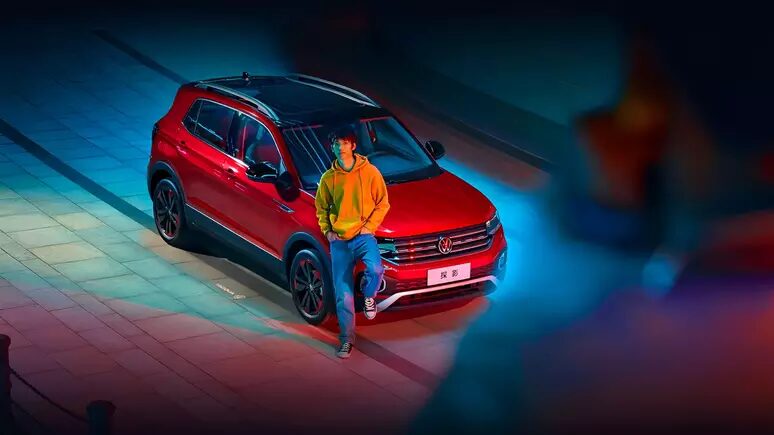
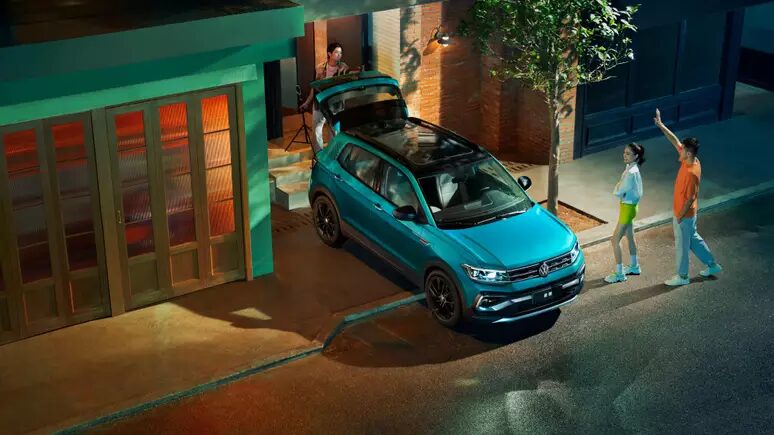
In China, the Volkswagen T-Cross is not just one, but two different cars. SAIC-Volkswagen manufactures the Tukai, while FAW-Volkswagen is responsible for the Tacqua. Both share the same essence but present significant variations in dimensions, engine specifications, and, of course, in name.
Differences Between Tukai and Tacqua: Two T-Cross, Two Experiences
The T-Cross Tukai, manufactured by SAIC-Volkswagen, measures 4,218 meters in length and has a wheelbase of 2,651 meters. It is sold in three versions, with the first two equipped with a naturally aspirated 1.5 engine delivering 110 hp and 141 Nm of torque.
The five-speed manual version costs ¥ 115,900 (R$ 89,490), while the six-speed automatic version sells for ¥ 128,900 (R$ 99,532).
There is also a top-of-the-line version, called 300 TSI, equipped with the new 1.5 Turbo Evo II engine, delivering 160 hp and 250 Nm of torque, paired with a seven-speed DSG transmission.
This model, the most expensive, costs ¥ 161,900 (R$ 125,014) and can be purchased with a trunk capacity of 329 liters or a smaller version with 212 liters.
On the other hand, the Tacqua from FAW-Volkswagen, which is slightly smaller at 4,194 meters in length, also offers two versions, both with a 1.2 Turbo engine producing 116 hp and 200 Nm of torque.
The versions, sold as R-Line, have prices ranging between ¥ 143,900 (R$ 111,115) and ¥ 146,900 (R$ 113,431). Interestingly, the Tacqua has the largest trunk among the two models, with a capacity of 367 liters.
The Complexity of the Chinese Automotive Market
Understanding the Chinese automotive market is not a simple task, especially for those observing from a Western perspective.
The complexity goes beyond the differences between Tukai and Tacqua. In addition to a specific market segmentation that offers multiple options for the same model, China presents challenges and opportunities for automakers like Volkswagen.
The Chinese market, which was once dominated by foreign brands, is now leaning heavily towards its own automakers, particularly with the rise of innovative technologies in electric and plug-in hybrid vehicles.
This new scenario has forced Volkswagen to reinvent itself in order not to lose ground in a market that was once synonymous with guaranteed profits.
Now, even with its history of success in China, the company needs to rethink its strategies to keep up with the changes and preferences of Chinese consumers.
Why Does Volkswagen Need to Reinvent Itself in China?
China, with its unique automotive market, imposes complex challenges on foreign automakers. Volkswagen, which has always had a strong presence in the country, now faces the reality that consumers are increasingly attracted to local brands.
The T-Cross, which anywhere else in the world would be just a car, in China divides into two personalities, reflecting this transformation in the market.








Seja o primeiro a reagir!