





 Portuguese
  English
  Spanish
  4 min of reading
  0 comments


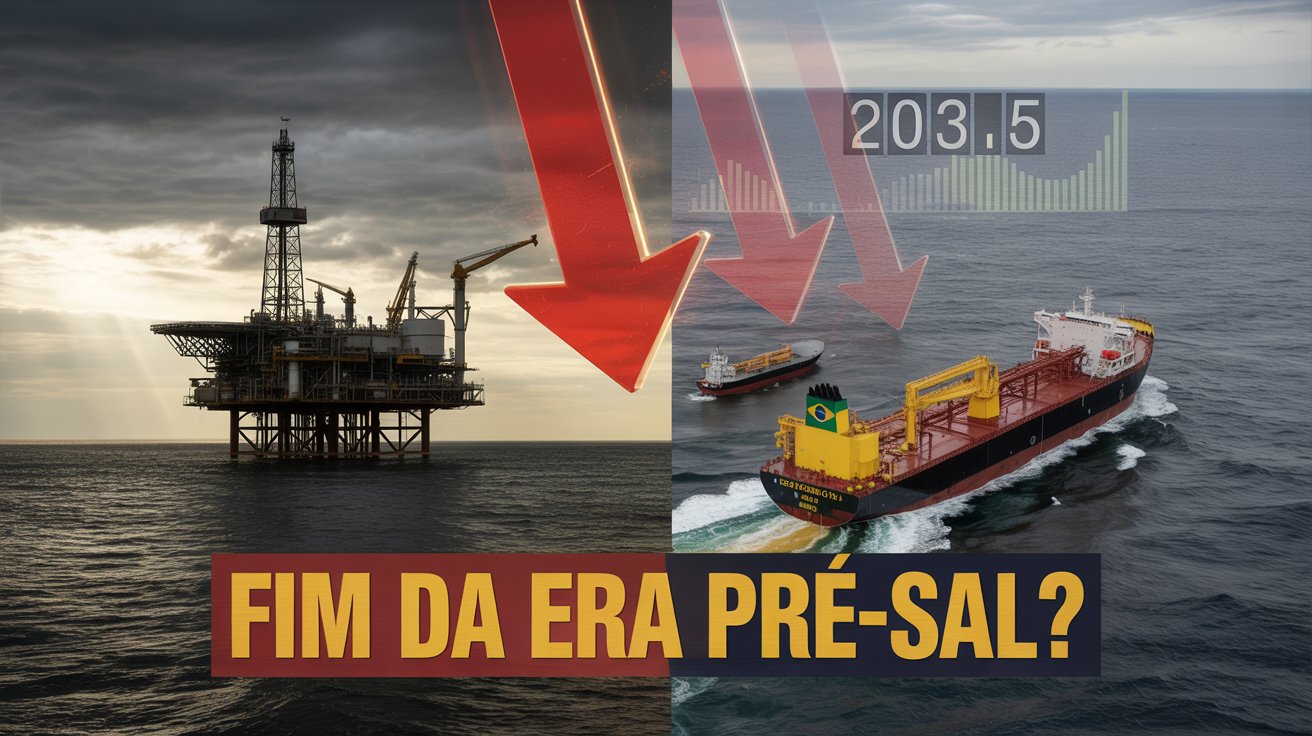
Shell Projections Indicate Risk of Brazil Returning to Dependence on the International Oil Market by 2035 If New Reserves Are Not Explored. Scenario Raises Alarm About Energy Future and Challenges for the National Sector.
Brazil could return to the status of a net importer of oil by 2035, if it does not advance in exploring new reserves, according to a report from the website CNN Brasil.
The warning comes from Shell, one of the largest companies in the global energy sector, which projects a challenging scenario for national production in light of declining drilling activities and the gradual depletion of the country’s main oil basins.
According to Cristiano Pinto da Costa, president of Shell in Brazil, signs of exhaustion are already evident in the Santos and Campos basins, regions responsible for a large part of the oil extracted today.
-
Offshore industrial demand in Macaé surges with the recovery of oil and gas and could grow by up to 396% by 2026 in the Campos Basin.
-
Brazilian giant expands borders in the Southeast: Petrobras confirms new oil discovery in ultra-deep waters in the pre-salt of the Campos Basin.

-
Alert in the global energy market: Severe tropical cyclone hits the coast and disrupts gas production at major plants in Australia, threatening global supply.

-
Petrobras finds high-quality oil in the pre-salt at 113 km from RJ and reignites expectations about strategic reserves in the Campos Basin.


“It is a scenario that worries me,” says Costa, stressing that the pace of exploration has dropped drastically in recent years.
In the 2000s, Brazil drilled more than 150 wells a year.
In 2024, that number plummeted to just six new drillings, the lowest level in decades.
The executive highlights that if the declining trend continues, the country may see its production unable to meet its own consumption.
Without the opening of new exploratory frontiers and the holding of regular auctions by the National Agency of Petroleum, Natural Gas and Biofuels (ANP), it will be inevitable to import oil to meet domestic demand.
Oil Production in the Pre-Salt Faces Decline in Exploration Pace
The growth of the Brazilian oil sector in recent decades has been directly linked to the development of the pre-salt, especially in the Santos and Campos basins.
However, recent data indicate a progressive depletion of these fields, requiring new investments in exploration.
According to Shell, the volume of drilling has dropped to critically low levels.
The decline in the number of wells opened reflects not only operational challenges but also regulatory and environmental uncertainties that hinder the advancement of new projects.
For industry experts, the absence of regular auctions for new exploratory areas limits the capacity to replenish reserves and jeopardizes Brazil’s energy security.
New Frontiers and ANP Auctions Are Proposed Alternatives
To reverse this scenario, Cristiano Pinto da Costa advocates the urgent opening of new areas for exploration and the resumption of “one or two” annual auctions promoted by ANP.
According to him, this strategy is essential to keep national production at sustainable levels and avoid dependence on imports.
The executive emphasizes that the interest from major companies in the sector remains high, especially in light of opportunities in regions still underexplored.
The expectation is that with appropriate public policies, it will be possible to attract investments and expand the national reserve base.
Global Oil Consumption Is Expected to Grow in the Coming Decades
Despite the global debate on reducing the use of fossil fuels in light of climate change, Shell projects an increase in oil consumption in the coming decades.
Population growth, rising living standards in Southern Hemisphere countries, and the increasing demand for energy driven by artificial intelligence are highlighted as determining factors.
By 2050, the world’s population is expected to reach 9.7 billion people, about 2 billion more than in 2020, according to estimates from the United Nations (UN).
This demographic advancement, coupled with improvements in quality of life in developing countries, is expected to significantly increase per capita energy consumption, which today in the Southern Hemisphere represents only one-third of that recorded in the Northern Hemisphere.
Furthermore, the growth of the technology sector, especially among the so-called “big techs” like Meta, OpenAI, and Alphabet, has spurred demand for reliable and continuous energy sources.
“Today, companies are looking for any reliable energy source, whether renewable or not,” says Costa, pointing to a shift in the demand profile.
Carbon Market and Energy Transition Come to the Fore
The CEO of Shell emphasizes that the pursuit of higher production does not mean abandoning commitments to the energy transition and reducing greenhouse gas emissions.
The company advocates the valuation of the carbon credit market and bets on the development of CO₂ capture and storage projects as viable alternatives to mitigate environmental impacts.
The advancement of these initiatives, however, depends on adequate regulation and incentives for large-scale adoption.
This topic is at the center of global discussions about the future of the energy matrix and the sustainability of the oil sector.
Future of the Pre-Salt and Challenges for Energy Self-Sufficiency
The discussion about the future of the pre-salt and national oil production occurs within a context of significant global transformation.
Brazil, which achieved self-sufficiency in oil production in the early 21st century, now faces the challenge of maintaining its position amid the depletion of mature fields and regulatory uncertainties.
The possibility of the country returning to importing oil by 2035 represents a turning point for national energy policy.
In light of this, authorities, companies, and experts are seeking solutions to ensure energy security and take advantage of the potential of new exploratory frontiers, balancing economic growth and environmental responsibility.
Will Brazil be able to renew its reserves and maintain self-sufficiency, or will it return to dependence on the international market to ensure supply?
The debate about the future of the pre-salt and national oil production remains open and mobilizes key players in the energy sector.









Seja o primeiro a reagir!