





 Português
  Inglês
  Espanhol
  3 min de leitura
  0 comentários


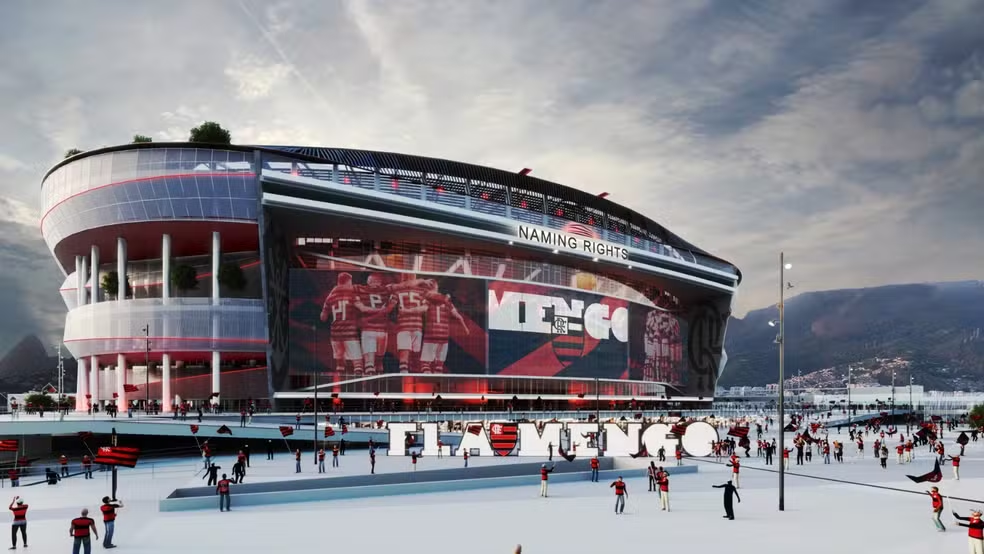
Flamengo Stadium Will Be Most Expensive Construction in Brazilian Football, with an Investment of R$ 3 Billion and Focus on Innovation and Comfort for Fans.
The Flamengo will have a new stadium, but the cost of the project will be much higher than expected. Luiz Eduardo Baptista, known as Bap, the club’s president, revealed that construction is expected to cost at least R$ 3 billion. This amount exceeds the initial forecast by over R$ 1 billion, which was R$ 1.9 billion. The work will be the largest in Brazilian football, surpassing Arena Corinthians, which cost R$ 1.6 billion.
The statement was made this Saturday at Maracanã, after the team won the Taça Guanabara. Bap explained that the previous amount is outdated and that the club is still waiting for the completion of technical and financial studies to define the exact figure.
Ongoing Studies for Flamengo Stadium
According to Bap, Flamengo has hired Arena Events + Venues to deepen the studies on the Gasômetro land, where the stadium will be built. The analysis includes soil quality and road infrastructure around the area.
-
A megaproject worth R$ 89 billion is advancing in Iraq and promises to change the game in global trade by creating a new corridor between Asia and Europe, reducing traditional routes and repositioning the country as a logistics powerhouse.

-
Goodbye bedside table: floating shelves become a trend in 2026 by freeing up space in the bedroom, improving circulation, bringing visual lightness, and integrating technology without taking up floor space.

-
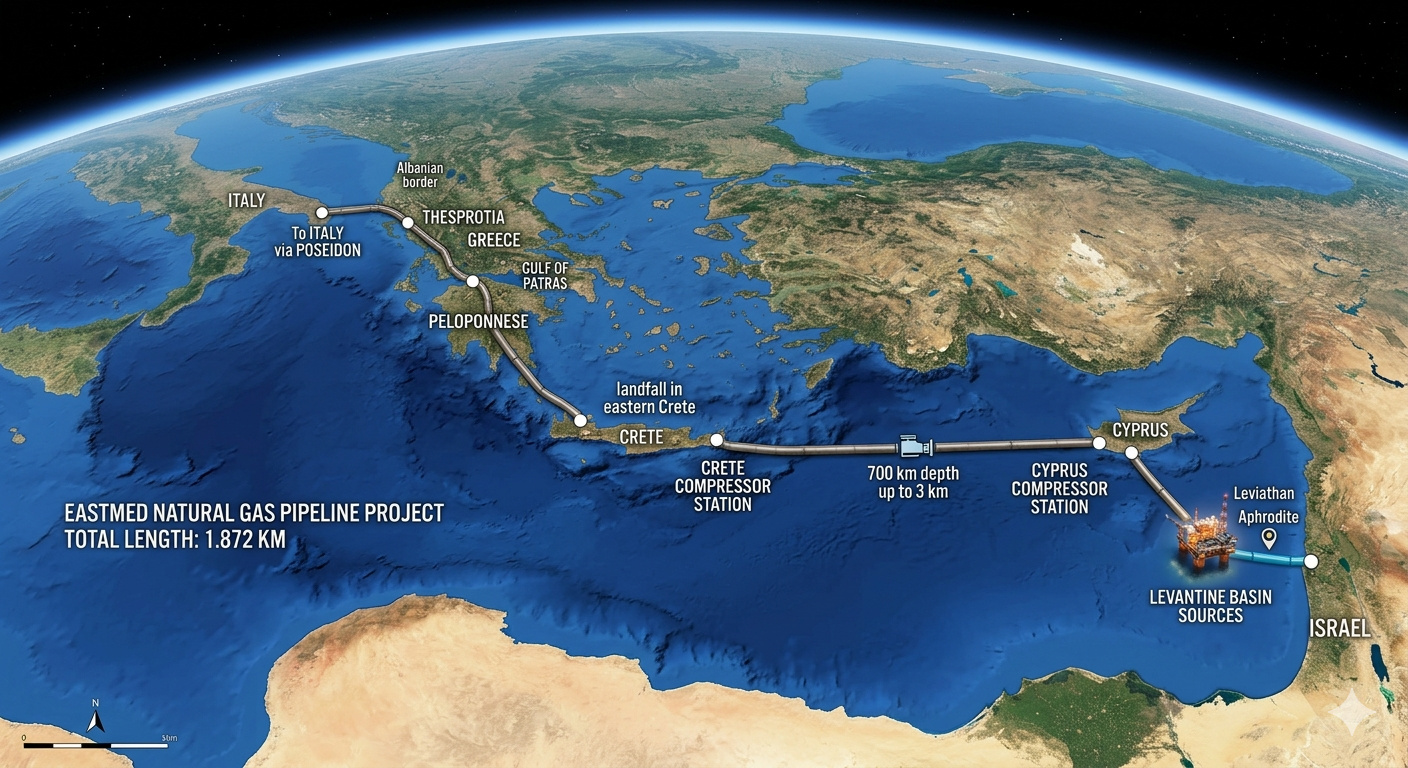
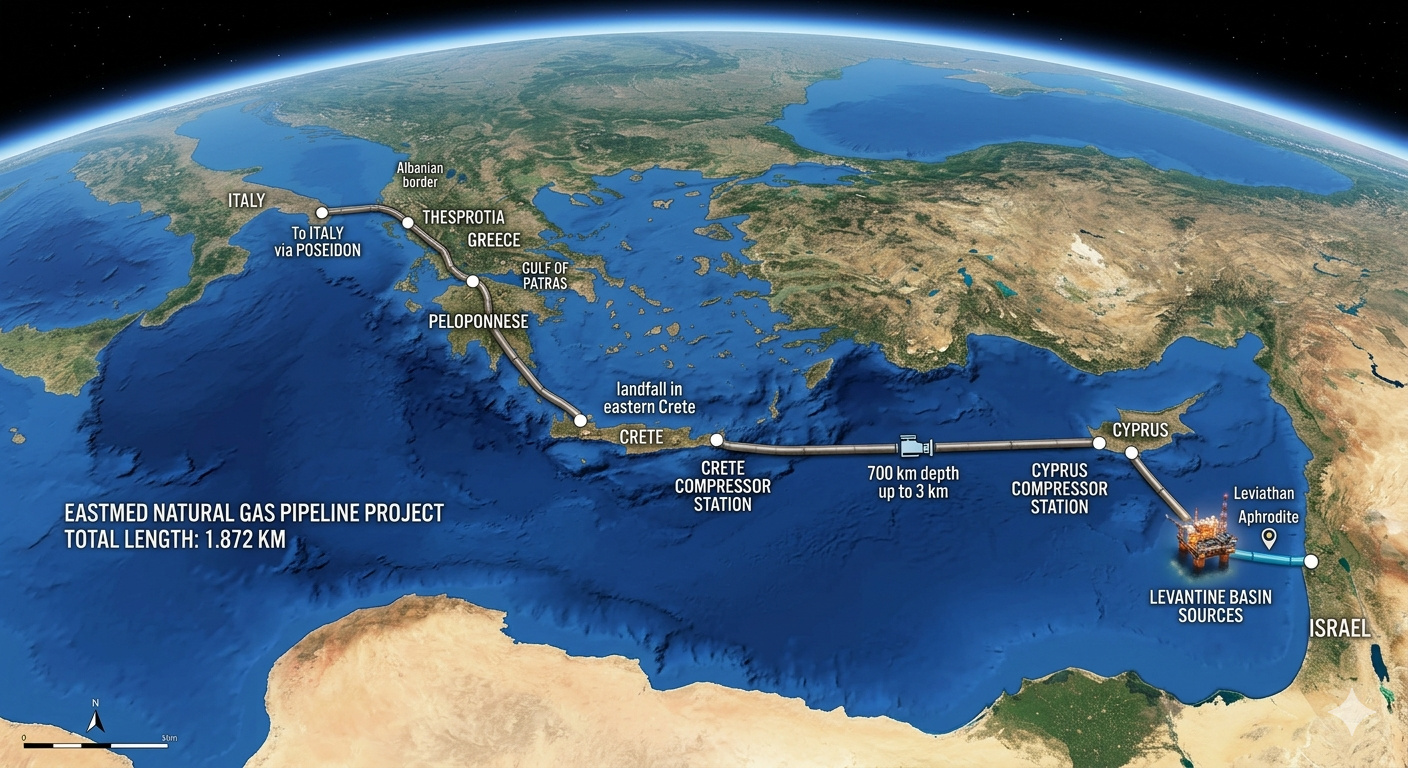
Israel, Greece, and Cyprus signed an agreement in 2020 to transport gas from the Mediterranean to Europe via a 1,872 km pipeline, but Turkey claimed sovereignty over part of the maritime route, and the project never materialized.
-
Israel, Greece, and Cyprus signed an agreement in 2020 to transport gas from the Mediterranean to Europe via a 1,872 km pipeline, but Turkey claimed sovereignty over part of the maritime route, and the project never materialized.

— We hired Arena to conduct a preliminary study. They said they did an initial assessment. We are hiring them to deepen the soil quality aspect and the road infrastructure around the stadium — stated the president.
Additionally, an economic and financial feasibility study is being conducted by Fundação Getúlio Vargas (FGV). FGV requested 45 days to complete the work. According to Bap, in approximately 60 days, the club will have more detailed information to share.
High Costs
Bap was straightforward in confirming that the cost of the work will exceed the previous forecast. The amount of R$ 3 billion includes expenses with land, drilling, decontamination, earthmoving, foundation, structures, installations, parking, roofing, field, urbanization, landscaping, and commitments to the City Hall.
— What I can say now is that I have no doubt that the figure of R$ 1.9 billion is not true, and that the confirmed number is close to R$ 3 billion, or more — emphasized the president.
The Gasômetro land was acquired by Flamengo last year. The area has become essential for the project of a new stadium, an old ambition of the club.
Imposing Structure
In November, Rodolfo Landim, then president of Flamengo, presented the preliminary project for the stadium. The proposal includes a structure 60 meters tall, equivalent to a 20-story building. There will be 27 elevators distributed throughout the stadium and 16 integrated ramps to facilitate internal access.
If the original project is maintained, the stadium will be taller than Maracanã and Santiago Bernabéu, home of Real Madrid. The expected capacity is 77,923 fans, which will make the arena the second largest in Brazil.
Capacity and Comparisons
Maracanã will continue to lead the list in Brazil, with a capacity of 78,838 people. Behind the new Flamengo stadium will be Mané Garrincha in Brasília, with 72,788 seats, and Morumbi in São Paulo, with 66,975 seats.
Despite being imposing, the new home of Flamengo will not surpass the Monumental de Nuñez in Argentina, which holds 83,196 fans after recent renovations.
On the international scene, the red-and-black stadium will also be distant from the largest in the world. Rungrado 1st of May Stadium in North Korea leads the global ranking, with a capacity of 114,000 spectators. Other examples include Michigan Stadium in the United States (107,601) and Camp Nou in Spain (99,354).
International Standard
Even without leading the capacity rankings, Flamengo Stadium will be a reference in the continent. The club’s expectation is to deliver a modern arena with international standards, capable of hosting major sporting events.
President Bap reinforced that the club will only disclose new information after the completion of the ongoing studies. Meanwhile, fans are waiting for details about the project that promises to mark Flamengo’s history.
With information from GE.









Seja o primeiro a reagir!