





 Portuguese
  English
  Spanish
  4 min of reading
  0 comments


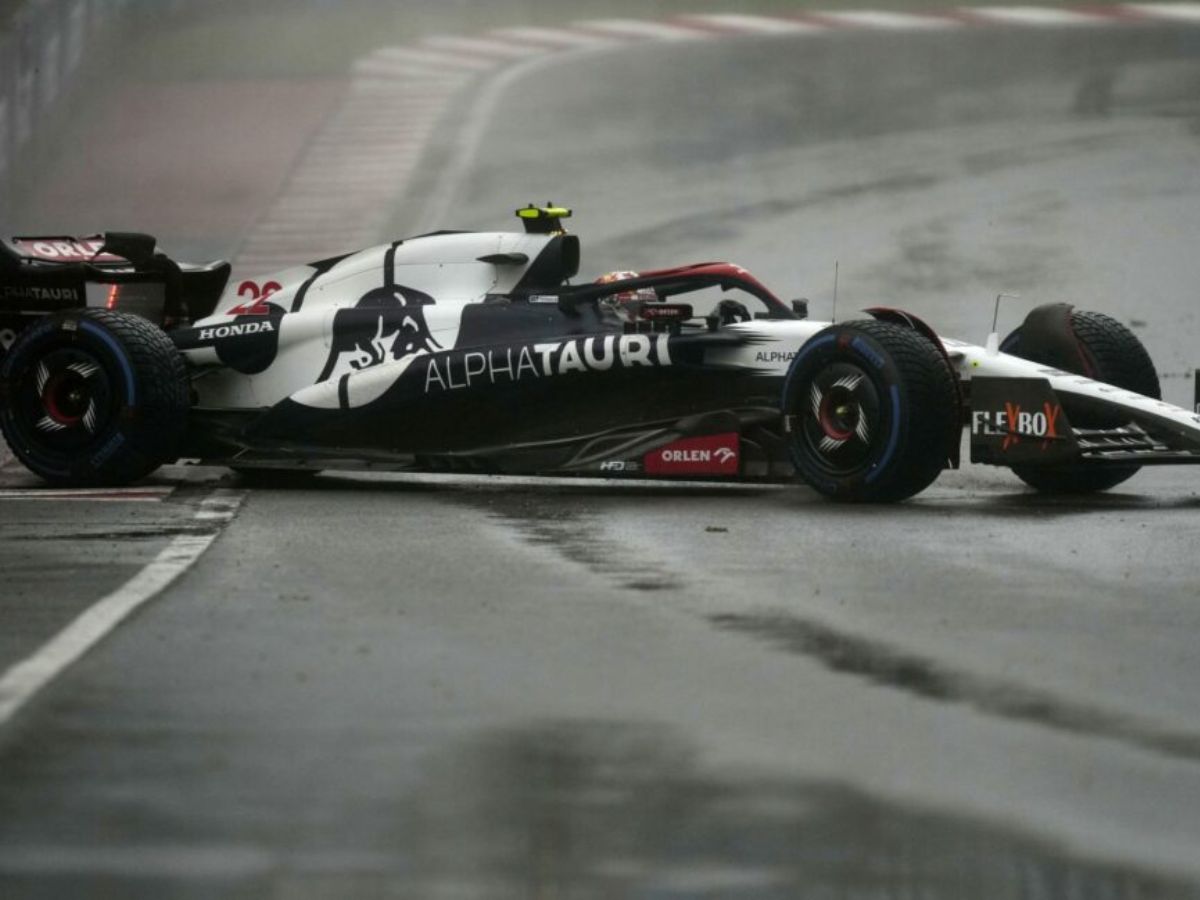
Understand How The F1 Braking System Works In Extreme Temperatures And Generates A Deceleration Force That Subjects Drivers To Over 5 G
The brake of a Formula 1 car is one of the most impressive pieces of engineering in motorsport. During a single lap, it is responsible for transforming speeds exceeding 300 km/h into sudden stops in less than 3 seconds. This brutal deceleration generates such intense heat that the discs can reach peaks of 1,200°C, a temperature hotter than that of the lava of many volcanoes.
This technology, which reaches its peak in 2025, is fundamental for performance and safety in the sport. It is the braking capability that defines a driver’s limits in a corner and ensures the precious seconds that lead to victory. The stopping power of an F1 car is as vital as its acceleration.
Why F1 Uses Carbon-Carbon, Not Ceramic Carbon
It is a common mistake to think that F1 brakes are ceramic carbon. In fact, the category exclusively uses a carbon-carbon (C-C) composite, a material developed for the aerospace industry. The main difference is that carbon-carbon has been designed for maximum performance at extremely high temperatures, ideal for racing. Ceramic carbon brakes are used in luxury street cars because they last longer and perform better at lower temperatures.
-
A couple buys an old chalet, breaks the kitchen floor for renovation, and finds over a thousand coins of gold and silver hidden since the English Civil War over 4 centuries ago.

-
Rigid bags with their days numbered: new trend prioritizes comfort in 2026.

-
YouTuber creates an excavator equipped with a giant 4.5-meter sword to challenge his brother to a rematch, and the invention quickly goes viral on social media.

-
The U.S. Army surprises the world by presenting the UH-60MX Black Hawk helicopter capable of flying without pilots, controlled by a tablet, featuring the MATRIX system, smart sensors, and full autonomy in real combat and rescue missions.


A carbon-carbon brake disc weighs approximately 1.4 kg, much lighter than a 25 kg steel disc of a regular car. This lightness is crucial for the car’s performance, improving acceleration and handling. The manufacturing process is so complex that few companies in the world master it, with Brembo being one of the main suppliers since 1975.
How The Brake Reaches 1,200°C In One Second
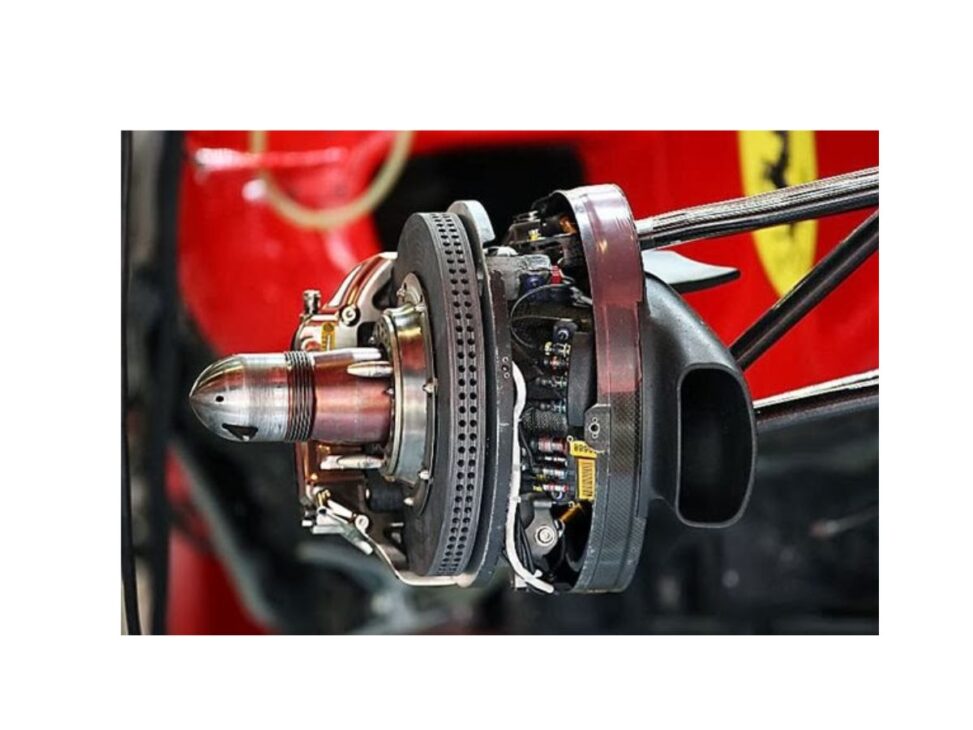
The heat generation in the brake of a Formula 1 car is absurdly quick. In just one second of intense braking, the disc temperature can jump from 200°C to over 1,000°C. Detailed studies show that the temperature rises about 100°C every tenth of a second. At its peak, the disc can exceed 1,200°C.
To give you an idea, the lava of an erupting volcano typically ranges from 700°C to 1,200°C. This means that, for a brief moment, the brake disc can get hotter than lava. Despite this, it is also designed to cool down extremely quickly, ensuring that performance remains consistent lap after lap.
The Deceleration That Generates Over 5 G For Drivers
The efficiency of the braking system results in an impressive deceleration force. During strong braking, the driver experiences a force greater than 5 G. This is equivalent to having five times their own weight pressed against their seatbelts.
This capability allows a Formula 1 car to reduce its speed from over 300 km/h to a tight turn over an incredibly short distance. Braking is directly linked to the car’s aerodynamics, which generates high downforce, pushing the car against the track and increasing grip for an even more effective stop.
The Evolution Of Holes, How Disk Cooling Has Changed Since 2002
To handle extreme heat, the design of brake discs has evolved drastically over the years, primarily in terms of cooling. In 2002, a brake disc had about 72 ventilation holes. This number has exponentially increased to maximize heat dissipation.
By 2016, discs had up to 1,100 holes, and in 2021, they reached a peak of 1,470 holes. However, a change in regulations in 2022 established a minimum diameter of 3 mm per hole, resulting in a reduction to around 1,050 holes. This constant fine-tuning seeks the perfect balance between cooling capacity and the structural integrity of the disc.
The Cold Brake Dilemma, The Challenge Of Operating Between 300°C And 1,000°C


Despite its performance at high temperatures, the brake of a Formula 1 car faces a significant challenge: it does not work well when cold. At room temperature, the carbon-carbon material is as slippery as two pieces of glass. It only begins to have an effective “bite” once it reaches at least 300°C.
For this reason, drivers need to actively warm the brakes during formation laps. The ideal operating window is between 800°C and 1,000°C. Maintaining the brakes within this temperature range is one of the great challenges for the driver, as a brake that is too cold may not respond, while an overheated one may lose efficiency.








Seja o primeiro a reagir!