





 Portuguese
  English
  Spanish
  3 min of reading
  0 comments



With the evolution of aerospace technology, flying backpacks, known as jetpacks, are transforming the concept of personal transportation and air mobility. Understand the development, challenges, and potential future of these innovative devices, with a detailed look at technological advancements, especially in engine mechanics.
The idea of flying backpacks, or jetpacks, is not recent but has gained significant attention with recent advances in engineering and design. From the early concepts of “Rocket Belts” powered by rockets to the modern jetpacks powered by jet engines, the quest for efficient personal flight has been a constant goal for engineers and aviation enthusiasts.
The transition from the Rocket Belt to modern jetpacks was marked by the replacement of rocket engines with compact jet engines, powered by aviation kerosene. These engines, similar to those used in aircraft but on a smaller scale, have increased the efficiency and viability of jetpacks.
Innovation Has Not Stopped at the Engines for Flying Backpacks


The integration of advanced technologies has enabled notable developments, as demonstrated by former Swiss military officer Yves Rossy, who developed the “Jetwing pack.” Using jet engines on a rigid wing, Rossy was able to fly at speeds of up to 300 km/h, showcasing the impressive potential of these combined technologies.
-
China accelerates global science and may surpass the United States in 2 years with increased public investment, continuous growth, and direct impact on the global technological competition.

-
Scientific studies indicate that drought may be strengthening a much greater silent threat: more resistant superbugs.

-
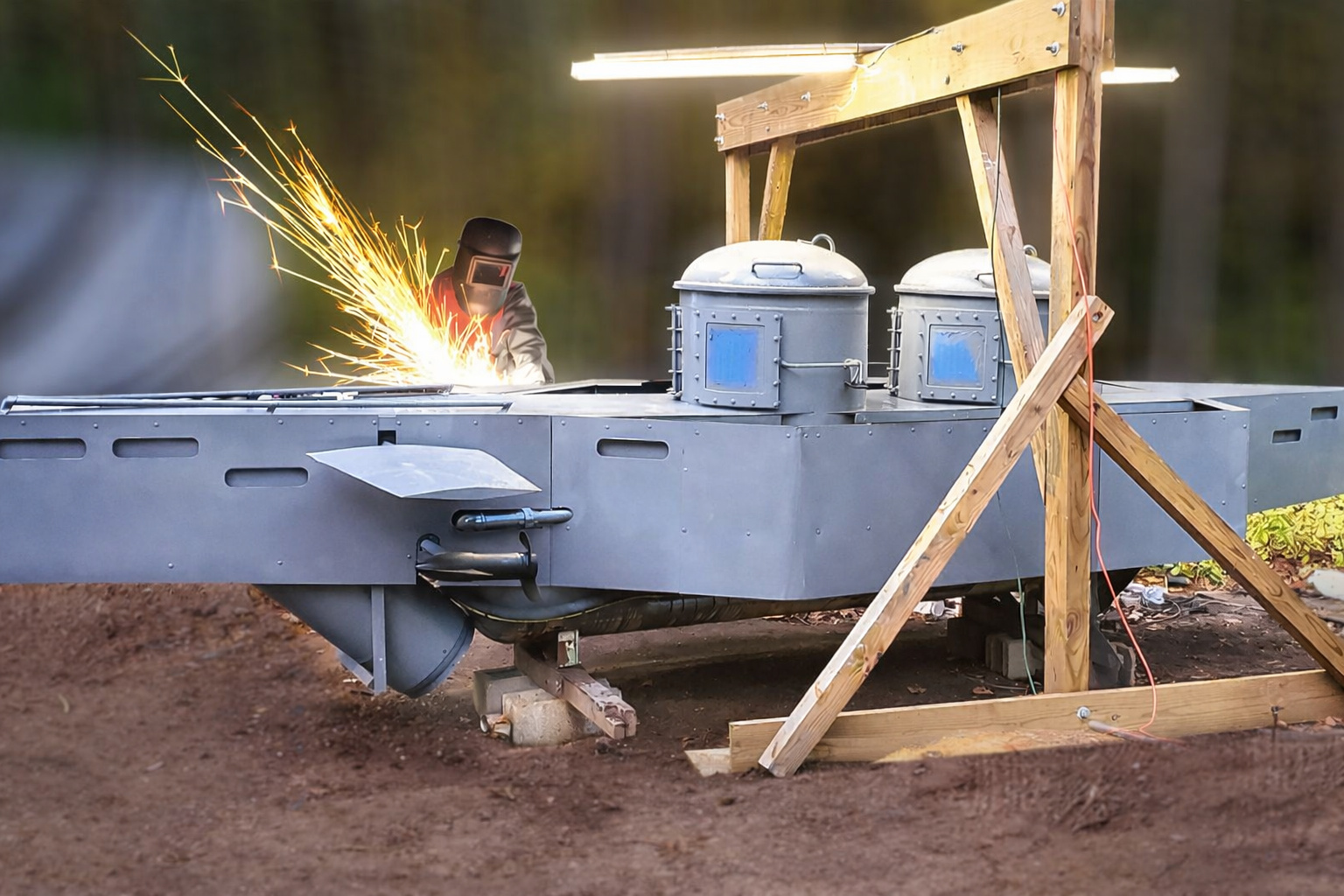
Man builds functional 5-meter submarine in his garage using gas cylinders, PVC pipes, and a refrigerator motor, and navigates with the vessel on a lake in Colombia.
-
Millions of people have been eating yam for centuries without knowing that this humble tuber contains a compound called diosgenin, which scientists have now discovered can improve memory and help control blood sugar levels.


Jetpacks Are Already a Reality
In addition to sports and recreational applications, jetpacks are being considered for use in rescue and military operations. Companies like the British Maverick Aviation are exploring designs that integrate the stability and ease of control of drones into jetpacks, aiming to expand the operational capabilities of these devices.
Despite the Progress, Challenges Remain
Issues such as cost, safety, flight autonomy, and aviation regulations are significant barriers to the widespread adoption of jetpacks. Balancing technological innovation with regulation is crucial for the future of these devices.
Flying backpacks represent a fascinating advancement in personal transportation technology. With continuous improvements in design, safety, and efficiency, the dream of safe and accessible personal flight is becoming an increasingly tangible reality. Closely following the evolution of engines and the integration of new technologies, the future of flying backpacks promises to transform our way of thinking about mobility and personal flight.
Engines Are the Vital Force of Flying Backpacks, Responsible for the Propulsion and Control Needed for Flight
Initially, flying backpacks, or Rocket Belts, used rocket engines that burned hydrogen peroxide to create jets of propellant gas. Although effective for short flight periods, these engines were limited by low autonomy and high operational costs.
The transition to jetpacks marked the shift to jet engines. These engines are essentially miniaturized versions of jet engines used in aircraft, operating with aviation kerosene. This transition represented a significant advancement, offering greater efficiency, better control, and extended flight times.
Current Technology in Engines
The modern jet engines in jetpacks are optimized to balance power, efficiency, and weight. Innovative companies in the flying backpack field have developed engines capable of generating the necessary propulsion to lift a person and equipment while maintaining stability and maneuverability in flight.
A noteworthy evolution in this space is the integration of advanced control technologies, such as thrust vectoring systems, which allow the pilot to control the direction and stability of flight in a more intuitive and safe manner.







Seja o primeiro a reagir!