





 Portuguese
  English
  Spanish
  4 min of reading
  1 comment


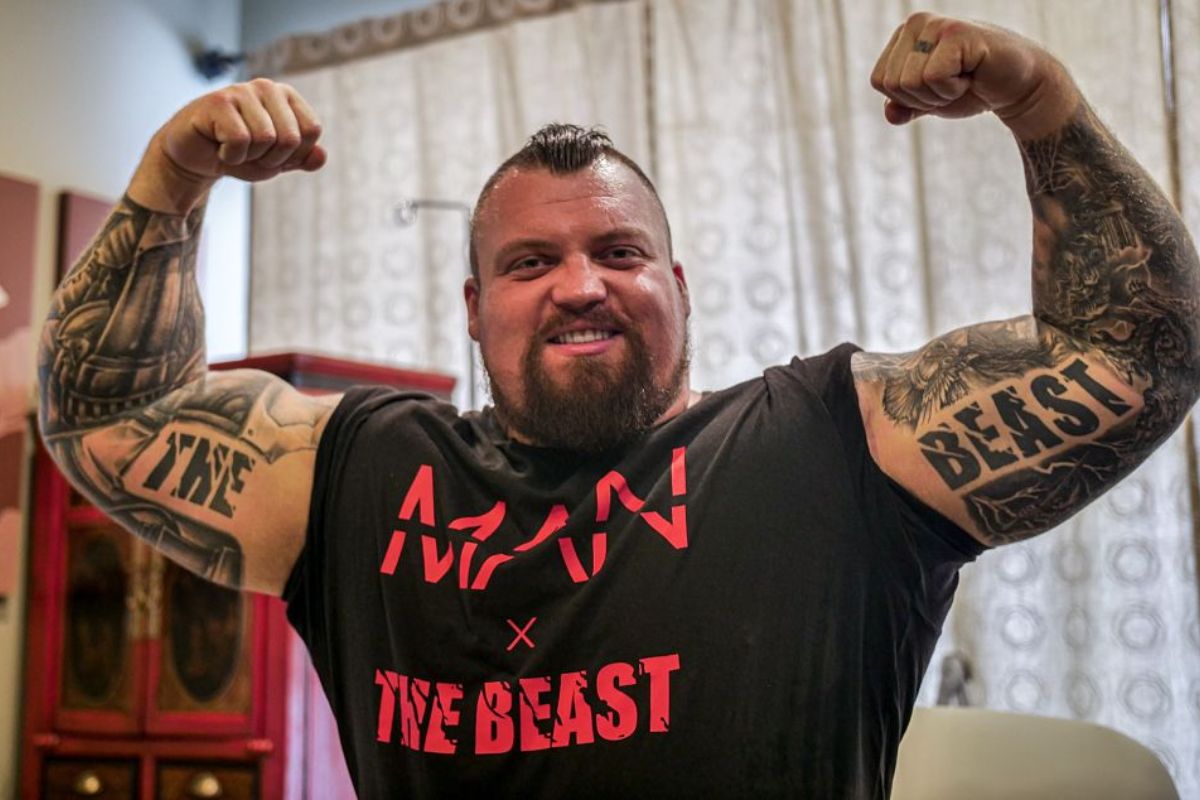


Called The Strongest Man in 2017, Eddie Hall Entered the Loughborough Laboratory for a Rigorous Protocol with 3.0 T Magnetic Resonance and Squat, Jump, and Isometric Pull Tests. The Study Measured 22 Leg Muscles, Patellar Tendon, and Found Volume Up to Three Times Greater in Key Stabilizers.
The label of the strongest man often suggests giant arms and strength that comes solely from the trunk. It was this impression that led researchers to seek an extreme case, placing Eddie Hall, the world champion of 2017, into a set of measurements that attempts to separate myth and biomechanics.
In the 15 years prior to the researchers’ contact, Eddie Hall maintained a consistent resistance training regime for both the upper and lower body. Twelve months prior to the test, the plan included squats, deadlifts, leg press, knee extensions, bench press, shoulder press, dumbbell rows, and lateral raises, with one requirement: to refrain from strenuous activity for 24 hours.
Who Is Eddie Hall in the Cut of The Strongest Man

Eddie Hall held, in 2017, the official title of the strongest man in the world, along with five titles of the strongest man in Great Britain and a second place in the European competition.
-
A couple buys an old chalet, breaks the kitchen floor for renovation, and finds over a thousand coins of gold and silver hidden since the English Civil War over 4 centuries ago.

-
Rigid bags with their days numbered: new trend prioritizes comfort in 2026.

-
YouTuber creates an excavator equipped with a giant 4.5-meter sword to challenge his brother to a rematch, and the invention quickly goes viral on social media.

-
The U.S. Army surprises the world by presenting the UH-60MX Black Hawk helicopter capable of flying without pilots, controlled by a tablet, featuring the MATRIX system, smart sensors, and full autonomy in real combat and rescue missions.

He was also a two-time world champion in deadlifting and held the world record in the event, lifting 500 kg.
The choice of the athlete was not random.
Understanding muscle strength matters for athletic performance, injury prevention, and healthy aging, and the stated goal was to investigate what made Eddie Hall extraordinarily strong and whether the results could benefit both athletes and non-athletes.
How The Laboratory Measured Muscles, Tendons, and Performance

The first stage was the 3.0 T magnetic resonance imaging, used to assess the size of 22 individual muscles in the lower limbs, five functional muscle groups, and the cross-sectional area of the patellar tendon.
This type of exam generates a magnetic field twice as strong as a standard 1.5 T magnetic resonance, producing sharper images, especially of bones, joints, and muscles.
Next, Eddie Hall performed squats to a depth chosen by him, jumps focused on maximum height, and an isometric pull to mid-thigh, similar to the deadlift, with the bar stationary.
The squat was treated as a reliable measure of lower body power, while the deadlift assessed total body strength and the ability to produce force.
What The Numbers Revealed Beyond “Muscle Size”


To contextualize the strongest man, researchers compared the shape, form, and structure of muscles and tendons with trained and untrained athletes.
The total muscle volume of Eddie Hall’s 22 leg muscles was nearly double that observed in untrained individuals, with a 96% increase. Compared to sub-elite athletes, it was 63% higher, and 32% higher than elite 100 meters sprinters.
The most striking difference appeared in the so-called “tendinous cords”, the sartorius, gracilis, and semitendinosus trio, associated with the stabilization of the pelvis and femur.
The values of Eddie Hall were found to be up to three times greater than those of untrained individuals, with 140% in the gracilis, 157% in the semitendinosus, and 202% in the sartorius.
The reading suggests that stabilizers may weigh more than previously thought when it comes to lifting and carrying very heavy loads.
The survey also pointed out relevant differences in the group of muscles of the plantar foot, linked to toe extension and stabilization of tendons under stress.
In this group, Eddie Hall surpassed untrained individuals by 120%, sub-elite sprinters by 100%, and elite sprinters by 70%, reinforcing that less visible parts of the body can sustain performance.
Power In Squat And Strength In Deadlift
In the deadlift, Eddie Hall’s maximum raw strength was 54% greater than that of the comparable highest level group cited, sub-elite lifters.
His maximum net strength in the isometric pull to mid-thigh was 100% greater than that of collegiate American football players.
In the squat, the maximum power was more than 2.5 times that of the untrained group, with a gain of 164%, and 51% greater than that of the comparable highest power group cited, professional basketball players.
The smallest difference appeared where many would expect the opposite, in the hip flexor muscles: 65% above untrained individuals, 30% above sub-elite sprinters, and 5% above elite sprinters.
Why This Becomes A Clue For Aging With More Autonomy
The conclusion signed by Jonathan Folland, the lead author, was that the upper body did not prove as crucial for explaining extreme strength as previously imagined.
Instead, the greatest muscle development occurred precisely outside the larger, more obvious muscles, in the stabilizers of the “resilient cord,” which support the pelvis and thigh.
By linking the case of the strongest man to muscle function, the authors reinforced that the muscular system is adaptable and that greater development appears in the muscles that are most used and trained.
The bridge to autonomy is at the study’s core: if muscle strength influences performance, injury prevention, and healthy aging, understanding which muscles support movement changes priorities.
If you follow sports science, it’s worth noting how the strongest man helps to place stabilizing muscles on the agenda and to treat squat and deadlift as more than just numbers on the bar.
What surprises you most about the strongest man: the magnetic resonance, the squat, or the deadlift?






Os tendões dele ser bem maiores do que de uma pessoa normal.