





 Portuguese
  English
  Spanish
  7 min of reading
  1 comment


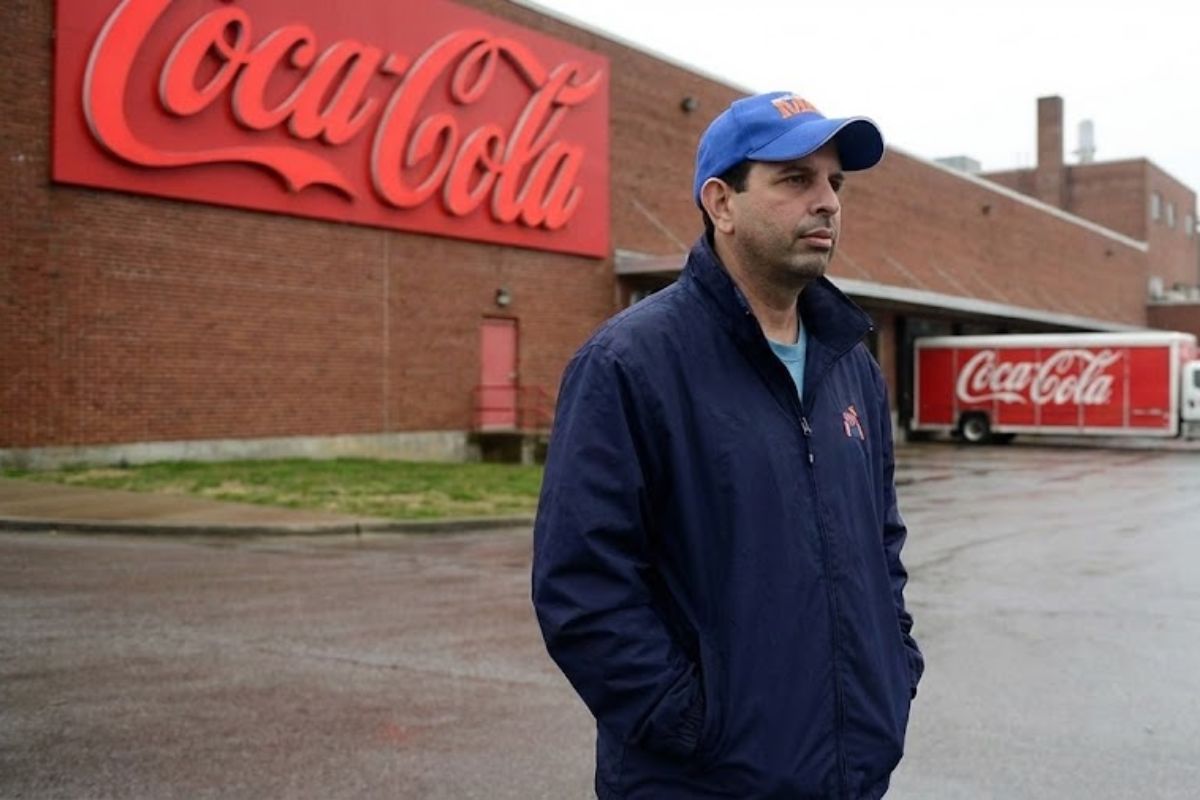


After Selling Glaceau in 2007 for US$ 4.1 Billion and BodyArmor in 2021 for US$ 5.6 Billion, the Man Who Pocketed R$ 54 Billion, Mike Repole, Says That Entrepreneurship Is Glamorized and That in the First Five Years Bankruptcy Hovers Every Day at Coca-Cola, in Historical Purchases, Insists.
The man who pocketed R$ 54 billion, Mike Repole, stated in an interview with the School of Hard Knocks channel that he spends more time discouraging people from starting businesses than encouraging them. The entrepreneur summarized the initial period as “survival years” and said that, during this cycle, bankruptcy is a daily threat for those trying to maintain cash, team, and product.
In the same interview on December 30, 2025, Mike Repole argued that the public narrative tends to show only the financial outcomes of sales to Coca-Cola, without exposing the risk-laden routine that precedes scaling. He noted that more than two-thirds of startups fail before reaching five years and advocated that the glamour associated with Glaceau and BodyArmor hides a long phase of uncertainty.
The Businessman’s Warning and What He Refers to as Years of Survival

The core of the message is direct and uncomfortable: “don’t start a business.”
-
50 viaducts, 4 tunnels, 28 bridges, and 40 kilometers of bike paths: BR-262 in Espírito Santo will receive 8.6 billion reais for the largest engineering project in the state’s history, inspired by the Immigrant Highway in São Paulo.

-
Brazil produces too much clean energy and doesn’t know what to do with it: over 20% of solar and wind capacity was wasted in 2025 while investors flee and 509 renewable generation projects were abandoned in the last year.

-
Piauí will produce a new fuel that replaces diesel without needing to change anything in the truck’s engine and reduces pollutant gas emissions by half: truck drivers from all over the Northeast are already celebrating the news that will arrive later this decade.

-
A new Brazilian shopping center worth R$ 400 million will be built in an area equivalent to more than 4 football fields, featuring 90 stores, 5 cinemas, a supermarket, a college, and parking for 1,700 cars, potentially generating 3,000 jobs.


The man who pocketed R$ 54 billion does not use the phrase to deny the value of creating companies, but to reposition expectations.
In his view, entrepreneurship is sold as autonomy and wealth, when, initially, it is continuous pressure for liquidity, product validation, and operational survival.
Mike Repole describes the first five years as a period when the entrepreneur wakes up thinking about three simple variables: sell, pay, and not go bankrupt.
Each month, the company needs to cover fixed costs, retain customers, and maintain suppliers, often without bargaining power.
During this period, according to him, the probability of error is high because the business still lacks mature processes, reliable data, and margins to absorb losses.
When the man who pocketed R$ 54 billion warns that “every day you could go bankrupt,” he points to the cumulative risk.
A delay in receivables, a rise in logistical costs, a bulk return, or a marketing failure can drain cash.
If the company is leveraged, the risk increases. If it depends on a few customers, it increases even more. If it operates in a category with aggressive competition, margins disappear quickly.
What the Two Sales to Coca-Cola Show and What They Hide
The story that often goes viral is the financial outcome: Glaceau and BodyArmor sold in two acquisitions deemed historical for Coca-Cola.
The man who pocketed R$ 54 billion acknowledges that this result exists and is extraordinary, but insists that it is a statistical exception.
Mike Repole’s experience also highlights how an acquisition can become a public symbol disconnected from execution.
To outsiders, the figure of US$ 4.1 billion in 2007 and the figure of US$ 5.6 billion in 2021 seem to confirm a formula.
For those inside, he says, the routine is one of testing, failure, and pressure, with the company trying to survive long enough for a multinational to see scale and synergy.
Another point that the man who pocketed R$ 54 billion emphasizes is the emotional cost of the initial period. Financial insecurity is not an abstraction: it manifests in deadlines, negotiations with banks, defaults, and the weight of maintaining jobs.
In categories like beverages, working capital tends to be high due to inventory, distribution, and marketing, and a planning error can create a cascading effect.
Glaceau: From 1999 to the Sales Surge and the Purchase in 2007
Mike Repole co-founded Glaceau in 1999, the company behind drinks like Smartwater and Vitaminwater.
In the cited account, the business went from US$ 1 million in sales in the first year to over US$ 1 billion in revenue before the Coca-Cola purchase.
In 2007, Coca-Cola bought Glaceau for US$ 4.1 billion. The man who pocketed R$ 54 billion uses this trajectory to challenge the myth of linear growth.
The sales surge is what appears at the top of the graph, but the path includes brand building, competition for shelf space, negotiations with distributors, and customer acquisition costs that can erode margins.
Glaceau, in the premium drink segment, also requires consistency in quality and communication.
When the company grows quickly, the risks change: pressure for industrial standardization, supply chain control, and the capacity to meet demand without compromising the product arise.
For Mike Repole, it is in this transition that many businesses fail, not due to a lack of ideas, but due to an inability to operate at scale.
BodyArmor: Founded in 2011, Surge in 2014 and the Largest Brand Purchase in 2021
After the initial major success, Mike Repole returned to the market in 2011 as a co-founder of BodyArmor.
The brand gained worldwide recognition in 2014 when Kobe Bryant invested US$ 5 million and became the company’s creative director, a move that increased visibility and legitimacy in the category.
In 2021, Coca-Cola acquired the remaining 85% of BodyArmor for US$ 5.6 billion, described as the largest brand purchase ever made by the multinational.
In total, the two operations are summed up as about US$ 9.7 billion, a value cited as equivalent to R$ 54 billion, consolidating the narrative of the man who pocketed R$ 54 billion.
The point that Mike Repole brings to the present is that BodyArmor does not start with an exit guarantee.
Even with Kobe Bryant’s support, the brand had to deal with intense competition, distribution costs, and the need for differentiation.
In sports drinks, the barrier is not just producing but reaching sales and replenishment scale, building repeat consumption.
Why the Risk of Bankruptcy Is Daily in the First Five Years
The phrase “survival years” translates into a financial diagnosis. In the first cycles, the company rarely has cash slack. This means that mistakes are costly, and successes do not always pay off immediately.
The man who pocketed R$ 54 billion describes the period as an interval in which the company learns to price, understand real demand, and reduce waste.
Three mechanisms explain the daily risk.
The first is the mismatch between payment and receipt: the company pays for inputs before receiving from retail or the end customer.
The second is the volatility of costs, including raw materials, freight, and fees. The third is the cost of growth: hiring, investing in marketing, and expanding production consume cash before becoming margin.
Mike Repole also draws attention to the psychological component.
The entrepreneur makes decisions with incomplete data, and each choice weighs more because there is no redundancy.
A supplier that fails can halt production. A batch error can destroy reputation. A poor campaign can drain the sales budget.
The Fortune After the Sales and the Distance Between Wealth and Routine
The contrast between the advice “don’t start a business” and the financial gain is what generates shock.
Today, Forbes estimates Mike Repole’s fortune at US$ 1.6 billion, built from the two sales and other ventures, like the expansion of the Pirate’s Booty snack brand, sold in 2013.
The man who pocketed R$ 54 billion uses this distance to reinforce that wealth is a late consequence, not initial fuel.
In consumer categories, a company can grow without turning a profit for a time, and survival depends on financing, cost discipline, and timing.
The billionaire narrative often glosses over the phase where the entrepreneur loses sleep, makes strategic errors, and deals with short-term pressure.
By stating that there were days when he didn’t believe it would work, Mike Repole adds an element that rarely appears in cover stories: the fragility of the path.
He claims to have failed several times, which connects to the cited data that more than two-thirds of startups fail before five years.
How to Interpret the “Don’t Start a Business” Without Turning to Fatalism
The message is not a prohibition; it is a filter. When the man who pocketed R$ 54 billion says “don’t start a business,” he tries to separate curiosity from commitment.
Starting a business for status tends to collide with the survival phase. Starting a business with a plan, cash, and tolerance for risk is another conversation.
What the interview suggests, in practice, is an objective triage.
How much cash do you have? What is the minimum fixed cost? What is the dependence on a few clients? What are the distribution risks?
In the beverage sector, for example, distribution and replenishment are strategic assets, and competing with giants requires capital and clear differentiation.
Mike Repole’s warning can also be read as a critique of the narrative that romanticizes failure as an inevitable stage. He does not romanticize.
He describes the risk as real. The journalistic value of the account lies in refocusing on the invisible part: daily negotiation, cash pressure, and survival.
Mike Repole’s trajectory condenses a paradox: the man who pocketed R$ 54 billion in two sales to Coca-Cola uses his own case to say that success is not the rule and that the beginning is survival.
The message is less about giving up and more about facing the real cost of keeping a business alive when bankruptcy is a daily possibility.
If you are thinking about starting a business, treat the advice as a maturity test: write your cash plan, define the minimum fixed cost, and list the risks that could break the operation before five years. This doesn’t guarantee victory, but it reduces the chance of entering the game without understanding the rules.
What was the biggest survival risk you have experienced or seen someone face in the first five years of a business?









Não cheguei a ser testemunha ou sofri com ameaça de falência, mas posso assegurar que marketing é tudo,o nosso guaraná Brasileiro já era para ter seu lugar no mundo.