





 Portuguese
  English
  Spanish
  4 min of reading
  1 comment


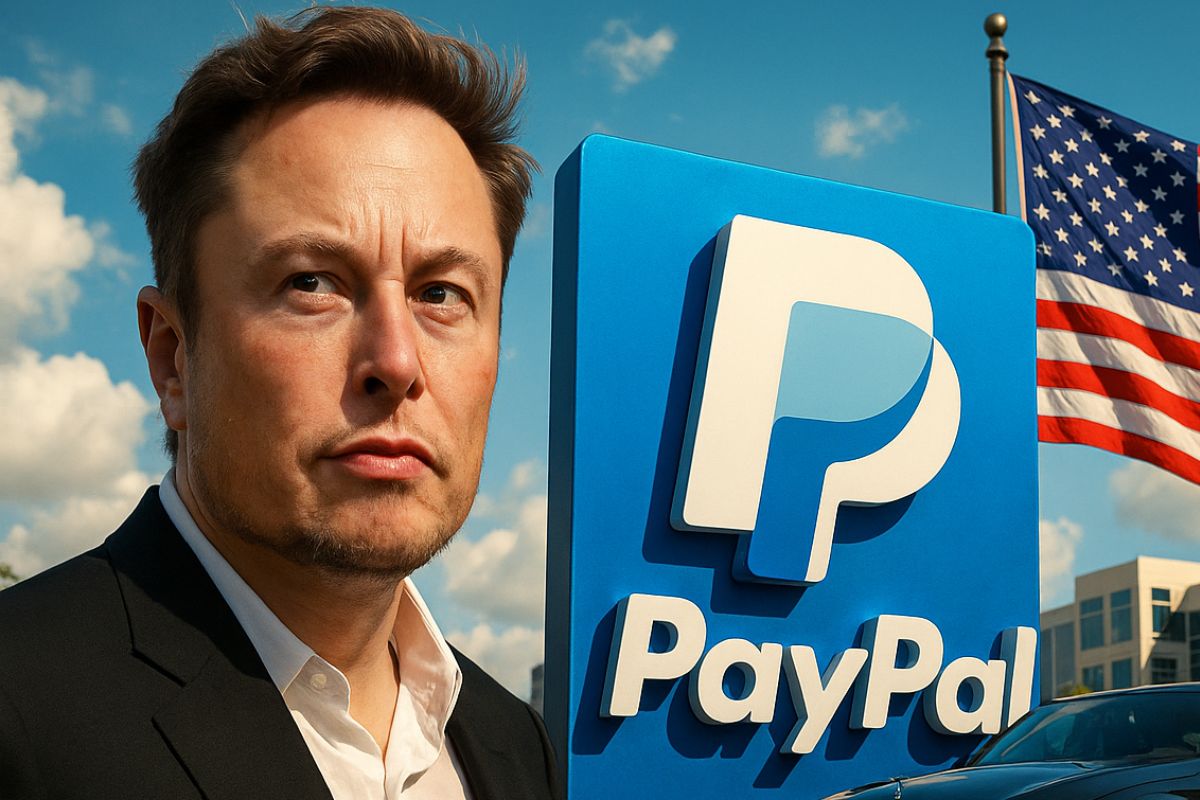


How PayPal Emerged From the Dot-Com Bubble Chaos to Become a Financial Giant and Why Its “Mafia” Influenced Innovation in Silicon Valley.
The PayPal is now one of the largest digital payment platforms in the world, competing with giants like Stripe and Apple Pay. According to AUVP Capital, the ecosystem includes peer-to-peer transfers, digital wallets, credit, and integration with cryptocurrencies, supported by an annual revenue exceeding US$ 25 billion and a market value around US$ 100 billion, numbers that reflect an ambition that began when paying online still seemed risky.
Behind this advancement lies a trajectory marked by large-scale fraud, powerful competitors, and global regulatory challenges. How did PayPal navigate all this and consolidate itself? The answer lies in technical decisions, strategic acquisitions, and a group of founders and early executives known as the “PayPal Mafia”.
From Origins to the Merger: Confinity, X.com, and the Birth of PayPal
In 1998, in Palo Alto, Max Levchin, Peter Thiel, and Luke Nosek founded Confinity, focusing on security for mobile devices. In 1999, the company launched email payments, a simple and scalable idea — but one that exposed the system to attacks and fraud.
-
Larger than entire cities in Brazil: BYD is building a 4.6 km² complex in Bahia with a capacity for 600,000 vehicles per year, but the discovery of 163 workers in conditions analogous to slavery has shaken the entire project.

-
With an investment of R$ 612 million, a capacity to process 1.2 million liters of milk per day, Piracanjuba inaugurates a mega cheese factory that increases national production, reduces dependence on imports, and repositions Brazil on the global dairy map.

-
Brazilian city gains industrial hub for 85 companies that is equivalent to 55 football fields.

-
Peugeot and Citroën factory in Argentina cuts production by half and opens a layoff program for more than 2,000 employees after Brazil drastically reduced purchases of Argentine vehicles.


The response came with pioneering detection algorithms, which became a technical differentiator.
Meanwhile, Elon Musk and partners created X.com, one of the first fully digital banks. The merger of Confinity and X.com in 2000 gave birth to PayPal.
The mission was to overcome user distrust and standardize secure online payments in an environment still dominated by static websites and a low security culture.
IPO, eBay, and Trust as a Product
Growth gained traction when eBay adopted PayPal as its preferred payment method in its auctions. The friction between buyers and sellers decreased, and the platform became the transactional standard of the marketplace.
In 2002, PayPal went public on Nasdaq, raising about US$ 70 million, and was acquired by eBay for US$ 1.5 billion.
Buyer protection policies, such as refunds in case of fraud, reinforced trust and accelerated global adoption of e-commerce.
The “PayPal Mafia” and the Network Effect in the Valley
The exit to eBay transformed founders and early executives into investors and serial entrepreneurs dubbed by the media as the “PayPal Mafia”.
Capital, knowledge, and networks began to circulate in new projects, creating a multiplier effect of innovation in Silicon Valley.
For PayPal, this history solidified a technical culture focused on scale and anti-fraud. For the ecosystem, it meant new companies, new funds, and new theses, impacting the tech scene in a lasting way.
Internationalization, Mobile, and New Products
After 2002, PayPal expanded to Europe, Asia, and Latin America, adapting payment methods, compliance, and security to local requirements.
The company launched PayPal Credit and invested in PayPal Mobile, anticipating the shift of smartphones as the main transactional channel.
The acquisition of Braintree (which brought Venmo) connected PayPal to fast and social P2P transfers, bringing the brand closer to a younger audience and to everyday use cases, from splitting bills to informal payments for small services.
Security, Fraud, and Regulation: The Core of the Business
From the beginning, fraud was the key variable. PayPal evolved from static rules to algorithmic models of prevention, continuously adjusting risk thresholds.
With every surge in adoption, new attack tactics emerged, requiring defensive engineering and ongoing investigation.
On the regulatory front, expansion brought anti-money laundering, KYC, and audit requirements. Scaling without losing compliance became part of the product: the end user sees “easy payment”, but behind it are layers of controls to maintain trust and liquidity.
Competition and Positioning: From Checkout to Ecosystem
With the rise of Apple Pay, Google, and Stripe, PayPal shifted from being merely a “checkout button” to positioning itself as a complete financial platform: credit for SMEs, digital wallets, integration with physical retail, and crypto.
User experience and ubiquity across multiple channels became the focus to maintain relevance against mobile-native rivals.
The company also reinforced partnerships and expanded acceptance points, reducing dependence on a single marketplace and increasing competitive resilience across various sectors, from e-commerce to digital content.
From Payment Empire to Global Infrastructure


By the end of the 2010s, PayPal was operating in over 200 markets with hundreds of millions of active accounts and billions of dollars in daily transactions.
The structure began to encompass credit, mobile payments, digital wallets, and crypto, as well as investments in AI and machine learning for fraud prevention and behavioral analysis.
Emerging markets such as Latin America, Southeast Asia, and Africa came onto the radar due to their high potential for digitalization.
The vision for the future projects a decrease in the use of physical cash and fully integrated payments across platforms, devices, and physical stores.
PayPal helped to shape the backbone of online payments and radiated talent and capital through the “PayPal Mafia”. Amidst advancements and controversies, it built trust as a product, combining scale, security, and regulatory adaptation.
The next chapter involves mobile first, AI, crypto, and emerging markets, in a game where users, regulators, and competitors define the pace.
And you? In your routine, is PayPal still a key player or has it lost ground to local solutions? Have Pix and digital wallets changed your payment behavior? To what extent does opening the ecosystem to crypto add value or create unnecessary risk? Share your thoughts in the comments: your real experience helps understand where digital payments are headed in the coming years.










Simply wish to say your article is as amazing The clearness in your post is just nice and i could assume youre an expert on this subject Well with your permission let me to grab your feed to keep updated with forthcoming post Thanks a million and please carry on the gratifying work