





 Português
  Inglês
  Espanhol
  2 min de leitura
  1 comentário


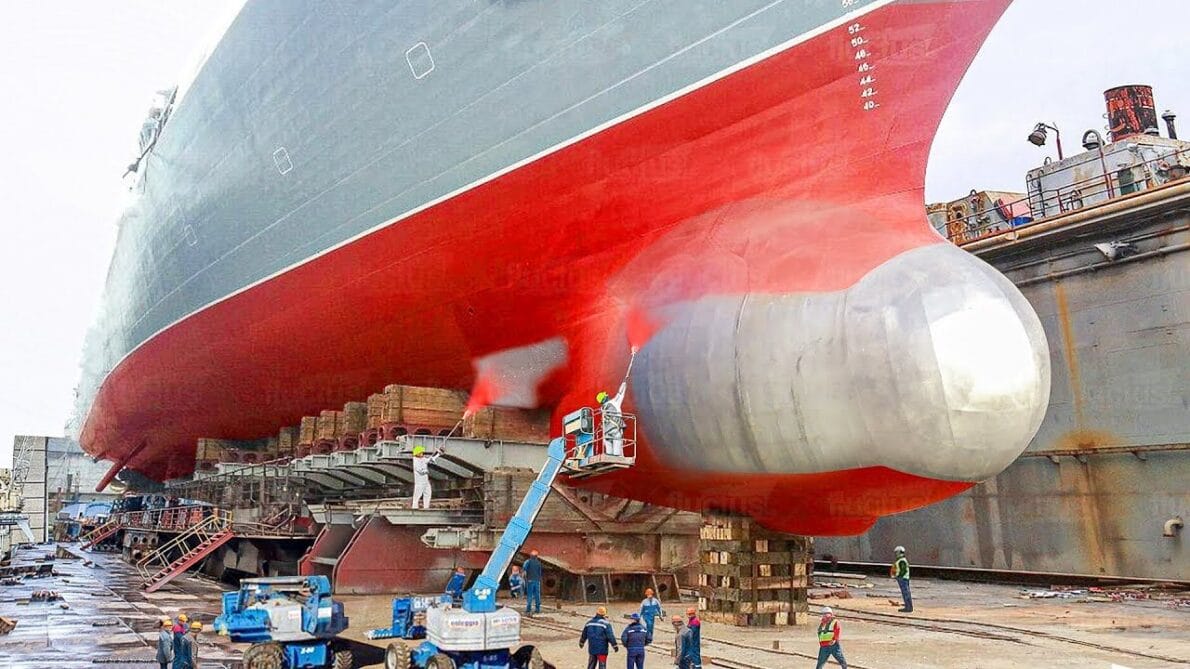

The Repair Of Giant Ships In A Shipyard Is An Impressive Operation That Involves Advanced Techniques And Careful Planning. This Process Ensures The Maintenance And Safety Of These Essential Vessels For Global Transport.
Ships, like any other structure that spends long periods in the water, accumulate unwanted organisms, such as algae and small animals. This phenomenon, known as biofouling, increases the drag on ships, reducing their speed and causing damage to the hull, which leads to costly repairs. To address this issue, shipyards apply a special paint called antifouling.
The repair process begins with the preparation of the hull surface. Specialists clean and polish the area, removing rust and traces of biofouling. On large ships, such as aircraft carriers and freighters, this is crucial to ensure the adherence of the new layer of paint. With the surface clean, the team applies the antifouling paint using spray guns or rollers, depending on the size of the ship.
Modern Antifouling Paints Are More Complex And Environmentally Friendly Than The Old Ones That Used Toxic Substances Such As Arsenic And Mercury

Today, coatings utilize polymers such as silicone or epoxy, along with natural enzymes and copper compounds that prevent the formation of mollusk colonies on the hull. Another crucial aspect in the shipyard is the maintenance of ballast tanks, which help maintain the stability of the ships.
-
Historic bankruptcy of Centauro shocks the market, and the century-old company puts more than 500,000 products, machines, and complete infrastructure up for online auction.

-
New shoe factory in Ceará is expected to create 400 jobs and strengthen the local economy.

-
No one imagined it, but a mixture of sawdust with a mineral that fights fires surprises scientists with a result that changes the course of fire-resistant construction.

-
From empty land to a high-end house, wooden construction uses a lightweight system, metal structure for the foundation, ventilated ceramic cladding, and special windows to create an efficient and comfortable living space throughout the year.


These tanks are regularly inspected for corrosion, cracks, or deformations. Drones are often used in these inspections, as they can safely and efficiently access tight spaces. Advanced techniques, such as ultrasonic testing, help identify problems early.
During The Construction Of Ships Or After Inspections, The Ballast Tanks Receive A Layer Of Epoxy Paint To Protect Against Corrosion. The Application Is Done With High-Pressure Sprayers That Ensure Uniform And Efficient Coverage.
The shipyard is a place where technology and manual skill meet. Marine painters, specialized in working with steel surfaces, use sophisticated equipment to apply the necessary coatings, prolonging the lifespan of the ships and ensuring their safe operation.
The repair of ships in a shipyard is a vital and highly specialized process that involves everything from cleaning and preparing the hull to applying advanced coatings. This meticulous work ensures that ships continue to operate efficiently and safely in the world’s seas.










Gostei e muito. Parabéns pelo trabalho