





 Portuguese
  English
  Spanish
  4 min of reading
  12 comments


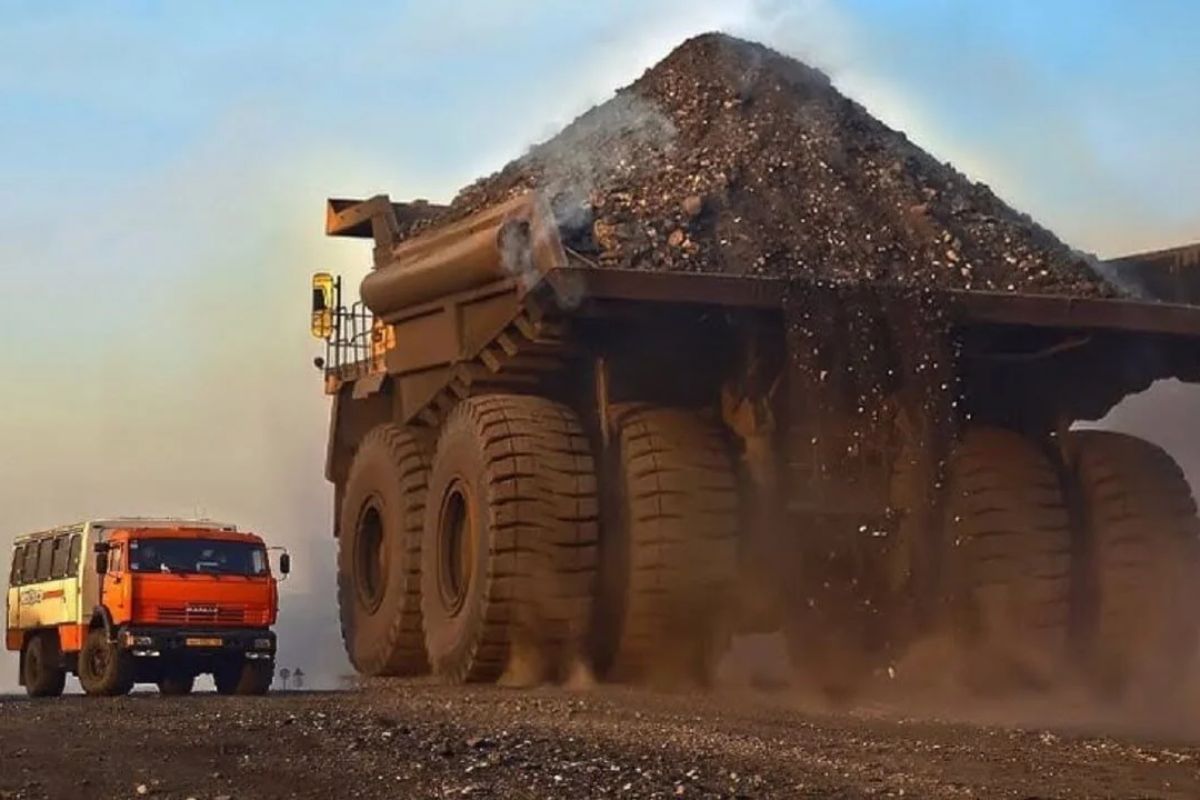


Meet the BelAZ 75710, the Largest Dump Truck in the World, Capable of Carrying 450 Tons and with Fuel Consumption Comparable to That of a Small City.
The BelAZ 75710 is a milestone in heavy vehicle engineering, holding the title of the largest dump truck in the world. Designed to transport massive volumes of rocks in open-pit mines, often under extreme weather conditions, this colossus is manufactured by BelAZ, a state-owned enterprise in Belarus.
Since its introduction in 2013, the BelAZ 75710 impresses with its 450-ton load capacity. This giant meets the mining industry’s demand for greater efficiency and economies of scale, moving more material with fewer cycles.
The BelAZ 75710 and Its Mission in Mining
The BelAZ 75710 was developed to operate in deep mines, facing temperatures ranging from -50 to +50 °C. Its creation represents a paradigm shift, surpassing previous capacities of 360-400 tons. BelAZ, 100% government-controlled in Belarus, has invested significantly in its production capacity, allowing the 75710 to become a symbol of national engineering.
-
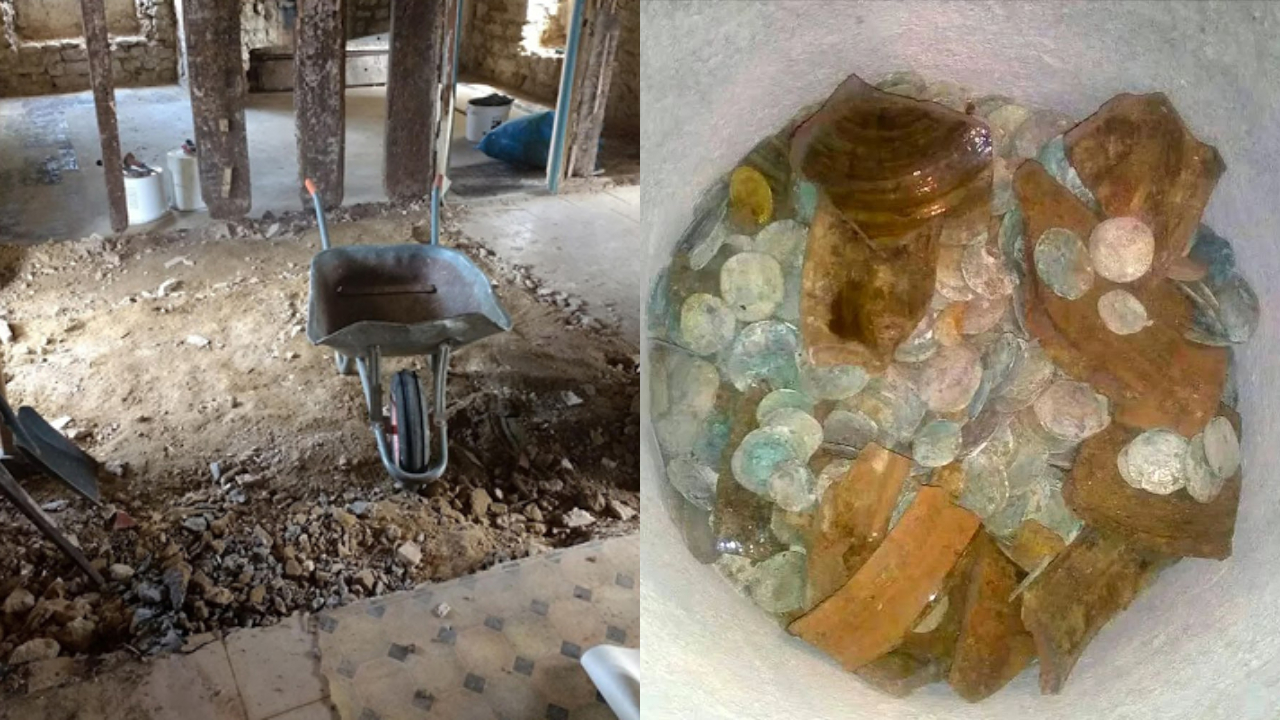
A couple buys an old chalet, breaks the kitchen floor for renovation, and finds over a thousand coins of gold and silver hidden since the English Civil War over 4 centuries ago.
-
Rigid bags with their days numbered: new trend prioritizes comfort in 2026.

-
YouTuber creates an excavator equipped with a giant 4.5-meter sword to challenge his brother to a rematch, and the invention quickly goes viral on social media.

-
The U.S. Army surprises the world by presenting the UH-60MX Black Hawk helicopter capable of flying without pilots, controlled by a tablet, featuring the MATRIX system, smart sensors, and full autonomy in real combat and rescue missions.

This truck is not only a record holder in size; it is a solution to economic challenges in the extraction industry. Its development aimed to meet the demand for greater efficiency in large-scale mining, reducing operational costs by transporting more material per trip.
Design and Dimensions of the Largest Dump Truck in the World

The dimensions of the BelAZ 75710 are impressive: 20.6 meters in length, 9.87 meters in width, and 8.26 meters in height. Its empty weight is 360 tons, reaching a Gross Vehicle Weight (GVW) of 810 tons when fully loaded. These measurements define the scale of its robust engineering.
The design of the largest dump truck in the world includes unique features, such as a two-axle chassis with dual wheels at each end, totaling eight solid tires (59/80R63). This arrangement effectively distributes the colossal weight. It also has hydraulic drive and steering on all four wheels, unusual for its class, providing maneuverability with a turning radius of 19.8 meters. Its structure uses Advanced High-Strength Steel (AHSS), allowing for a high payload-to-weight ratio.
The Powertrain and Performance of the Belarusian Colossus
The heart of the BelAZ 75710 consists of two MTU DD 16V4000 diesel engines. Each 65-liter V16 engine produces 2300 hp, totaling a combined power of 4600 hp. These engines utilize Common Rail direct injection, DDEC electronic control, and a turbocharger with intercooling.
The truck uses a Siemens MMT500 diesel-electric propulsion system. The diesel engines power alternators that generate electricity for four electric traction motors, providing all-wheel drive. This system allows for immense torque and precise control, as well as efficient electrodynamic braking, crucial for descending with heavy loads. The redundancy of the two motor-alternator systems increases reliability, allowing operation with one engine under light loads for fuel economy.
Transporting 450 Tons at Once
The payload capacity of 450 metric tons is the most famous feature of the BelAZ 75710. This volume earned the truck recognition by the Guinness World Records in January 2014 as the largest cargo vehicle by capacity. Its bucket, of the scoop type and heated by exhaust gases, also holds the record for the largest volume for mining trucks, with approximately 269.5 m³ (2:1 crowned).
This monumental capacity means fewer trips to move large quantities of material, potentially reducing congestion and labor costs per ton. However, it requires large loading equipment (excavators, wheel loaders) and robust transport roads, adapted to support its GVW of 810 tons.
The Diesel Consumption of the Largest Dump Truck in the World
The title of largest dump truck in the world comes with a proportional fuel consumption. Data indicates a consumption of 1,300 liters of diesel per 100 km. The specific fuel consumption of each engine is 198 g/kWh. Based on this, the total hourly consumption for the two engines at full power is estimated to be around 800 liters. Another source mentions an average operational consumption of about 425 liters per hour.
To meet this demand, the BelAZ 75710 has two fuel tanks with a total capacity of 5,600 liters. Even with this capacity, its range at maximum continuous power is only about 7 hours. The ability to operate with a single engine under light loads or empty is an important design feature to mitigate high consumption and optimize operational economics.
Comparisons and the Legacy of the Mining Giant


Compared to other ultra-class trucks from manufacturers like Caterpillar (797F, 798 AC) and Komatsu (980E-5), the BelAZ 75710 leads in load capacity with its 450 tons. Its closest competitors operate in the range of 360-372 tons. The GVW of the BelAZ (810t) and its total power (4600 hp) also exceed those of its direct rivals.
Despite its size and specialization, BelAZ used parts from earlier models in the 75710 to simplify maintenance and training. This truck represents the pinnacle of current diesel transport technology, but it also faces challenges. International sanctions on BelAZ may impact the supply of key components, such as MTU engines and Siemens systems, affecting its future development and market reach. Nevertheless, the BelAZ 75710 has already established itself as a colossus of modern engineering.






Comprar pra dar um role
preciso de 3 pra carregar café..
É bom para enfrentar o trânsito das grandes cidades.